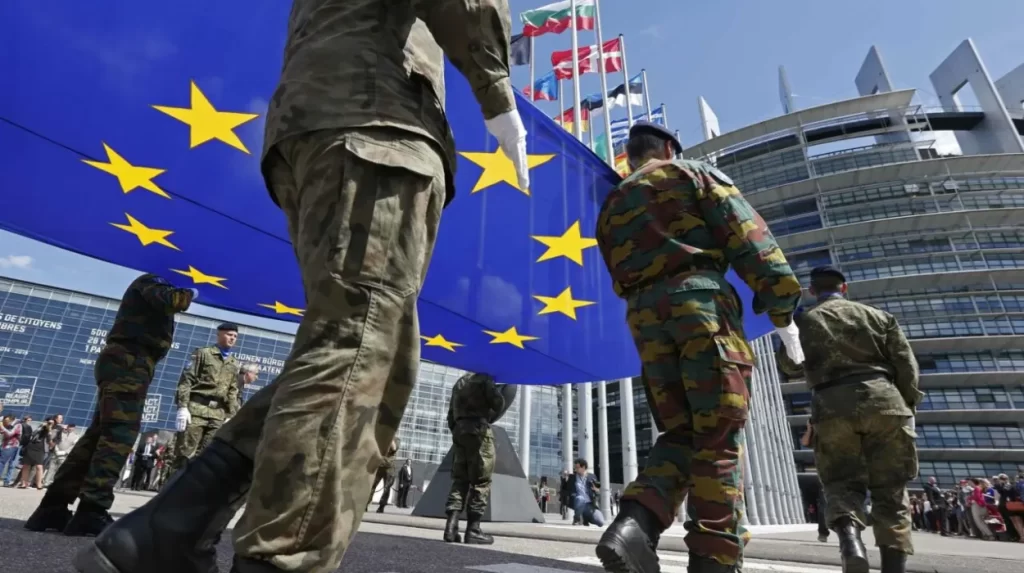

The Common Foreign and Security Policy (CFSP) of the European Union (EU) serves as a pivotal framework for how EU member states coordinate their foreign affairs and security strategies. Established under the Maastricht Treaty in 1993, the CFSP aims to enhance the EU’s global role by promoting common interests, values, and security measures. As the landscape of global politics becomes increasingly complex, the CFSP provides a structured approach for navigating international challenges.
One of the primary goals of the CFSP is to ensure that the EU speaks with a unified voice on foreign policy matters. This is essential for the EU’s credibility and effectiveness on the global stage. By working collaboratively, member states can leverage their collective influence, which is particularly important when addressing issues such as climate change, international trade, and security threats like terrorism and cyber-attacks.
The CFSP is characterized by its emphasis on diplomacy, conflict prevention, and crisis management. The EU employs various tools, including diplomatic initiatives, sanctions, and peacekeeping missions, to manage conflicts and promote stability in regions of concern. For instance, the EU has engaged in numerous peacekeeping operations, particularly in the Balkans and Africa, demonstrating its commitment to fostering peace and security far beyond its borders.
Another significant aspect of the CFSP is the role of the High Representative of the Union for Foreign Affairs and Security Policy. This position, created in the Lisbon Treaty of 2009, consolidates various foreign policy responsibilities under a single authority. The High Representative not only represents the EU on foreign affairs but also plays a crucial role in coordinating member states’ positions, enhancing the efficacy of the CFSP.
Moreover, the CFSP is closely intertwined with the EU’s broader security policy, which encompasses the Common Security and Defence Policy (CSDP). While the CFSP focuses on diplomatic and policy aspects, the CSDP encompasses military dimensions, allowing the EU to undertake military operations when deemed necessary. This dual approach ensures a comprehensive framework in addressing both diplomatic and security challenges.
In recent years, the CFSP has faced numerous challenges, including geopolitical tensions with Russia, the rise of China, and the impacts of global crises such as the COVID-19 pandemic. These dynamics necessitate a flexible and adaptive CFSP, capable of responding to evolving threats while promoting the EU’s foundational values of democracy, human rights, and the rule of law.
In conclusion, the Common Foreign and Security Policy is a cornerstone of the EU’s external relations, enabling member states to coordinate their policies and respond to global challenges effectively. Through collective action, the EU aims to enhance peace, security, and prosperity both within Europe and around the world.
For more details and the full reference, visit the source link below: