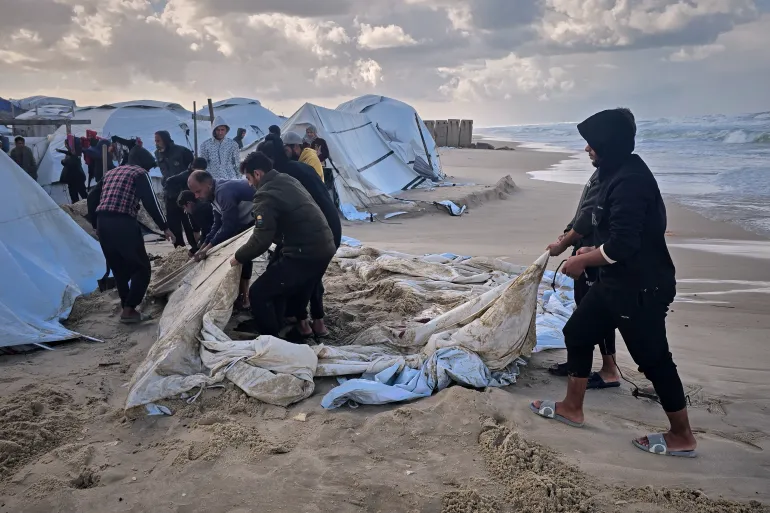

The humanitarian crisis in Gaza has escalated to alarming levels, particularly as the cold weather sets in. As winter approaches, the situation for civilians—already dire due to ongoing conflict—has become increasingly urgent. In a region where infrastructure has been severely damaged, the combination of frigid temperatures and inadequate shelter poses a significant threat to the lives of those who remain.
Civilians in Gaza are facing not just the immediate dangers of conflict but also the burdens of poor living conditions exacerbated by the winter chill. With homes destroyed or damaged during hostilities, many people are left to contend with leaking roofs, inadequate heating, and limited access to basic necessities. The United Nations has reported that a significant portion of the population lacks sufficient winter clothing, food, and access to warm shelters, leaving them vulnerable to hypothermia and other cold-related illnesses.
Children and the elderly are particularly at risk as seasonal illnesses like pneumonia and influenza can spread rapidly in overcrowded and unsanitary conditions. With hospitals already overwhelmed and resources stretched thin due to the ongoing conflict, the ability to address these health issues is severely hindered. Medical facilities are struggling to operate amid shortages of medicine, staff, and equipment, leaving many without necessary care.
The cold weather also impacts mental health, as the prolonged stress of living in a conflict zone is compounded by harsh environmental conditions. Anxiety, depression, and post-traumatic stress disorder are prevalent among those exposed to violence and displacement. The winter months may deepen these issues, making it imperative to provide both psychological and physical support to affected populations.
International aid organizations are mobilizing to address the urgent needs of Gaza’s civilians, but access to the region remains fraught with challenges. Blockades and restrictions complicate the delivery of humanitarian assistance, forcing many organizations to operate under severe limitations. Communities are calling for immediate action from the global community to alleviate their suffering and restore basic services.
As the temperatures drop, the need for solidarity and support is paramount. The international community must prioritize diplomatic efforts aimed at achieving a sustainable ceasefire, allowing for humanitarian access and rebuilding efforts. It is only through concerted action that the suffering of Gaza’s civilians can be alleviated and their dignity restored amidst the harsh realities they face this winter. The urgency of the situation cannot be overstated; lives depend on immediate intervention.
For more details and the full reference, visit the source link below:
Read the complete article here: https://brusselsmorning.com/gaza-civilians-cold-weather/88000/