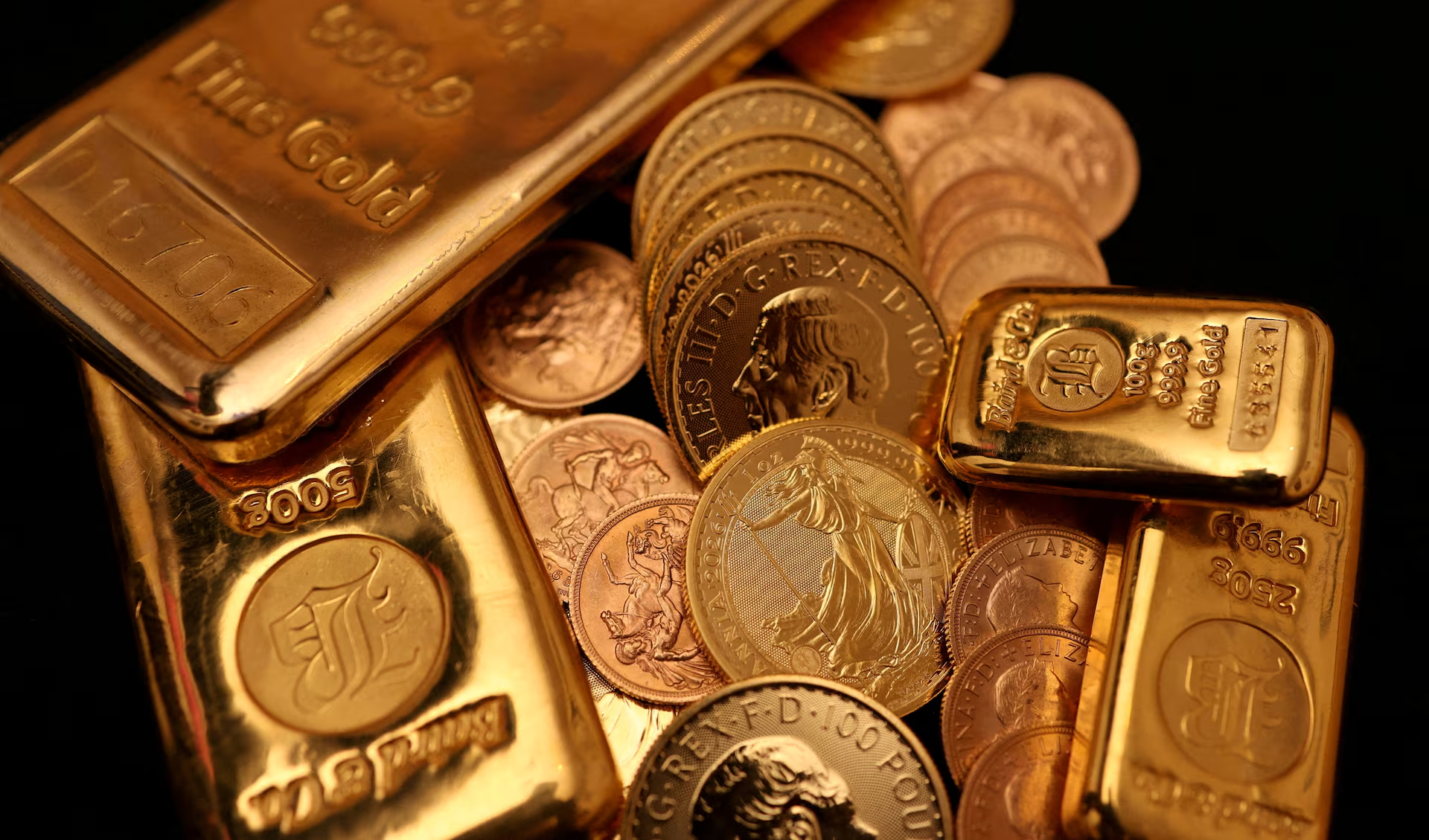

In 2026, the London gold markets witnessed a significant downturn, marked by the sharp decline in gold prices, primarily influenced by a powerful shift in market indices. This unexpected volatility can be attributed to a confluence of global economic factors, including changes in monetary policy, geopolitical tensions, and evolving investor sentiment.
As the year progressed, the Bank of England (BoE) adopted a more aggressive stance on interest rates to combat inflation, which had begun to creep back into the economy following a period of relative stability. Higher interest rates typically strengthen the value of fiat currencies, leading to a decrease in the demand for gold, which is seen as a safe-haven asset. The immediate reaction in the London markets was noticeable; investors started reallocating their portfolios away from non-yielding assets like gold toward bonds and equities that promised better returns in a rising rate environment.
Compounding this was an increase in geopolitical tensions, particularly in Eastern Europe and parts of Asia. While such tensions often drive investors toward gold for security, in this instance, they seemingly had the opposite effect. Many investors believed that easing tensions could stabilize markets, leading to a risk-on sentiment and dampening gold’s appeal as a hedge against uncertainty.
Moreover, advancements in technology and mining efficiencies led to increased gold production levels, adding downward pressure on prices. Larger mining companies announced expansions and new projects, which flooded the market with additional supply. In a year where demand from emerging markets, particularly India and China, was not as robust as anticipated, the imbalance between supply and demand became pronounced, further exacerbating price declines.
Yet, the most significant shift affecting gold came from the recalibration of investment indices, particularly those tracking commodities and precious metals. A growing trend among asset managers was to focus on more sustainable investment practices, pulling funds away from traditional commodities. Gold, often viewed as a relic of the past, found itself losing favor amid rising interest in green technologies and blockchain assets like cryptocurrencies, which were increasingly viewed as modern alternatives for wealth preservation.
As the year ended, the gold markets in London faced an uncertain future. Analysts speculated whether this decline was just a temporary blip or a reflection of longer-lasting structural changes in the global economic landscape. Investors were left grappling with the implications of shifting market dynamics, leading to broader discussions about the role of gold in modern portfolios amidst the overall evolution of investment strategies.
For more details and the full reference, visit the source link below: