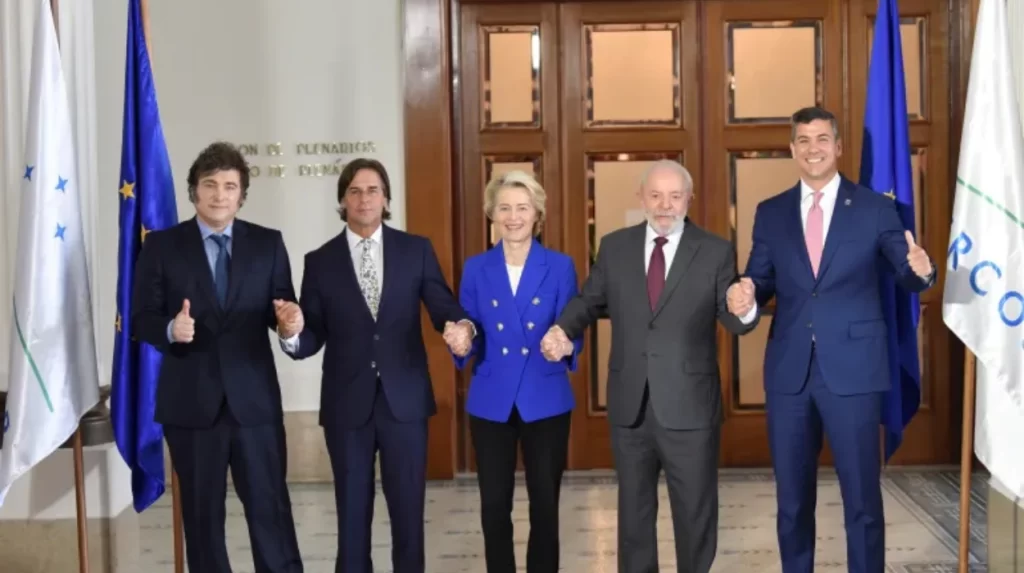

Europe’s evolving stance on the EU-Mercosur trade deal reflects a culmination of political, environmental, and economic factors that have shaped negotiations over the years. Originally, the agreement aimed to boost commercial ties between the European Union and the South American bloc of Argentina, Brazil, Paraguay, and Uruguay, potentially establishing one of the world’s largest free trade areas. However, recent developments have caused a re-evaluation of Europe’s position.
At the heart of the matter is the EU’s commitment to sustainability and environmental protection. The Amazon rainforest, a vital ecological asset, has become a focal point in discussions surrounding the agreement. Increased deforestation rates in Brazil, coupled with concerns about agricultural practices and their environmental impacts, have led many European nations to reassess the potential environmental consequences of intensified trade. Countries like France and Ireland have expressed strong reservations, insisting that any trade agreement must align with rigorous environmental standards.
Economic motivations also play a critical role. Proponents advocate that the deal would enhance access to a market of 260 million people, presenting lucrative opportunities for European businesses, particularly in sectors such as agriculture, pharmaceuticals, and vehicles. Freeing up trade barriers could lead to overall economic growth, create jobs, and enhance competitiveness in a global market increasingly dominated by larger economies. However, opposition from local farmers and industries, fearing negative impacts from cheaper imports, has intensified concerns in various EU member states, complicating the agreement’s approval process.
Politically, the shifting winds within the EU further complicate matters. With rising populism and environmental activism influencing political dialogue, member states are under pressure to adopt stances that resonate with their electorates. The European Parliament’s opposition has heightened, with calls for stricter conditions to ensure that the deal upholds the EU’s climate objectives. Negotiators now find themselves balancing the interests of economic growth and political feasibility against a backdrop of environmental accountability.
Moreover, relations between the EU and its South American counterparts have not been without friction. Tensions, particularly involving governance and human rights issues, have raised questions about trust and reliability in the partnership. The potential for Brazil’s recent political changes to affect compliance with environmental policies introduces further uncertainty into the negotiations.
In summary, Europe’s stance on the EU-Mercosur trade deal is characterized by a complex interplay of environmental concerns, economic interests, and political dynamics. The ongoing discussions reflect the EU’s broader commitment to sustainability while navigating the realities of global trade. Whether the deal can be revived hinges on finding common ground that satisfies economic ambitions without compromising environmental integrity.
For more details and the full reference, visit the source link below: