
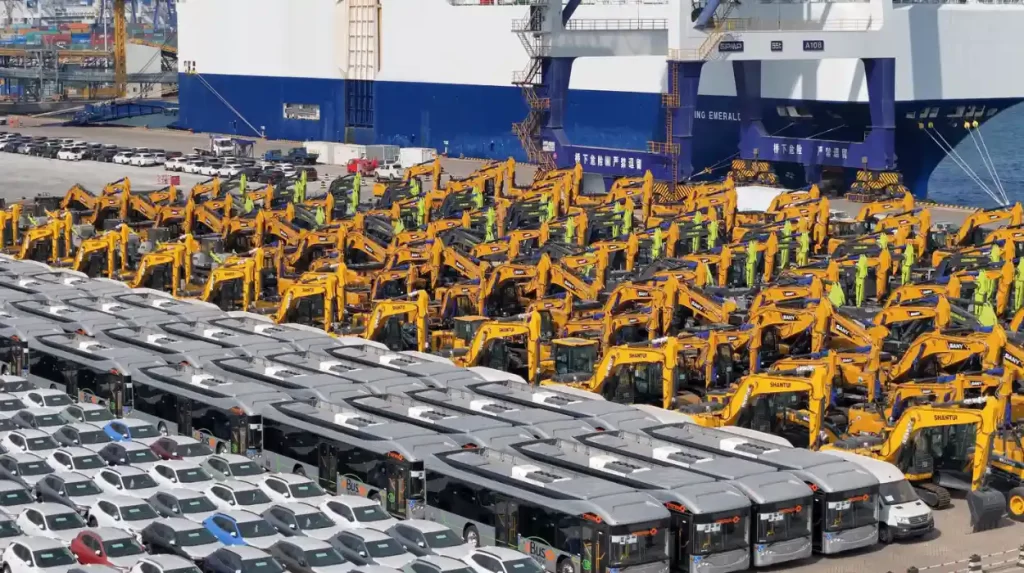

The phenomenon known as “China Shock 2.0” represents a significant shift in the global economic landscape, driven by China’s deepening integration into the world economy and the subsequent effects on various nations. While the initial China Shock in the early 2000s primarily impacted manufacturing sectors in advanced economies through increased competition and outsourcing, the second wave is redefining the global economic paradigm by emphasizing not only competition but also innovation, supply chains, and digital economies.
The first chapter of the China Shock saw further globalization through the offshoring of manufacturing jobs to China, where production costs were markedly lower. This led to significant job displacement in industries such as textiles, electronics, and machinery in Western countries. However, as China’s economy developed, a new dynamic emerged. The country’s shift toward high-tech industries and services is now altering the fabric of the global economy, showcasing its ambition to lead in sectors like artificial intelligence, renewable energy, and digital finance.
China Shock 2.0 is characterized by its dual nature. On one hand, it poses challenges to existing economic models in developed countries, where industries must pivot to adapt to new realities. On the other hand, it provides opportunities for innovation and collaboration. Countries worldwide are re-evaluating their economic strategies to not only compete with but also partner with China in various fields. This evolution encourages the creation of a parallel global economy, where China acts as both a competitor and a collaborator.
Furthermore, China’s Belt and Road Initiative (BRI) has become a key player in this new global landscape. By investing in infrastructure and trade routes across Africa, Asia, and Europe, China is reshaping global trade dynamics. This ambitious project not only enhances China’s economic reach but also brings emerging markets into a more integrated economic framework. As these countries benefit from Chinese investments, a new wave of economic interdependence has been established.
However, with opportunities come numerous challenges. The growing economic influence of China raises concerns about environmental sustainability and labor practices, as well as geopolitical tensions and trade disputes. Countries must navigate this complexity, leading to a more fragmented but interconnected global economy.
In conclusion, China Shock 2.0 is not merely a continuation of its previous iteration; it is a transformative force that is redefining global economic structures. Nations are compelled to adapt, innovate, and collaborate in ways that reflect the complex realities of the modern global economy. As we step further into this new era, a parallel economy is emerging—one where collaboration and competition coexist in shaping the economic future.
For more details and the full reference, visit the source link below:


