
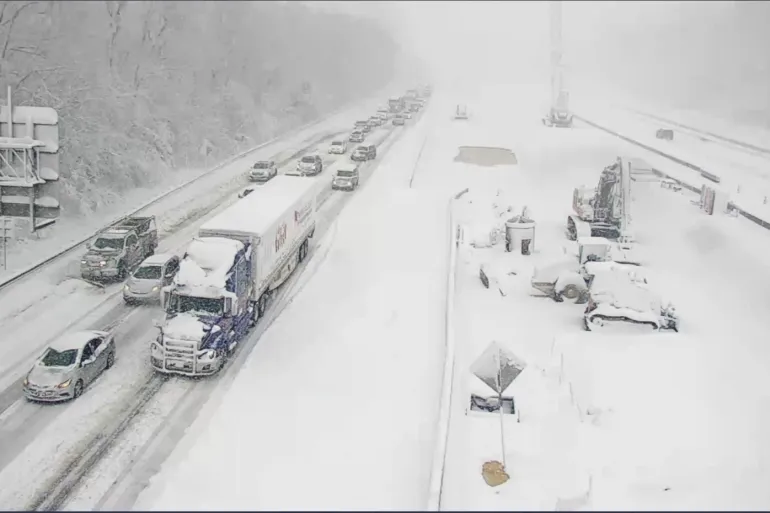


As the calendar turned to January 2026, the United States faced an unprecedented severe winter storm warning that gripped much of the nation. This extraordinary weather event, fueled by a rare combination of atmospheric conditions, was projected to impact millions as it swept across vast regions, bringing with it heavy snowfall, high winds, and dangerously low temperatures.
The storm, dubbed “Winterzilla,” began forming over the Rockies before moving eastward, rapidly intensifying as it progressed. Meteorologists noted that this storm was following a pattern not seen in decades, with polar vortex conditions contributing to extreme cold air surges across the Northern Plains. States like Minnesota, Wisconsin, and North Dakota braced for blizzard conditions, with snow accumulations expected to reach upwards of two feet in some areas. Heavy winds of 40 to 60 miles per hour further complicated matters, creating whiteout conditions and transportation hazards.
In preparation for the storm, local governments declared states of emergency, activating snow removal plans and urging residents to stay indoors. Schools, universities, and businesses in several states announced closures to ensure public safety. Emergency services prepared for increased demand, stocking up on sandbags, de-icing materials, and other essential supplies to tackle the anticipated impacts of the storm. The Federal Emergency Management Agency (FEMA) also positioned resources to assist in hard-hit areas, ready to provide aid to displaced individuals and facilitate recovery efforts.
As this winter storm loomed, the media played a crucial role in disseminating information, reminding citizens to prepare for power outages and to stock up on food and medical supplies. Social media buzzed with warnings and updates from meteorologists, with hashtags like #Winterzilla trending as people shared their experiences and photos of the evolving winter landscape.
Beyond immediate safety concerns, the broader implications of such a storm raised questions about climate change and extreme weather. Experts suggested that while winter storms were a natural occurrence, increasing temperatures could amplify their intensity and frequency in years to come. The struggle to grapple with this phenomenon underscored the necessity of sustainable practices and resilient infrastructure capable of withstanding more extreme weather events.
As Winterzilla swept across the nation, it served as a stark reminder of the power of nature and the importance of preparation in the face of adversity. It brought communities together in a shared experience, showcasing human resilience as people helped one another through this challenging time, navigating their way through the frigid chaos brought by one of the most severe winter storms in recent history.
For more details and the full reference, visit the source link below:


