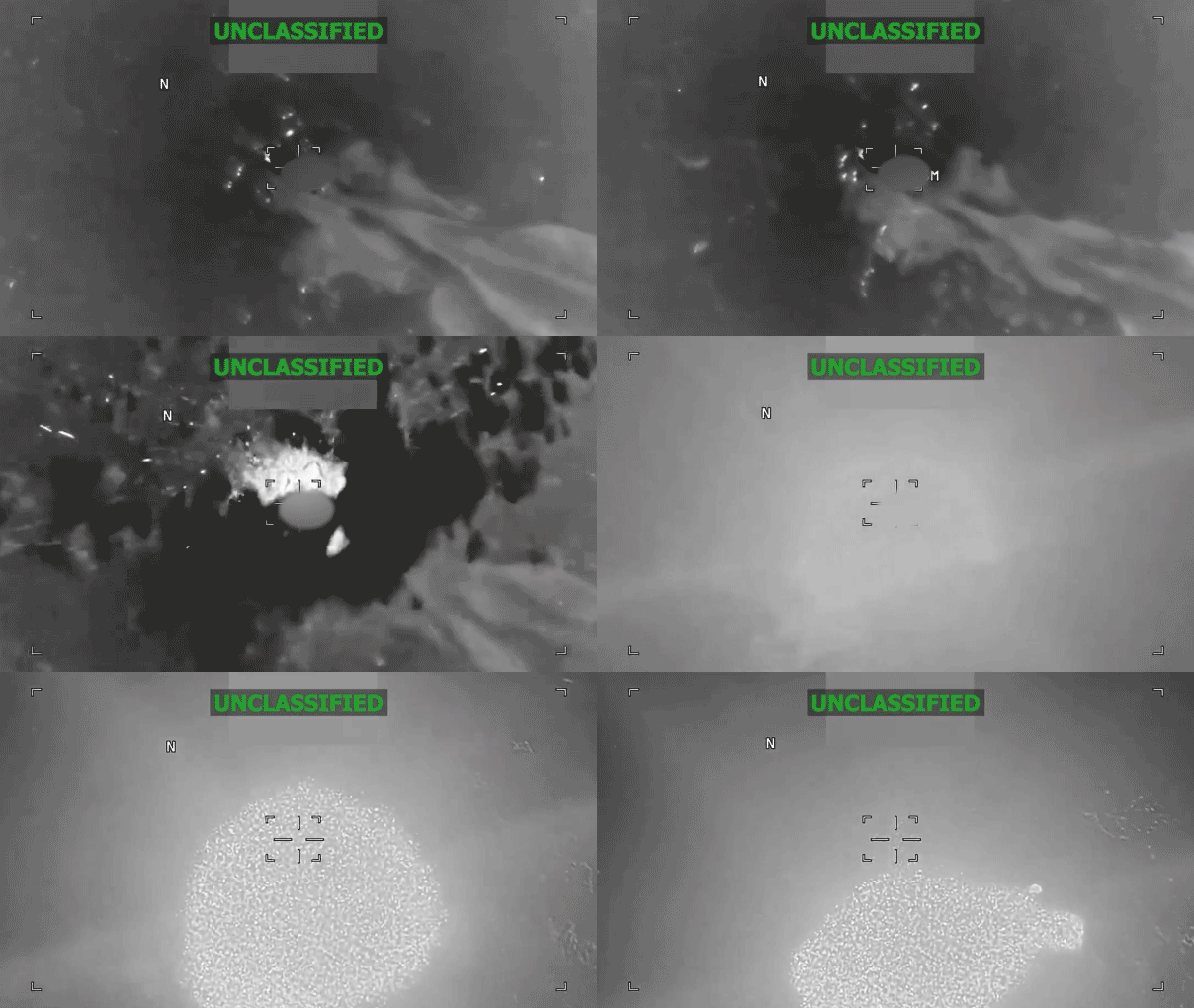

U.S. Military Strike Kills Three Drug Traffickers in the Caribbean
Introduction
In a significant operation that emphasizes the ongoing battle against drug trafficking, a U.S. military strike recently resulted in the deaths of three high-profile drug traffickers in the Caribbean. This operation not only highlights the U.S. government’s commitment to combating illegal drug trade but also addresses the broader implications for regional security and international relations.
The Context of Drug Trafficking in the Caribbean
The Caribbean region has long been a pivotal hub for drug trafficking. Its proximity to the United States, combined with historical challenges related to governance and law enforcement, makes it an attractive route for traffickers. Cartels often exploit the region, using it as a transshipment point to facilitate the movement of narcotics such as cocaine and marijuana into the U.S. market.
The Role of the U.S. Military
The U.S. military has increasingly engaged in operations aimed at dismantling drug networks. This strategy aligns with the broader goals of the U.S. government to reduce drug-related violence and destabilization in both domestic and international contexts. Military operations, supported by intelligence and local law enforcement collaboration, have been pivotal in tracking and apprehending key figures in the drug trade.
The Recent Strike: Details and Implications
Operation Overview
The recent military strike was coordinated as a part of a sustained effort to disrupt drug trafficking operations in the Caribbean. Specific details about the operation remain classified, but reports indicate that it involved precision airstrikes based on intelligence gathered over several months. The three traffickers killed were believed to be linked to a major drug cartel responsible for flooding U.S. streets with illegal substances.
Tactical Decisions and Execution
The operation’s success can be attributed to extensive planning and real-time intelligence sharing among U.S. military branches and local law enforcement agencies in the Caribbean. Utilizing advanced technologies, including surveillance drones and satellite imagery, the U.S. military was able to pinpoint the traffickers’ locations, ensuring minimal collateral damage during the strike.
Impact on Drug Trafficking Networks
Disruption of Operations
The elimination of these three traffickers is expected to disrupt operations significantly within their organization. The strike sends a clear message that U.S. authorities are willing to take decisive action against drug trafficking networks, potentially deterring other traffickers from operating in the region.
Ripple Effects on Regional Security
The aftermath of such operations often leads to a ripple effect across drug trafficking networks. Remaining members may engage in power struggles, leading to increased violence as factions vie for control. This could escalate tensions in the region and necessitate further military or law enforcement action to stabilize the situation.
U.S. and Caribbean Relations
Strengthening Partnerships
The U.S. military’s commitment to combating drug trafficking strengthens its partnerships with Caribbean nations. Collaboration is essential not only for operational success but also for building trust and enhancing regional capacity to fight such crimes. Improved relations can lead to joint training programs, intelligence sharing, and logistical support for local law enforcement.
Addressing Root Causes
It is also crucial to address the root causes of drug trafficking. Poverty, lack of education, and limited economic opportunities are factors that fuel recruitment into drug cartels. Collaborative efforts between the U.S. and Caribbean nations must extend beyond military action to include social programs aimed at reducing these vulnerabilities.
Legal and Ethical Considerations
Justification of Military Actions
While military action is justified in the context of combating drug trafficking, it raises legal and ethical questions. The sovereignty of Caribbean nations is an important consideration, and any military involvement must respect local laws and norms.
Civilian Safety
Efforts to minimize civilian casualties are paramount during such operations. The U.S. military’s emphasis on precision strikes aims to ensure that innocent lives are protected, and the possibility of collateral damage is mitigated.
The Future of Drug Enforcement in the Region
Continual Military Presence
Given the complexities of drug trafficking and evolving methodologies employed by traffickers, a continued military presence in the region may be necessary. This includes a recurring assessment of tactics and partnership dynamics with local law enforcement.
Innovation in Drug Enforcement Strategies
Innovative approaches, such as better intelligence-sharing protocols and technology utilization, can enhance enforcement efforts. By staying ahead of traffickers, law enforcement agencies can create more effective counter-strategies, ultimately reducing drug supply and demand.
Conclusion
The U.S. military strike that resulted in the deaths of three drug traffickers in the Caribbean underscores the determination to combat the pervasive issue of drug trafficking. While the immediate impact is notable, the long-term effects on regional stability, U.S.-Caribbean relations, and the future of drug enforcement strategies must be carefully monitored. Continued cooperation, innovative solutions, and ethical considerations will be crucial in shaping the future landscape of drug enforcement in the Caribbean region.