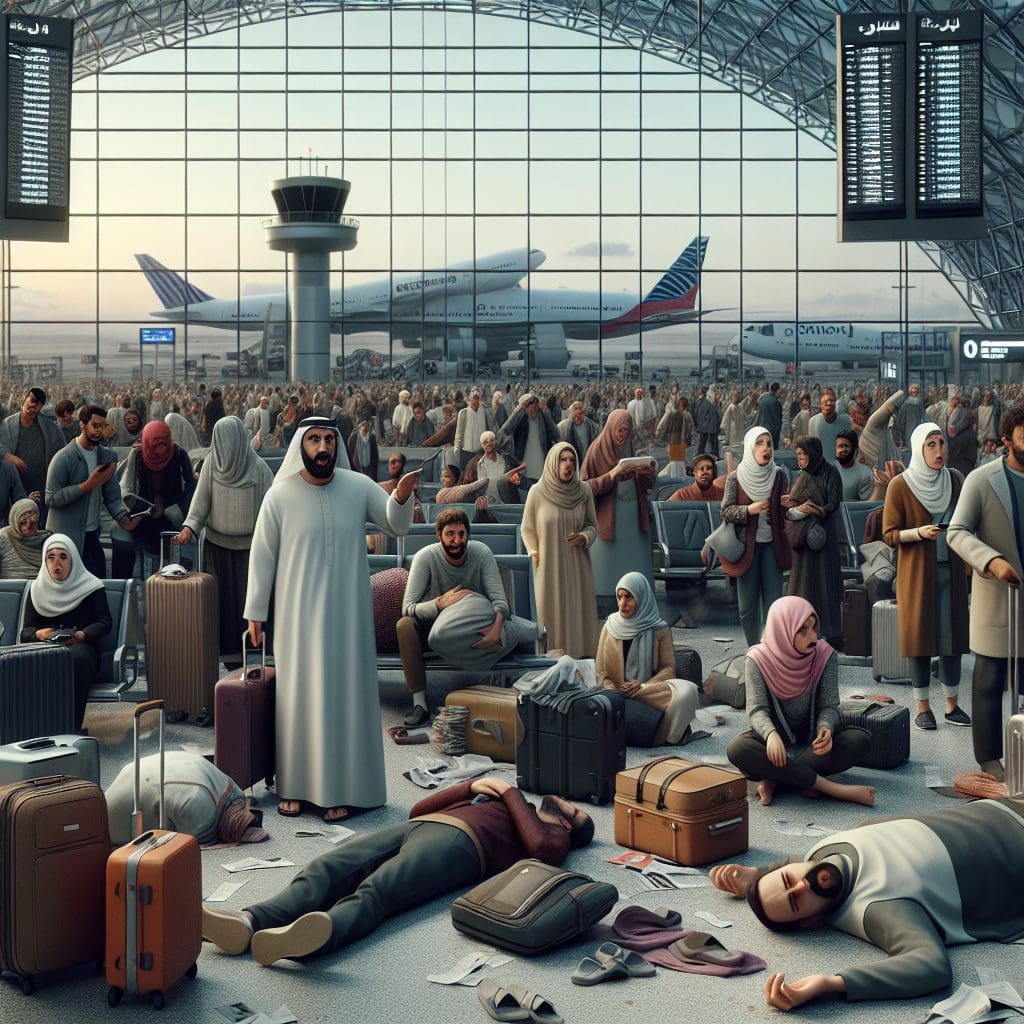

In the wake of escalating tensions in the Middle East, Americans find themselves facing unprecedented challenges as airspace closures complicate travel plans. The region, often a hub for tourists and expatriates, has become increasingly volatile, prompting numerous governments, including the U.S., to issue travel advisories and restrictions.
As flights are canceled and routes are rerouted, the impact on American travelers is profound. Many had planned trips for business, leisure, or to visit family, only to discover that borders are closed and airports are eerily quiet. Airlines, grappling with safety concerns, have adjusted their schedules, leaving passengers stranded in limbo. This predicament amplifies the anxiety of those affected, who often feel helpless in the face of geopolitical turmoil.
The ripple effects extend beyond individual travel woes. Businesses reliant on travel to the Middle East are experiencing disruptions, which could lead to significant financial losses. For many firms, the ability to establish and maintain international relationships hinges on face-to-face meetings, which are now in jeopardy. The uncertainty around travel patterns is affecting commerce as companies scramble to adapt to sudden changes that disrupt logistics, partnerships, and an essential flow of operations.
Families trying to reunite find themselves frustrated by the burgeoning restrictions. With many Americans living abroad in the Middle East due to work or personal reasons, the barriers to travel produce anxiety and emotional distress. The chaos resulting from airspace closures adds a layer of fear not only related to safety but also concerning emotional connections with loved ones.
Moreover, the travel challenges compound existing issues for American citizens abroad. As borders tighten, the avenues for obtaining assistance or repatriation become complex and bureaucratic. The U.S. government has been working to facilitate the return of its citizens, but efforts can be hampered by lack of available flights or safe ground transport. This sense of urgency, accompanied by rising costs and availability of accommodations, adds layers of stress for those stuck far from home.
In essence, the closure of airspace and shifting travel regulations reflect a broader context of instability in the region. For Americans caught in this predicament, the impact is felt on personal, economic, and emotional levels. Navigating through these uncharted waters, individuals must exercise patience and resilience, while hoping for a swift resolution to the ongoing crises that have transformed their travel plans from simple itineraries into elaborate paths fraught with uncertainty.
For more details and the full reference, visit the source link below: