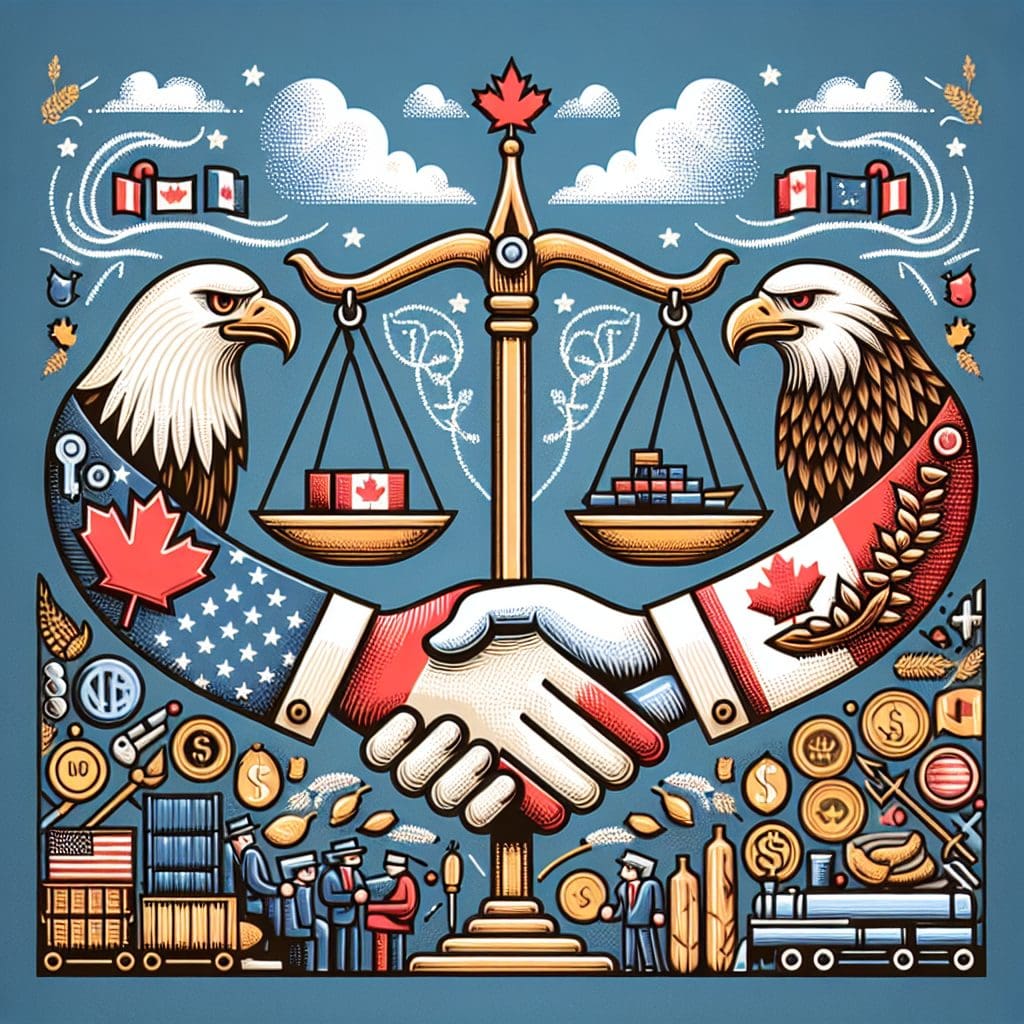

Canada enjoys several key advantages in tariff and trade negotiations with the United States, bolstered by its geographic location, economic stability, and strategic trade frameworks. These strengths position Canada favorably in discussions with its largest trading partner.
One of Canada’s most significant advantages lies in its geographical proximity to the U.S. This closeness facilitates extensive cross-border trade, characterized by supply chains that are deeply integrated. As of recent reports, the U.S. is Canada’s largest trading partner, accounting for approximately 75% of Canada’s exports. This reliance creates a mutual dependence that American policymakers recognize; disruptions to this flow could have detrimental effects on both economies. Consequently, Canada holds leverage in negotiations, as a stable and cooperative trading relationship benefits both parties.
Moreover, Canada possesses a diversified economy, which offers negotiation flexibility. With strong sectors in natural resources, technology, and manufacturing, Canada can negotiate from a position of strength. The ability to export essential goods, including energy and agricultural products, means that Canada has key offerings that might deter the U.S. from imposing stringent tariffs or changing favorable trade terms. Canada can leverage these goods as bargaining chips during negotiations, thereby ensuring that their trade interests are safeguarded.
In addition, Canada has established strong trade agreements with other countries, including the Comprehensive and Progressive Agreement for Trans-Pacific Partnership (CPTPP) and the Canada-European Union Comprehensive Economic and Trade Agreement (CETA). These agreements not only enhance Canada’s global trade relationships but also allow it to present alternative markets to U.S. companies. This diversification reduces Canadian dependency on the U.S. market, which can serve as a counterweight in trade negotiations—effectively reminding U.S. negotiators that Canada has other viable options to explore.
Canada’s emphasis on fair trade practices also puts it in a favorable light during negotiations. With a strong reputation for adhering to international trade norms and regulations, Canada can attract support from other trading nations, amplifying its stance against unilateral actions from the U.S. This reputation fosters goodwill and increases the likelihood of achieving favorable terms in trade agreements.
Finally, the political climate in Canada often encourages stability and continuity, making it an attractive partner in negotiations. Canadian leadership has historically prioritized collaborative international relationships, which appeal to U.S. stakeholders focused on a stable and predictable trading environment. Maintaining this diplomatic approach ensures that Canada remains a trusted partner in discussions, adding to its negotiation prowess.
In conclusion, Canada’s geographical proximity, diversified economy, global trade agreements, commitment to fair practices, and stable political environment collectively bestow significant advantages in tariff and trade negotiations with the United States. As Canada continues to navigate the complexities of trade, leveraging these strengths will be vital to maintaining favorable terms with its southern neighbor.
For more details and the full reference, visit the source link below: