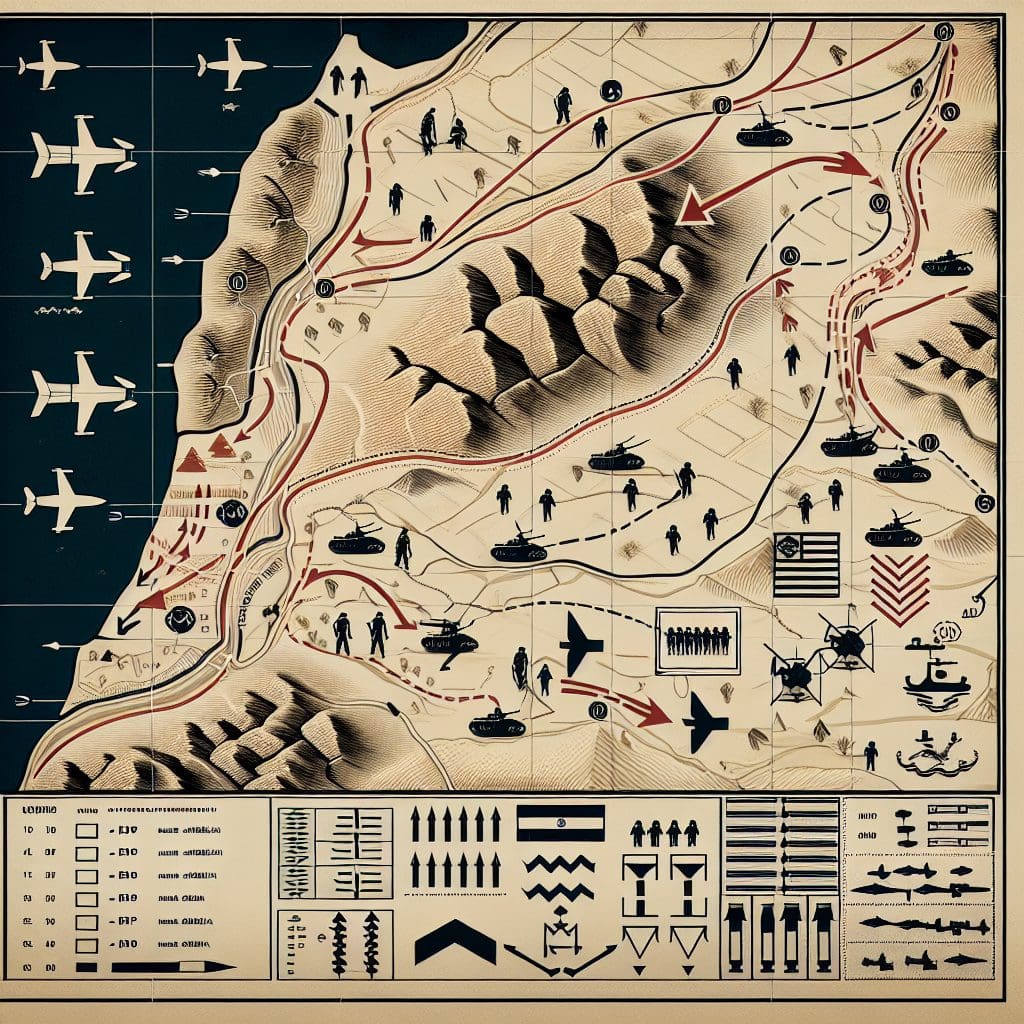

Israel’s defense chief has recently unveiled a new military strategy focused on occupying a section of southern Lebanon, a significant development that has drawn widespread attention and concern. This strategy reflects the complexities of the geopolitical landscape in the region, particularly amid historical tensions between Israel and Lebanon.
The decision to push deeper into southern Lebanon is rooted in various security considerations. Israel’s defense establishment cites ongoing threats from Hezbollah, the Iran-backed militant group that has maintained a strong presence along the Lebanon-Israel border. Hezbollah’s military capabilities have expanded in recent years, including the acquisition of advanced weaponry, which poses a direct threat to Israeli civilians and soldiers. This new strategy aims to mitigate that threat by establishing a more prominent military foothold in southern Lebanon.
The implications of this strategy could be profound. Residents of southern Lebanon, already burdened by economic struggles and social unrest, may face further disruption. The region has been a flashpoint for conflicts between Israel and Hezbollah, and an Israeli occupation could exacerbate existing tensions and lead to renewed hostilities. The potential for civilian casualties and the displacement of populations are significant risks inherent in military operations, which could rally anti-Israel sentiments and unify disparate factions within Lebanon against a common enemy.
Internationally, this announcement has raised eyebrows. The United Nations and various global powers have called for restraint and dialogue, fearing that further military escalation could destabilize the already fragile balance in the Middle East. Lebanon’s government, which is struggling to maintain control over its territory, may find itself in a precarious position. The occupation of southern Lebanon could complicate its already strained relations with Hezbollah and other political entities within the country.
Furthermore, this military strategy might also impact Israel’s relationship with its allies, including the United States. While the U.S. has historically supported Israel’s right to defend itself, it must consider the broader implications of such an operation, which could alienate other nations in the Arab world and undermine ongoing diplomatic efforts aimed at negotiating peace in the region.
In conclusion, Israel’s defense chief’s announcement regarding the military strategy to occupy a section of southern Lebanon marks a significant escalation in military engagement. As the region grapples with the potential consequences, the global community watches closely, aware that any misstep could lead to wider instability in an already volatile area. Dialogues emphasizing peace and de-escalation remain paramount to avoid further conflict and to ensure the safety of civilians on both sides of the border.
For more details and the full reference, visit the source link below: