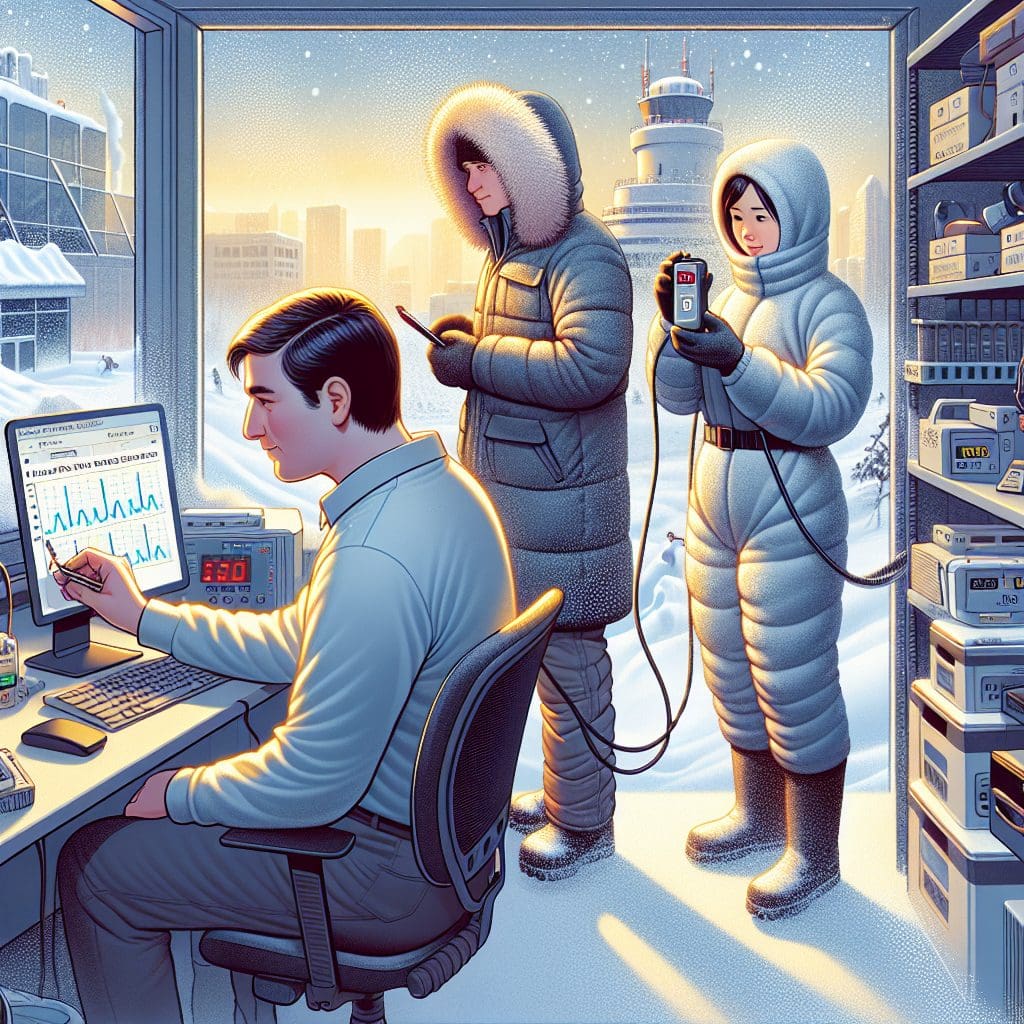

Q&A: University of Alberta Researcher Discusses Battery-Free Sensors for Monitoring Vital Signs in Extreme Cold Conditions
In a groundbreaking development, researchers at the University of Alberta are exploring innovative technologies aimed at enhancing monitoring of vital signs in extreme cold. Traditional battery-operated sensors with their inherent limitations, especially in polar climates, pose challenges in maintaining functionality and reliability. This innovative solution leverages energy harvesting techniques, eliminating the need for batteries, making it particularly suitable for remote and harsh environments.
Q: What motivated your research on battery-free sensors?
A: The motivation behind our research stems from the recognition of the increasing need for reliable monitoring systems in extreme weather conditions. Disasters, military operations, and scientific research in polar regions require real-time health assessments without the drawbacks of conventional battery-powered devices, which can fail in severe cold or require frequent replacements.
Q: How do these battery-free sensors work?
A: Our sensors use energy harvesting methods to power themselves. One prominent approach is using thermoelectric generators, which convert temperature differences into electrical energy. These sensors can autonomously collect and send vital sign data, such as heart rate and temperature, by harnessing the ambient energy around them. This eliminates the logistical burden of battery maintenance in remote areas.
Q: What are the key benefits of using these sensors in extreme environments?
A: The major benefits include enhanced reliability and sustainability. By removing batteries, we reduce the risk of device failure due to cold weather, ensuring consistent monitoring. Additionally, these sensors are designed for longevity and can operate for extended periods without human intervention, which is crucial during prolonged expeditions in isolated terrains.
Q: What potential applications do you foresee for this technology?
A: The applications are vast. They can be employed in mountaineering, where climbers can monitor their health during extreme ascents, or in Arctic research missions where scientists study climate change impacts. Furthermore, military operations in cold regions could benefit from consistent soldier monitoring, ultimately safeguarding personnel in adverse conditions.
Q: What challenges remain in the field?
A: While our preliminary results are promising, challenges remain, particularly in optimizing the sensors for various cold environments. Further research is needed to ensure accuracy and reliability under different temperatures and conditions. Additionally, enhancing data transmission speeds while maintaining energy efficiency is crucial for real-time monitoring.
Conclusion
The development of battery-free sensors represents a significant leap forward in health monitoring technology, particularly in extreme cold conditions. As research continues, the potential for improved safety and better health management in remote locations becomes increasingly viable, opening new frontiers for both scientific and practical applications.
For more details and the full reference, visit the source link below: