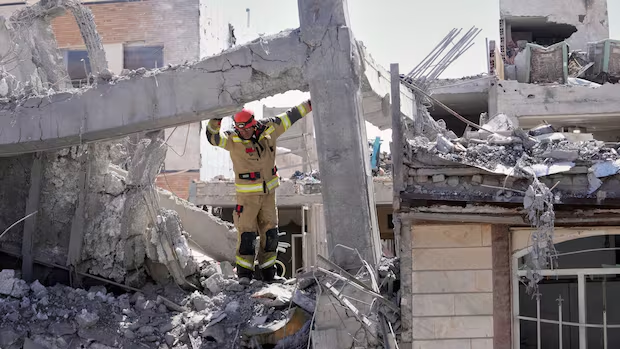

On a tense day in the Middle East, Tehran responded decisively to an Israeli assault on Iranian nuclear facilities by launching attacks on a Saudi military base. This reaction marks a significant escalation in regional tensions that have been brewing for years, with Israel perceiving Iran as a fundamental threat to its national security, particularly due to Iran’s nuclear ambitions and its support for militant groups in the region.
The Israeli strikes, which targeted key nuclear sites, were framed by Israel as preemptive actions aimed at thwarting Iran’s potential to develop nuclear weapons. Israel has long maintained a policy of military strikes against perceived existential threats, and its ability to conduct such operations is often bolstered by the support of its Western allies, particularly the United States. However, this aggressive posture has provoked strong responses from Iran, which views the attacks not just as an assault on its infrastructure, but as an affront to its sovereignty.
In retaliation, Tehran’s targeting of a Saudi military installation underscores the complex regional dynamics involved. Saudi Arabia, a Sunni-majority nation, has historically viewed Shiite Iran as its primary rival, leading to proxy conflicts across the region, including in Yemen and Syria. By striking a Saudi base, Iran aimed to send a message not only to Israel but also to its regional adversaries, reaffirming its capability and willingness to respond forcefully to perceived attacks.
This incident reflects a broader pattern of escalating hostilities in the region, wherein attacks and retaliations can quickly spiral into broader conflict. Iran’s military strategy has often involved asymmetric warfare, utilizing proxy forces and cyber capabilities to counterbalance its adversaries, particularly given the technological and military superiority of Israel and the U.S. The recent events could lead to heightened security measures in Saudi Arabia and increased military cooperation between Gulf states and Israel, as they perceive the growing threat from Iran.
Furthermore, this escalation poses significant risks to stability across the Middle East. International diplomatic efforts to curtail hostilities may be jeopardized as nations assess their military postures in light of the new realities. The potential for miscalculation remains high, as regional actors navigate the precarious landscape of alliances and hostilities.
As the situation develops, it becomes evident that the interlinked nature of Israeli, Iranian, and Saudi interests will continue to shape the geopolitical landscape of the Middle East. The stakes are enormous, not just for the countries involved, but for global security as well, making diplomatic engagement and conflict resolution more critical than ever.
For more details and the full reference, visit the source link below: