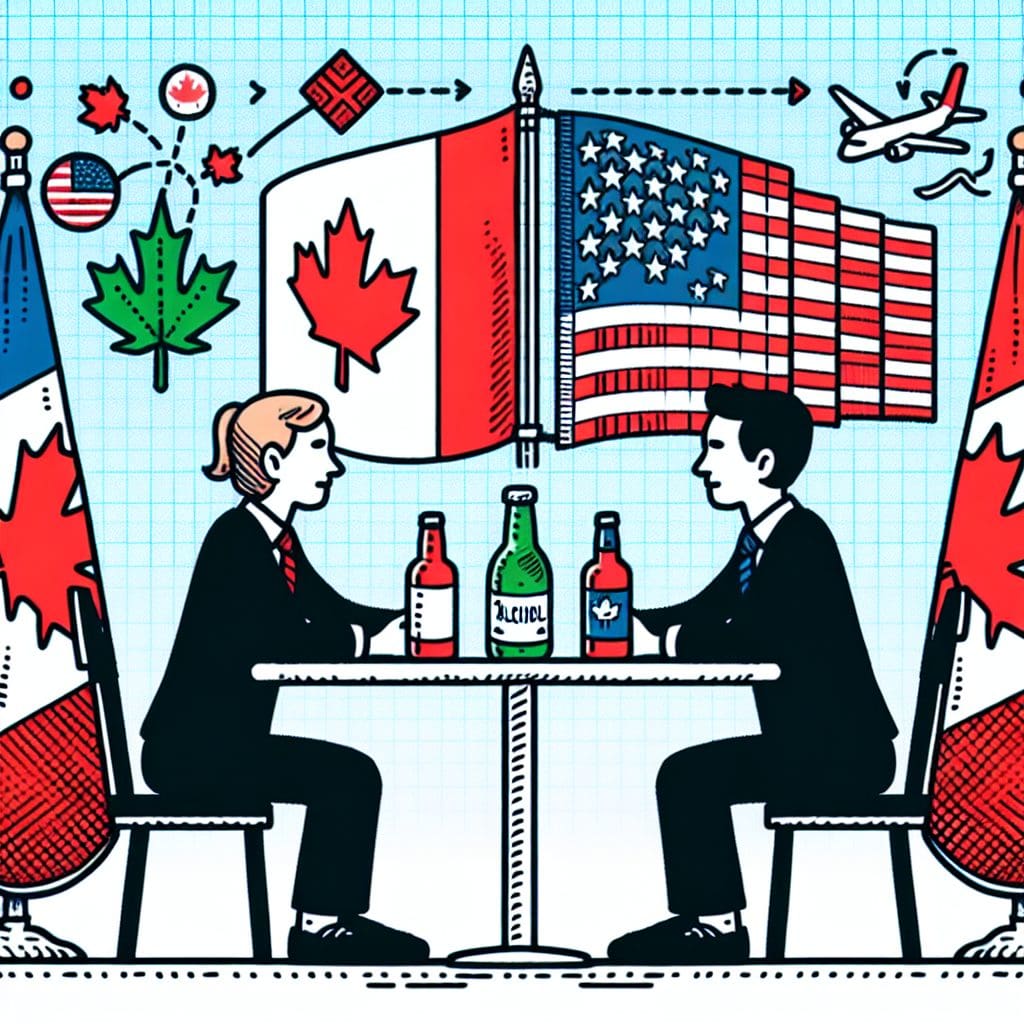

In a recent report detailing various trade issues between the United States and its northern neighbor, Canada, the focus has been drawn to two significant areas: American alcohol restrictions and Canada’s ‘Buy Canadian’ policies. These matters have been highlighted as barriers to trade, potentially impacting economic relations and consumer choices on both sides.
Alcohol distribution and sales in the U.S. are subject to a patchwork of state-level regulations, which can make it difficult for Canadian producers to enter the market. Many states enforce strict control over both the sale and distribution of alcohol, often limiting access to state-run liquor stores or imposing tariffs that increase the cost of Canadian products. This has resulted in a level of inconsistency that can deter Canadian brands from expanding into U.S. markets, ultimately restricting variety and driving up prices for consumers. Moreover, lengthy licensing and approval processes can further complicate matters, pushing many Canadian distillers and brewers to seek alternative routes.
On the flip side, Canada’s ‘Buy Canadian’ policies advocate for the purchase of domestically produced goods, including alcohol, as a means to bolster local economies. While these policies may aim to protect national industries and jobs, they can stifle competition from U.S. imports, limiting consumer choice and potentially raising prices. Critics argue that such protectionism not only hinders American businesses but also contradicts the spirit of free trade agreements like the USMCA (United States-Mexico-Canada Agreement). This raises concerns about the long-term implications of such policies on U.S.-Canada relations and the broader North American market.
Both nations are navigating a complex landscape of trade relationships, where local policies can impact bilateral trade dynamics. The U.S. government has taken notice of these restrictions and trade barriers, which they assert could hinder economic growth. The potential for stronger collaboration in the alcohol market presents a unique opportunity for both countries to review and possibly revise the regulations affecting alcohol sales and distribution. A balanced approach that addresses local concerns while also promoting international trade may help create a more favorable environment for businesses and consumers alike.
As discussions continue, it is crucial to strike a balance between protecting domestic industries and fostering a competitive market that benefits consumers in both countries. Exploring progressive trade solutions could pave the way for a more integrated market that embraces the diversity and quality of products available in North America while respecting individual national contexts. In summary, the identification of these trade issues highlights the ongoing challenges and opportunities that the U.S. and Canada face in maintaining a robust economic partnership.
For more details and the full reference, visit the source link below: