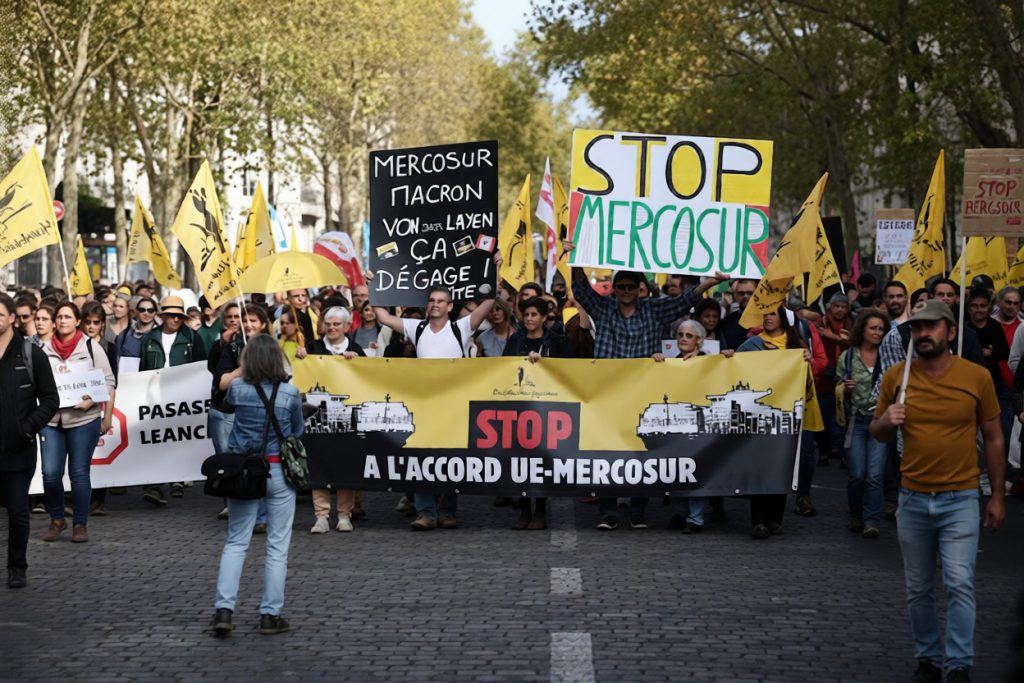

The Belgian farmers’ protests against the EU-Mercosur trade deal have escalated into significant unrest, highlighting deep-seated tensions between agricultural communities and governmental policies. The proposed agreement between the European Union and Mercosur countries—comprising Brazil, Argentina, Paraguay, and Uruguay—promises to open trade but has incited fears among farmers regarding competition, environmental concerns, and sustainability.
Farmers argue that the deal threatens their livelihoods by allowing South American beef and agricultural products to flood the European market at lower prices, undermining local production. With these imports typically produced under less stringent environmental and labor regulations, Belgian farmers worry about being unable to compete. The protests, which began peacefully, have seen escalating tensions as farmers engage in direct action, including blockades of roads and markets, symbolizing their frustration with the perceived inaction from EU policymakers.
The underlying issues are multifaceted. First, the environmental implications of increased imports from a region notorious for deforestation and land degradation are alarming to many. Activists argue that these trade practices could lead to a significant increase in carbon emissions at a time when Europe is striving to meet its climate goals. Furthermore, the farmers fear that the deal may undermine European agricultural standards, eroding consumer trust and safety.
In addition to economic and environmental concerns, there are socio-political dimensions contributing to the unrest. Farmers feel marginalized in the decision-making process, often perceiving EU institutions as detached from the realities of rural life and agriculture. The sentiment that policymakers prioritize corporate profits over local communities stokes resentment and distrust.
As the protests turn violent, drawing in clashes with law enforcement, the situation is becoming increasingly concerning. The escalation raises questions about how to reconcile trade agreements with the needs and rights of local farmers. While negotiators tout the benefits of such deals for economic growth and international relations, the farmers’ plight reflects the broader discontent in rural areas across Europe where agriculture remains a critical industry.
Fostering dialogue between the farmers, policymakers, and trade negotiators is essential for addressing these grievances. A more equitable trade framework that considers local standards and addresses the sustainability issues is crucial for harmonizing the interests of both farmers and consumers. Without this, the backlash seen in Belgium may echo across other European nations facing similar challenges, hinting at a larger crisis in agricultural policy and international trade relations.
The Belgian farmers’ protests serve as a stark reminder that trade deals cannot be pursued in isolation from the realities faced by those they impact directly. It underscores the urgent need for more inclusive approaches to agricultural policies in an increasingly globalized economy.
For more details and the full reference, visit the source link below: