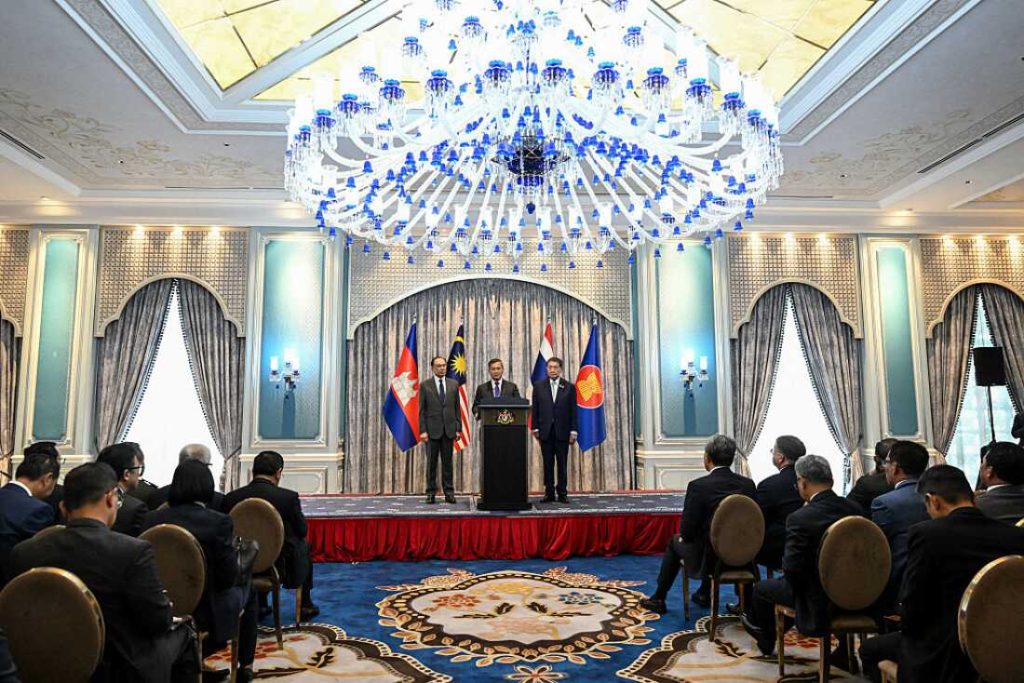

The longstanding dispute between Thailand and Cambodia has often flared up into violent confrontations, particularly centering around the ancient Preah Vihear Temple and surrounding areas. This historical conflict is deeply rooted in national pride, territorial claims, and cultural heritage, making the ceasefire agreements between the two countries incredibly fragile.
The Preah Vihear Temple, a UNESCO World Heritage site, serves as a symbol of national identity for both nations. While the International Court of Justice (ICJ) ruled in 1962 that the temple belonged to Cambodia, disputes over the surrounding territory have sparked tensions. In the late 2000s, clashes escalated, resulting in military skirmishes that raised concerns over regional stability.
Attempts at ceasefire agreements, often brokered by international entities, have been met with varying degrees of success. Despite the promise of peace, both countries have found it challenging to maintain a sustainable resolution. Military posturing, nationalistic rhetoric, and political grandstanding often derail ceasefire efforts, leading to renewed violence. The political landscapes of both countries complicate matters as leaders may leverage nationalism to bolster domestic support, further entrenching their positions.
In recent years, there have been additional triggers for conflict, including illegal logging in the disputed area, encroachments, and local protests. These incidents can easily escalate into broader military confrontations, especially in a region where historical grievances run deep. Attempts at dialogue, while noble, falter when faced with populist sentiments and the desire to appease hardliners.
International observers have emphasized the importance of cooperation over conflict, advocating for dialogue and diplomacy as the primary means for resolution. Initiatives such as joint development projects in disputed areas have been proposed to foster collaboration and reduce tensions. However, these suggestions require a level of political will and mutual trust that has been historically absent.
The geopolitical implications of the dispute are also significant, as ASEAN (Association of Southeast Asian Nations) member states seek to promote stability and peaceful coexistence. The involvement of external powers, particularly China and the United States, adds another layer of complexity, as both nations may strategically leverage the dispute to further their own interests in Southeast Asia.
Ultimately, breaking the cycle of ceasefire disputes between Thailand and Cambodia will require committed leadership willing to prioritize peaceful resolution over nationalistic fervor. This path is fraught with challenges, but the potential for a lasting peace remains possible if both nations can find a way to navigate their historical grievances. Only through sustained diplomacy and mutual understanding can they hope to achieve lasting stability in the region.
For more details and the full reference, visit the source link below: