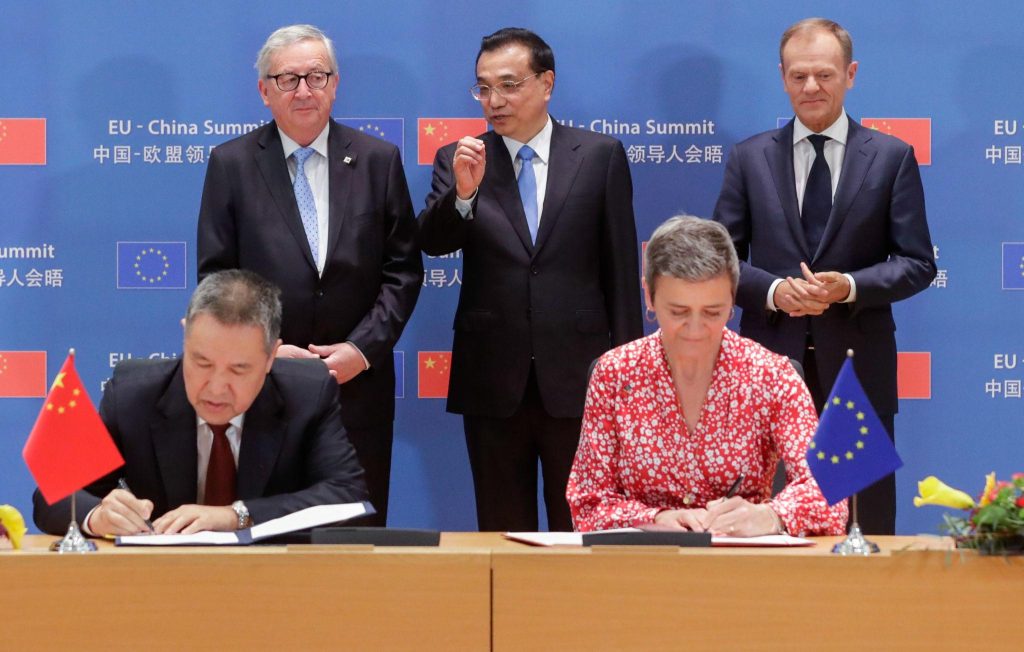

As of 2026, China-EU trade relations are at a critical crossroads marked by both challenges and opportunities. The complex interdependence shaped over the past few decades has reached a point where geopolitical tensions, regulatory differences, and economic policies necessitate a reevaluation of this vital partnership.
Historically, China and the European Union have enjoyed robust trade ties, with China being the EU’s largest trading partner. In 2022, bilateral trade reached unprecedented levels, underscoring the mutual benefits derived from their relationship. However, recent geopolitical tensions—particularly regarding human rights issues in Xinjiang, democracy questions in Hong Kong, and China’s assertiveness in the South China Sea—have put significant strain on these relations. The EU has begun to adopt a more cautious stance towards China, focusing on securing supply chains and strengthening its trade policies to safeguard its economic interests while promoting ethical governance.
The need for sustainable and responsible trade practices is also becoming increasingly prominent. The EU has introduced regulations aimed at ensuring transparency and accountability, particularly concerning environmental standards and labor rights. These new frameworks may complicate trade with China, where standards may differ significantly. As the EU pushes for greener technologies and sustainable investments, it must navigate the delicate balance between protecting its values and reaping the economic benefits of its extensive trade partnership with China.
In 2026, this balancing act reaches a pivotal moment. The implementation of the EU’s Carbon Border Adjustment Mechanism could challenge Chinese exporters by imposing tariffs on goods that do not meet EU environmental standards. This could intensify the ongoing debate about green technology and sustainability, compelling China to innovate or risk losing its competitive edge in European markets.
Moreover, the global geopolitical landscape, influenced by US-China tensions, is likely to further complicate roles. The EU seeks to maintain its strategic autonomy and may find itself caught between rival powers. The increasing push for partnerships in the Indo-Pacific region by both the US and China requires the EU to assert its position, thereby reshaping its trade policies.
Looking forward, the EU and China must recognize that a breakdown in trade relations could have severe economic consequences globally. Mutual cooperation on climate change, public health, and technological advancement could offer pathways to strengthen ties. Establishing frameworks for dialogue that promote transparency and shared goals will be essential in navigating this turning point in their relationship. As both sides adapt to a rapidly changing global economy, the choices made today will significantly influence the trajectory of China-EU trade relations for years to come.
For more details and the full reference, visit the source link below: