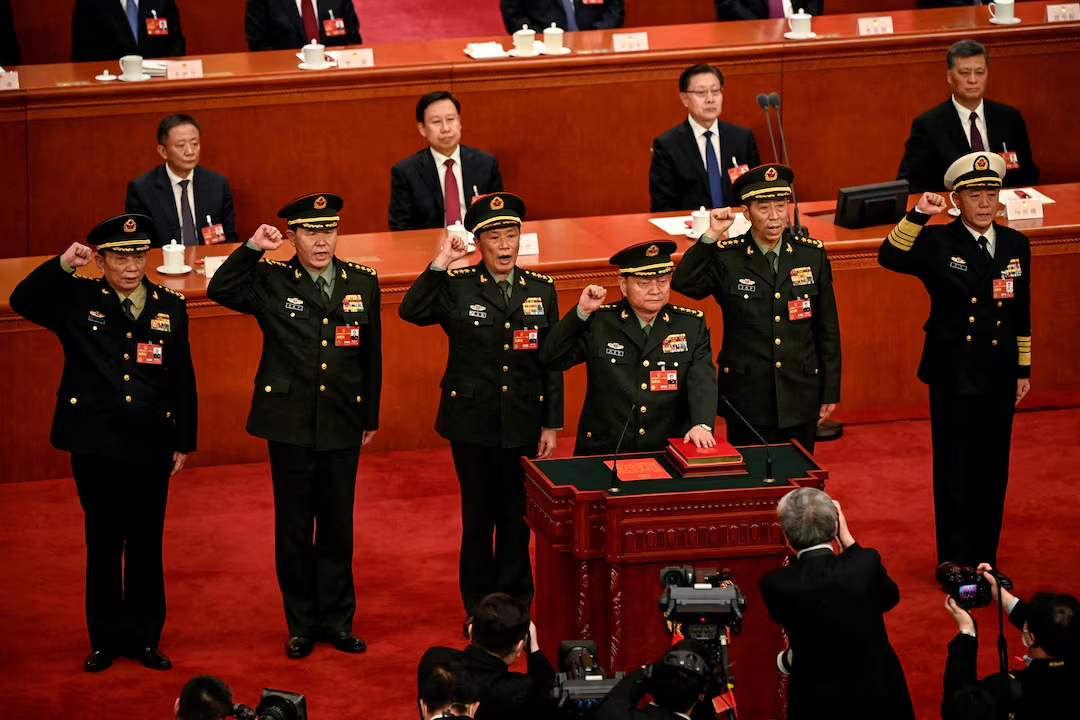

The year 2026 has emerged as a pivotal moment for China, as a leadership crisis unfolds, shaking the very foundations of Beijing’s political core. This crisis has not only raised questions about the stability of the Chinese Communist Party (CCP) but has also sent ripples through the international community, prompting analysts to closely scrutinize the potential implications for global geopolitics.
At the heart of the crisis is a confluence of economic stagnation, rising social unrest, and an increasingly assertive citizenry. After years of rapid growth, China’s economy has encountered significant headwinds, resulting in unemployment and discontent among various demographic groups. As young graduates struggle to find work and the middle class grapples with rising living costs, disillusionment towards the ruling party has seeped into public consciousness. This economic malaise is compounded by a perception that the government is failing to address the key issues affecting the populace, leading to a loss of faith in leadership.
Internally, the power struggle within the CCP has intensified as factions vie for influence in the wake of President Xi Jinping’s increasingly authoritarian rule. Reports of dissent among party members have become more frequent, with rising calls for transparency and accountability. This discord is not merely a sign of weakened leadership but also reflects a broader desire for reform within the ranks of the party itself. As various factions grapple for dominance, the implications for policy-making and governance become increasingly uncertain.
The leadership crisis in China has also brought issues of national security to the forefront of political discourse. Heightened tensions in the Taiwan Strait and ongoing territorial disputes in the South China Sea have made diplomatic engagements more precarious. As the leadership struggles to maintain stability at home, the capacity for China to assert its interests internationally has also come under scrutiny. This vulnerability is heightened by the perceptions of external threats, whether they be from the United States or regional rivals, which complicates Beijing’s strategic calculations.
Public sentiment is a crucial factor in this crisis. Social media has become a double-edged sword; while it provides an avenue for citizens to voice grievances, it also poses significant risks to the regime’s control over information. In a rapidly changing digital landscape, the CCP’s attempts to maintain a tight grip on censorship are being challenged by the rising tide of public opinion.
In conclusion, the leadership crisis of 2026 marks a transformative era for China as internal and external pressures converge. As the CCP confronts rising dissent and economic challenges, the stability of China’s political landscape hangs in the balance. The ramifications of this crisis will undoubtedly shape not only China’s future but also its role in the global arena. As observers look to Beijing for resolution, the world watches with bated breath.
For more details and the full reference, visit the source link below: