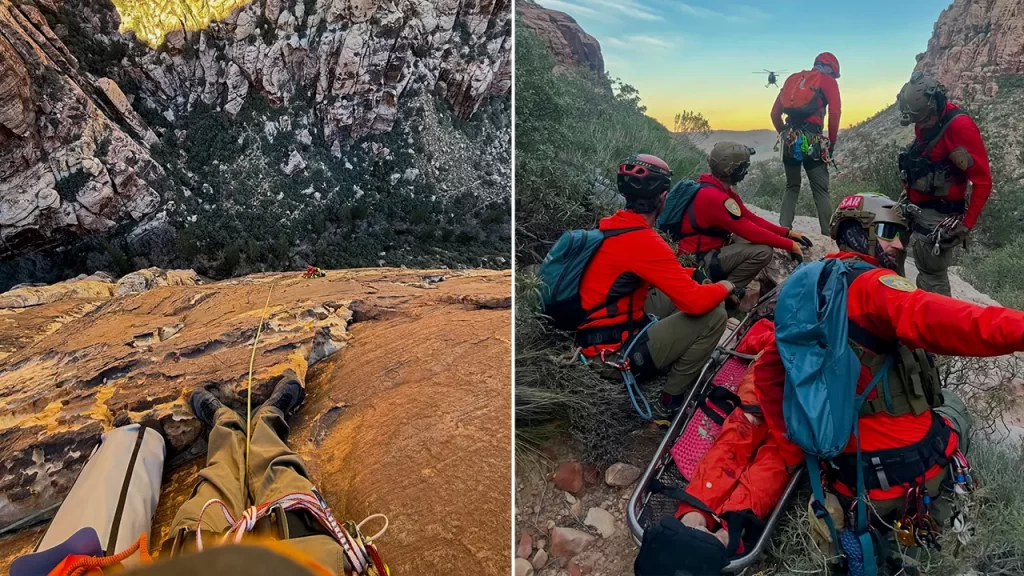

Climber Stranded 600 Feet Up Nevada Rock Face Rescued in 7-Hour Operation
Introduction
In a remarkable display of courage and teamwork, a climber stranded 600 feet up a rock face in Nevada was successfully rescued after a grueling seven-hour operation. This event not only highlights the dangers associated with rock climbing but also underscores the importance of preparedness and teamwork in rescue operations. In this article, we will delve into the details of the rescue operation, the challenges faced, and the significance of safety protocols for climbers.
The Incident: A Climbing Mishap
On a seemingly routine climbing day, the climber, identified as 32-year-old Jamie Thompson, encountered unexpected challenges while scaling the daunting rock face near Red Rock Canyon National Conservation Area. As Thompson progressed upward, a series of equipment failures and changing weather conditions led to a critical situation, leaving him stranded and unable to descend safely.
Despite his climbing experience, the unforeseen circumstances proved to be formidable. Out of options and with dwindling daylight, Thompson’s situation became increasingly dire, prompting him to call for help.
The Call for Help
Upon receiving the distress call, emergency services were quickly mobilized. Authorities dispatched a team of skilled rescue personnel specially trained in high-altitude operations. Within minutes, a helicopter accompanied by a rescue team was en route to the scene, ready to tackle the complexities of a high-altitude rescue.
Rescue Operation: A Race Against Time
Navigating the Challenges
The rescue team faced numerous challenges throughout the operation. The first obstacle was the environmental conditions. Winds were stronger than anticipated, and a chilling chill settled in as night fell. Visibility began to diminish, which complicated their efforts.
Additionally, the rock face itself presented a daunting challenge. While rescuers are trained for such situations, the steep incline and precarious positioning added layers of difficulty.
The Approach
Rescue helicopters are outfitted with specialized equipment and personnel for high-altitude rescues. The team first deployed a rescue expert to assess the situation up close. Following this, they communicated with Thompson to establish his condition and outline a plan. Thompson, although shaken, maintained his composure, providing valuable information about his location and the gear he had on hand.
Utilizing Technology for Safety
Modern Rescue Equipment
The technology employed by rescue personnel was pivotal in facilitating a successful operation. Rescuers utilized high-definition cameras and drones to survey the area, gaining insights that would prove crucial in formulating a strategy.
Communication is Key
Maintaining constant communication with Thompson was vital throughout the rescue operation. Rescuers provided him with tips on how to stay warm and focused, emphasizing that he would be brought back safely.
The Successful Rescue
After several hours of meticulous planning and execution, the rescue team successfully reached Thompson. A harness was securely fastened around him, and he was hoisted to safety using a helicopter winch.
As he was lifted off the rock face, the relief was palpable—not just for him, but for the rescue team that had put everything on the line to save a fellow climber.
Conclusion of the Operation
The entire rescue operation took approximately seven hours. Once safely back on solid ground, Thompson was examined by medical personnel for minor injuries. His spirit, despite the ordeal, remained undaunted.
Lessons Learned: Emphasizing Safety Protocols
The Importance of Preparedness
This incident serves as a stark reminder of the risks associated with rock climbing. Climbers should always have the right equipment and ensure it’s in good condition. Regular checks on gear, knowledge of the climbing route, and awareness of weather conditions are vital.
Emergency Preparedness
Equipping oneself with knowledge on how to handle climbing emergencies, and understanding the importance of communication with rescue services can be lifesaving. Climbers should always inform someone of their route and expected return time.
Role of Rescue Teams
The role of well-trained rescue teams cannot be overstated. They are essential in ensuring that climbers in distress receive help swiftly and safely. This incident highlights their dedication, training, and crucial role in wilderness safety.
The Impact of Rescue on Climbing Community
The successful rescue operation has sent ripples throughout the climbing community. Climbers across various forums are discussing the importance of safety protocols and sharing best practices to mitigate risks.
Raising Awareness
This incident has also spurred discussions on awareness about climbing safety, equipment checks, and the necessity of climbing with a buddy. The climbing community is highlighting that while the thrill of rock climbing is exhilarating, it should always come with a strong emphasis on safety.
Conclusion: The Spirit of Adventure and Responsibility
While rock climbing offers the thrill of adventure and the beauty of nature, it also demands respect for its inherent risks. The recent rescue operation in Nevada serves as a reminder of the balance between adventure and responsibility.
As climbers strap on their gear and chase the next challenging ascent, let this incident be a cautionary tale—one that emphasizes the readiness to seek help when needed, the importance of effective communication, and the strength of partnership with rescue teams.
In conclusion, as we celebrate the successful rescue of Jamie Thompson, let it inspire a renewed commitment to safety protocols in the climbing community, ensuring adventures can continue safely for all.