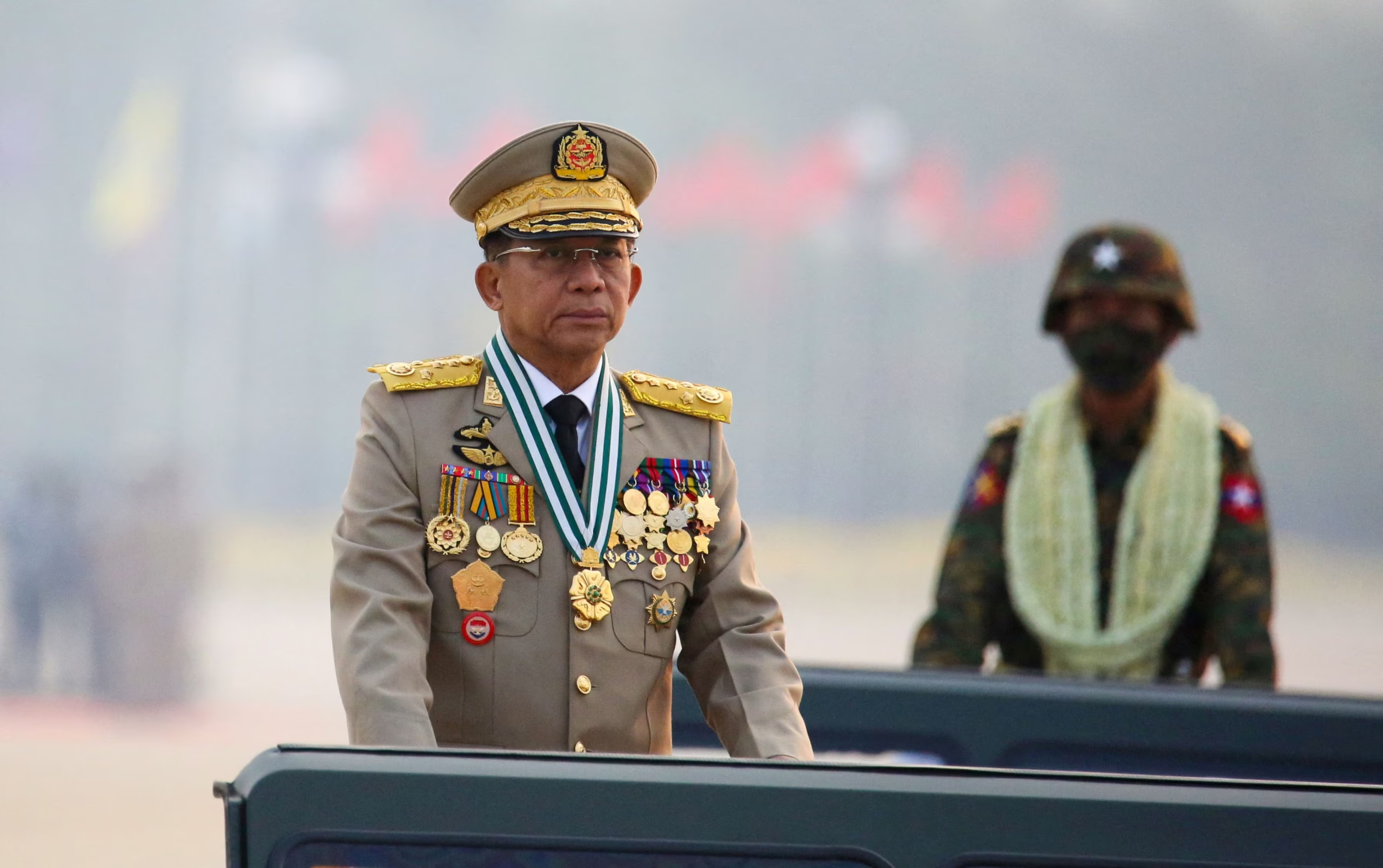

Myanmar’s election in 2023 has emerged as a pivotal moment, reflecting the ongoing struggle between military authority and democratic aspirations in a nation marred by political turmoil. Following the military coup in February 2021 that ousted the democratically elected National League for Democracy (NLD) government led by Aung San Suu Kyi, the political landscape has been marked by violence, repression, and civil disobedience.
This election is the first significant electoral event in Myanmar since the coup and is being closely scrutinized both domestically and internationally. The military, known as the Tatmadaw, has framed the election as a step towards restoring stability and legitimacy after what they claim was a disrupted transition of power. However, many political analysts and activists argue that the election is merely a façade designed to consolidate military control rather than a genuine effort to allow for democratic governance.
Under military rule, the political environment in Myanmar has grown increasingly oppressive. Civilian protests erupted following the coup, leading to a brutal crackdown by the military that has resulted in thousands of deaths and widespread human rights violations. Political dissidents, journalists, and activists have faced arrests and intimidation, creating a climate of fear. The military has actively worked to suppress opposition voices, leaving the electoral landscape heavily skewed in favor of pro-military candidates. This has raised significant concerns regarding the integrity and fairness of the election process.
International reactions to the upcoming election have been largely critical, with many countries and human rights organizations condemning the legitimacy of an election held under such circumstances. Sanctions have been imposed on military leaders, and the global community has expressed support for the pro-democracy movement within Myanmar. However, the Tatmadaw appears undeterred, determined to project an image of stability and governance despite widespread disapproval.
The election itself may serve only to reinforce existing divisions within the country. Ethnic minorities, who have often been marginalized in the political discourse, are voicing concerns that their issues may remain unaddressed. Additionally, armed resistance groups have gained traction in response to the military’s violent suppression of dissent, complicating the already volatile situation.
As Myanmar prepares for this critical election, the future remains uncertain. The desire for democratic reform is palpable among many citizens, yet the military’s grip on power poses a significant barrier. The outcome of the election may set the tone for Myanmar’s political trajectory in the coming years, either entrenching military rule further or reigniting hope for democratization in a country long plagued by conflict and instability.
For more details and the full reference, visit the source link below: