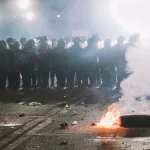

As we move deeper into 2026, the critical tensions between the United States and Iran have escalated alarmingly, signaling a rising global risk that could destabilize not only the Middle East but also international relations more broadly. After years of complex negotiations and intermittent conflicts, the situation has reached a boiling point, driven by a combination of geopolitical ambition, historical grievances, and strategic calculations.
The U.S. withdrawal from the Joint Comprehensive Plan of Action (JCPOA) in 2018 under the Trump administration set off a chain reaction that has severely strained relations. Despite attempts at renegotiation, the lack of a cohesive diplomatic framework has led to increased hostility, with both nations engaging in provocative military maneuvers. The U.S. has ramped up its military presence in the Persian Gulf, while Iran has retaliated by enhancing its ballistic missile capabilities and expanding its influence in neighboring regions, including Syria and Iraq.
These military tensions have broader implications for global security. As the U.S. bolsters its alliances with countries like Saudi Arabia and Israel, Iran finds itself forming deeper ties with nations opposed to Western influence, such as Russia and China. This has created a precarious balance of power in the region, resulting in proxy conflicts and heightened risks of direct confrontation. The potential for miscalculation looms large, and even minor incidents could spiral into open conflict, drawing in other nations and harming global stability.
Additionally, the ongoing tensions have detrimental effects on the global economy. As oil prices fluctuate in response to fears of conflict, markets respond unpredictably, contributing to inflationary pressures worldwide. The energy sector, which relies heavily on stability in the Middle East, faces significant uncertainty that could impact everything from consumer prices to international trade relations.
Another critical aspect is the impact on nuclear non-proliferation efforts. Iran’s advancements in nuclear technology, coupled with its insistence on the right to enrich uranium, pose a challenge to global efforts to prevent the spread of nuclear weapons. Should tensions escalate further, other countries in the region may also pursue their own nuclear capabilities, creating a cascade of proliferation that would challenge international security frameworks.
In conclusion, the critical U.S.-Iran tensions in 2026 serve as a stark reminder of the fragile nature of peace in a multipolar world. The interplay of military, economic, and diplomatic factors creates an unstable environment fraught with risk. As nations navigate this complex landscape, the need for renewed diplomatic engagement and conflict resolution becomes more pressing than ever. Without proactive measures, the potential for a catastrophic miscalculation remains a looming threat, endangering not just the region, but the global order itself.
For more details and the full reference, visit the source link below:
Read the complete article here: https://brusselsmorning.com/us-iran-tensions-2026/90311/