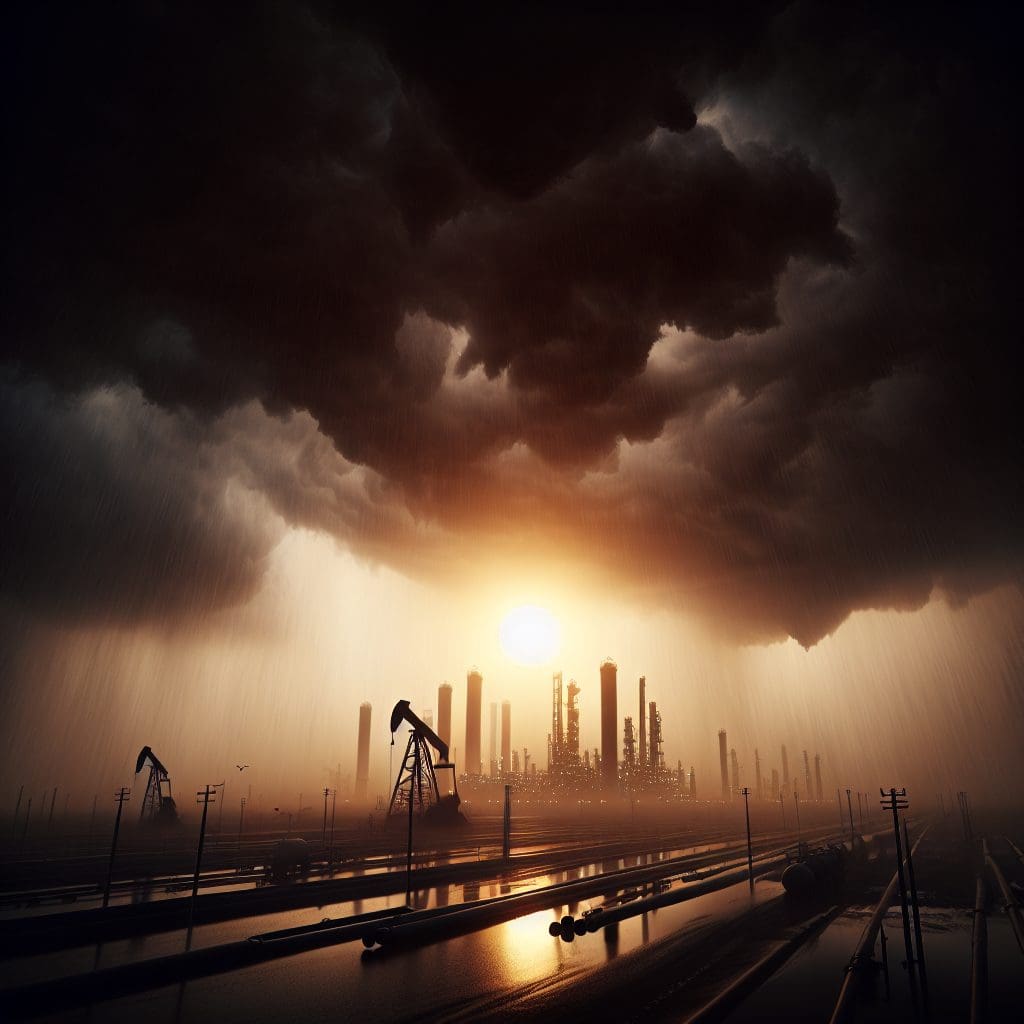

In recent weeks, Iran has faced a surge of conflict, particularly targeting its oil infrastructure, resulting in a significant strain on its economy and regional stability. The “dark rain” that metaphorically descends upon the nation symbolizes not just the immediate consequences of these attacks, but also the longer-term impacts that could reverberate throughout the Middle East and beyond.
The Iranian oil industry has long been a critical component of the nation’s economy, accounting for a substantial portion of its revenues. However, recent attacks have disrupted production, exacerbating already strained economic conditions amid sanctions and political isolation. Experts warn that these events could lead to an escalation of tensions in the region, reminiscent of previous conflicts over oil resources.
The ramifications of this turmoil are multi-faceted. Economically, the immediate loss of production capacity translates into reduced revenues for the Iranian government, which relies heavily on oil exports to fund its social programs and military expenditures. With inflation levels already soaring and a currency that has plummeted in value, the attacks could trigger a deeper economic crisis, affecting everyday life for ordinary Iranians.
Politically, the situation poses a significant challenge for the Iranian leadership. As public discontent grows over declining living standards, the government may resort to heightened repression, stifling dissent in a bid to maintain control. This could, in turn, lead to an increase in civil unrest as citizens respond to governmental overreach. The loss of jobs tied to the oil industry could further fuel protests, leading to a cycle of instability that officials seem ill-equipped to handle.
Regionally, the repercussions of the attacks on oil infrastructure extend to international energy markets as well. Disruption in Iranian oil production can lead to increased prices globally, creating a ripple effect that could influence economies far beyond the Middle East. This situation may compel neighboring countries and global powers to reassess their energy strategies and alliances, potentially leading to renewed diplomatic tensions.
Moreover, the potential for retaliatory attacks looms large. If Iran perceives itself under threat, it may escalate its proxy engagements across the region, involving itself in conflicts in Syria, Iraq, or Yemen. This could heighten instability, drawing in major powers into a broader confrontation.
In summary, the “dark rain” over Iran is not merely a reflection of the present conflict but a stark warning of enduring consequences. Economically, politically, and regionally, the impacts of these attacks on oil infrastructure could lead to a prolonged crisis, requiring astute navigation by regional players and global stakeholders alike.
For more details and the full reference, visit the source link below: