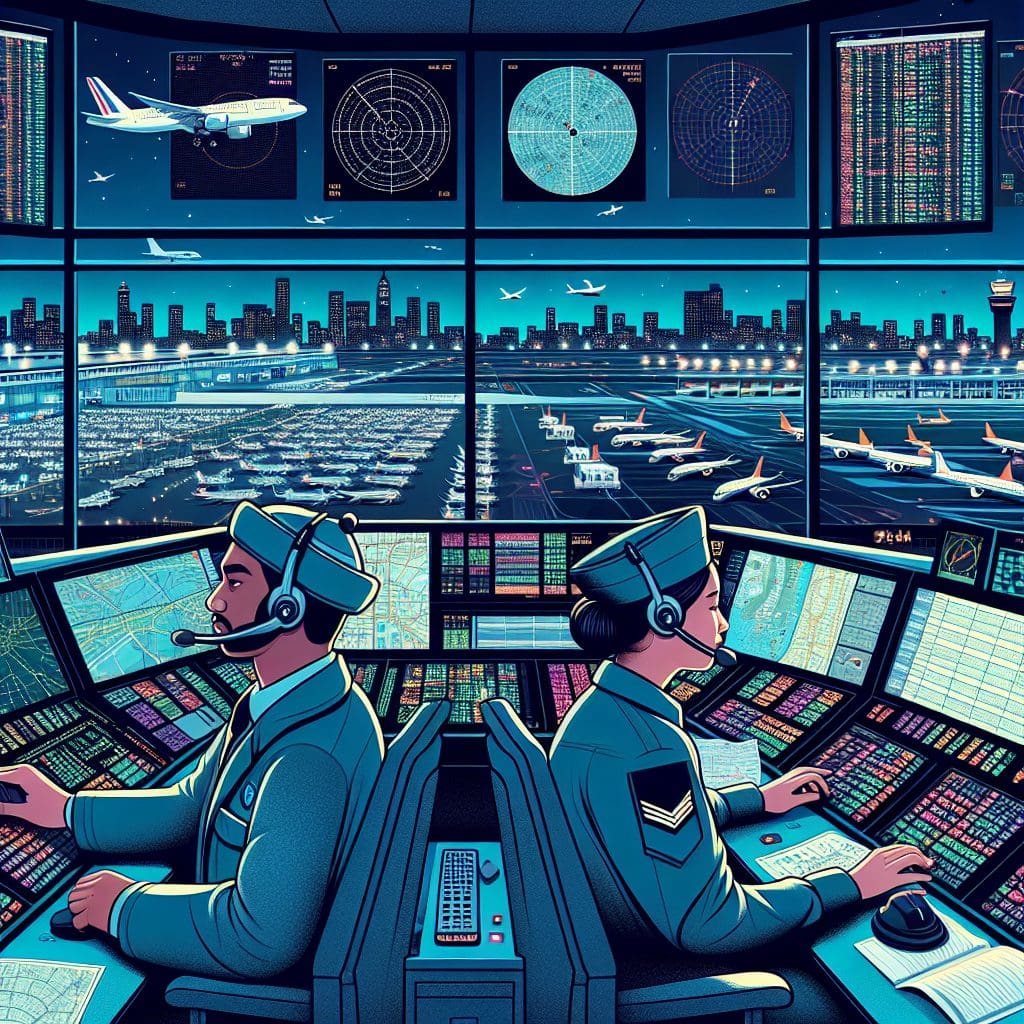

During the bustling hours of air travel, the role of air traffic controllers is paramount in ensuring the safety and efficiency of flights. This issue comes sharply into focus when examining the midnight shifts at airports like LaGuardia, one of the busiest in the United States. Recently, experts have been investigating whether the staffing levels during these late-night hours—particularly with only two air traffic controllers on duty—meet the essential needs of the airport.
LaGuardia Airport is known for its tight traffic patterns and diverse array of arriving and departing flights. As the sun sets, the dynamics don’t necessarily slow down; many aircraft continue to operate, carrying passengers and cargo. However, the question arises: is having just two controllers sufficient to manage this complex airspace during the midnight shift?
Critics argue that while two controllers may technically handle air traffic, it could compromise safety and efficiency. Research indicates that during peak hours, the workload for controllers can dramatically increase, making it crucial to have adequate staffing. The Controllers need to monitor multiple flight paths, communicate with pilots, and coordinate with other involved parties, all while keeping a sharp eye on changing weather conditions and evolving air traffic scenarios.
Supporters of the current staffing levels argue that modern technology—such as advanced radar systems and automated aids—has significantly changed how air traffic is managed. They posit that with the right technological support, two controllers are indeed capable of overseeing operations effectively. However, this perspective may overlook the inherent unpredictability of night-time air traffic, which can be fraught with challenges, including increased fatigue levels among controllers, potential delays, and unexpected emergencies.
Experts have also pointed out the emotional and mental demands placed on controllers during these shifts. The burden of making swift decisions under pressure cannot be underestimated. When the stakes are as high as aviation safety, some argue that it is better to err on the side of caution by ensuring that staffing levels are robust enough to respond to any situation that may arise.
In conclusion, the debate about staffing levels during LaGuardia’s midnight shift raises serious questions. While technology plays an essential role in aiding air traffic control, the necessity for human oversight cannot be understated. Ultimately, it may require a reevaluation of staffing strategies to strike a balance that ensures both efficiency and safety, especially during these critical overnight hours. The aviation community must heed the insights of experts to safeguard the future of air travel, recognizing that safety should always be the paramount concern.
For more details and the full reference, visit the source link below: