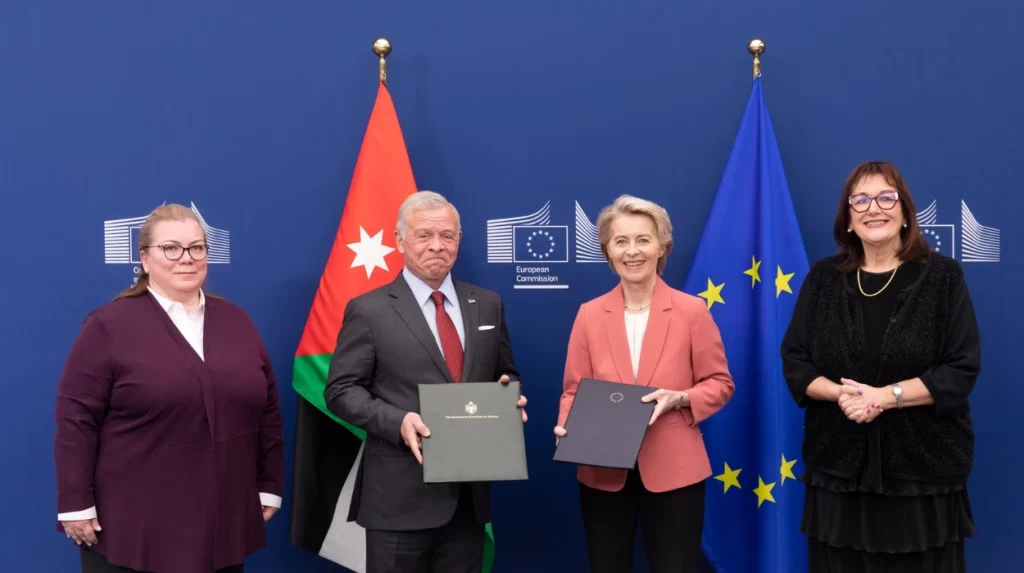

The recent EU-Jordan summit marks a significant moment in the geopolitical landscape, highlighting Europe’s renewed commitment to the Middle East amid escalating regional tensions and ongoing crises. This gathering illustrates the importance of Jordan as a stabilizing force in a tumultuous area, where conflicts such as those in Syria, Iraq, and Palestine continue to challenge security and humanitarian efforts.
Historically, Europe’s engagement in the Middle East has fluctuated based on economic interests, security concerns, and the evolving dynamics of regional politics. However, the latest summit represents a strategic pivot, indicating that the EU is actively seeking to bolster partnerships in the region. Jordan, under King Abdullah II’s leadership, has played a crucial mediating role, particularly in providing refuge to millions of displaced individuals, and remains a key ally in combating terrorism and extremism.
At the summit, leaders discussed a range of pressing issues, including economic cooperation, security challenges, and the humanitarian situation exacerbated by ongoing conflicts. The European Union’s Investment Plan for the Southern Mediterranean is one focal point, aiming to stimulate growth and development in Jordan and neighboring countries. By promoting sustainable infrastructure and job creation, this initiative demonstrates Europe’s recognition of the socio-economic factors fueling instability.
Additionally, the summit addressed the Israeli-Palestinian conflict, emphasizing the EU’s support for a two-state solution—a viewpoint Jordan staunchly advocates. Jordan’s historical ties to Palestinian issues and its custodianship over Islamic holy sites in Jerusalem make it an indispensable partner for the EU in efforts to mediate peace.
The EU’s re-engagement also comes in the context of broader shifts in the Middle East. With influences from powers like Russia and China growing, European leaders recognize the necessity of reaffirming their role as active participants in regional diplomacy. The summit serves as a platform for jointly addressing mutual concerns, promoting stability, and counteracting the spread of extremism.
Moreover, the summit reflects a growing understanding within the EU that lasting stability in the Middle East cannot be achieved without comprehensive dialogue, investment, and a commitment to human rights. By strengthening its ties with Jordan, the EU aims not only to secure its immediate interests but also to contribute to a more peaceful and prosperous Middle Eastern region.
In conclusion, the EU-Jordan summit underscores a pivotal moment for Europe as it reinvigorates its presence in the Middle East. Through strategic partnerships and collaborative initiatives, Europe seeks to address complex challenges, reinforce stability, and ultimately foster a more peaceful and affluent region for all its inhabitants.
For more details and the full reference, visit the source link below: