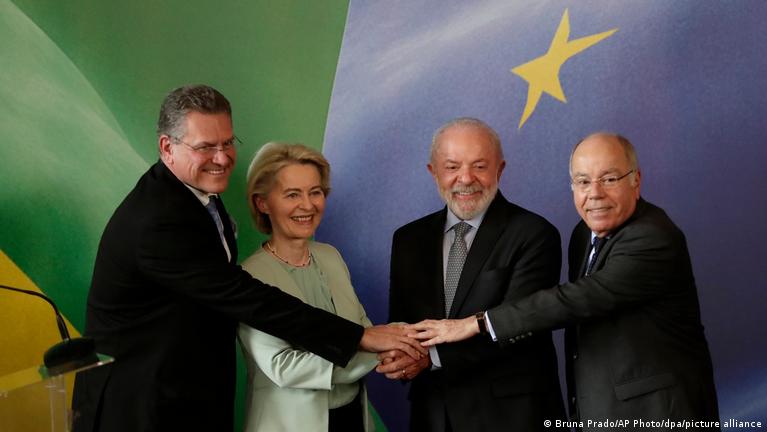

The EU-Mercosur agreement, finalized in June 2019, represents a significant milestone in international trade, aiming to bridge Europe and South America while enhancing economic ties between the European Union and the Southern Common Market (Mercosur), which comprises Argentina, Brazil, Paraguay, and Uruguay. Set for implementation in 2026, this agreement is projected to foster unprecedented levels of commerce, investment, and cooperation between these diverse economies.
At its core, the EU-Mercosur agreement seeks to eliminate tariffs on a vast range of goods, promoting trade in agricultural products, automobiles, and machinery. For the EU, this translates to improved access to South American agricultural products, while Mercosur countries gain entry to European markets for their industrial goods. This reciprocal arrangement promises benefits for consumers and businesses alike, as reduced tariffs and regulatory barriers could lead to lower prices and enhanced product availability.
However, the agreement has not been without controversy. Environmental concerns, particularly regarding deforestation in the Amazon rainforest, have been a sticking point for many critics. The EU has emphasized the need for adherence to environmental standards and sustainability, seeking assurances that Mercosur countries will uphold commitments to climate change and biodiversity protection. This reflects the EU’s broader ambition to integrate environmental considerations into trade policy, aligning economic growth with sustainability.
The agreement also encompasses provisions for labor rights and social standards, working to ensure that trade expansion does not come at the expense of workers’ rights and human dignity. By promoting fair labor practices, the EU aims to strengthen its ethical trade agenda while supporting Mercosur nations in improving social conditions.
In terms of geopolitical ramifications, the EU-Mercosur agreement denotes a strategic realignment in trade relationships. As global trade landscapes shift, the alliance serves as a counterbalance to rising economic powers, showcasing the EU’s commitment to multilateralism and cooperation. In the context of recent geopolitical tensions, the partnership aims to forge stronger ties and mutual dependencies between Europe and Latin America, promoting stability and shared prosperity.
Moreover, the deal provides a framework for addressing future trade issues collaboratively. By fostering dialogue between the two regions, it opens avenues for cooperation on various challenges, including digital trade, innovation, and sustainable development.
As 2026 approaches, the EU-Mercosur agreement holds the potential to reshape international trade dynamics, boost economic growth, and foster a more interconnected global economy. While challenges remain, the historical nature of this partnership underscores the commitment of both regions to embrace a future rooted in collaboration and shared values. To succeed, it will require the commitment of all parties involved to navigate the complexities and ensure that the benefits are equitably distributed.
For more details and the full reference, visit the source link below: