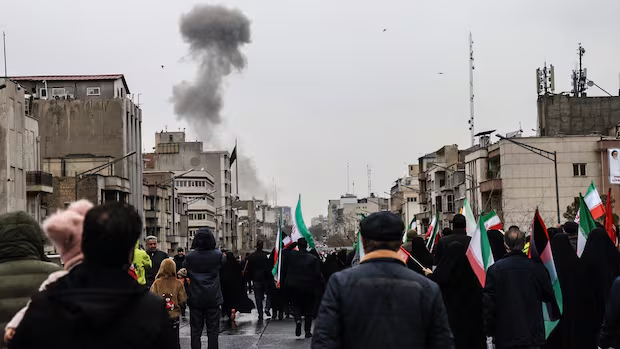

Recent airstrikes attributed to U.S. and Israeli forces have stirred a wave of tensions in Tehran, evoking a strong military and political response from Iranian authorities. These airstrikes, targeting sites believed to be linked to Iran’s military infrastructure and its regional allies, have resulted in significant explosions, causing alarm across the capital and beyond.
The strategic targeting of Iranian installations aligns with the intensifying geopolitical rivalry in the Middle East. U.S. and Israeli officials argue that these actions aim to curb Iran’s expanding influence in the region, particularly its support for proxy groups in Lebanon, Syria, and Yemen. Iran, on the other hand, views these strikes as a direct threat to its sovereignty and national security.
Witnesses reported hearing loud booms resonating across Tehran, with plumes of smoke rising above the skyline. The Iranian military quickly mobilized its air defense systems, indicating a heightened state of alert. Government spokespeople condemned the strikes, labeling them as acts of aggression designed to provoke instability. The Iranian leadership expressed its commitment to retaliate, signaling an escalation that could further destabilize the region.
The backdrop of these airstrikes is a complex web of longstanding hostilities among various state and non-state actors in the region. Tehran’s support for groups like Hezbollah and Hamas has been a contentious point, prompting U.S. and Israeli military interventions aimed at thwarting Iranian influence. This latest round of strikes occurs amid ongoing tensions surrounding Iran’s nuclear program, which has been a focal point of U.S. foreign policy for years.
Moreover, the strikes have raised concerns about civilian safety and infrastructure damage. Eyewitness accounts detail scenes of chaos in the wake of the explosions, with emergency services struggling to respond amidst the panic. This has reignited debates about the humanitarian implications of military operations in densely populated urban areas, where civilian casualties can quickly escalate.
As tensions simmer, the international community watches closely. Diplomatic channels remain strained, with calls for de-escalation met with a lack of consensus among major powers. The situation underscores the precarious balance of power in the Middle East, as both Iran and its adversaries grapple with the consequences of their military strategies.
In summary, the recent explosions in Tehran resulting from U.S. and Israeli airstrikes represent not only a significant military event but also a potential catalyst for broader conflict in the region. The unfolding dynamics highlight the complexity of Middle Eastern geopolitics, with each side weighing the risks of escalation against the need for strategic advantage.
For more details and the full reference, visit the source link below: