
Federal Judge Restricts Agents’ Use of Tear Gas at Portland ICE Building Protests
Introduction
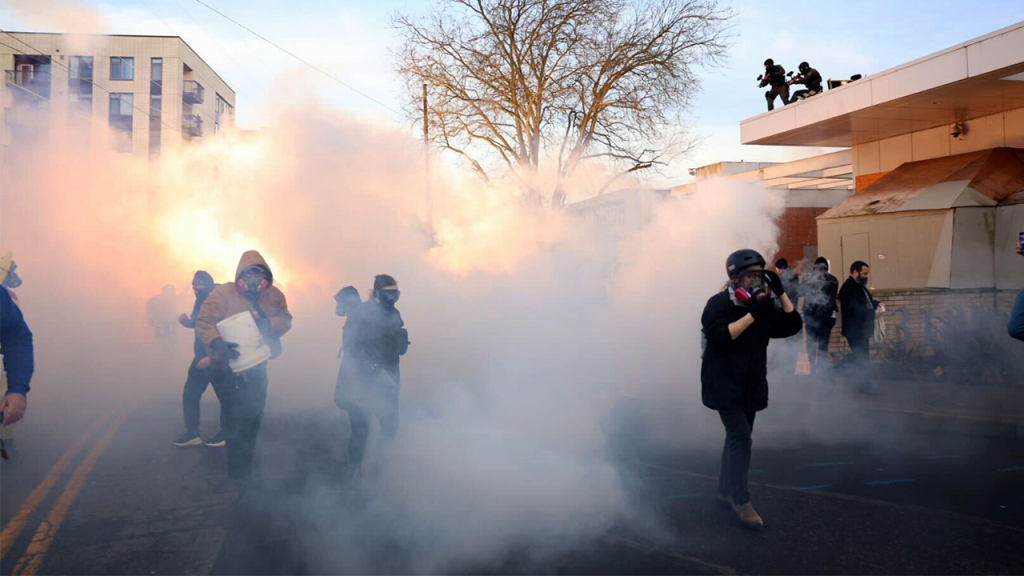
In a notable legal decision, a federal judge has imposed restrictions on the use of tear gas and other crowd-control munitions by law enforcement agents during protests outside the Immigration and Customs Enforcement (ICE) facility in Portland, Oregon. This ruling comes in response to ongoing protests fueled by a mix of local tensions and national issues regarding immigration and racial justice. The implications of this decision are profound, as it raises critical questions about the balance between maintaining order and allowing for peaceful protest.
Background of the Protests
The Context of Protests in Portland
The protests in Portland began as a local manifestation of nationwide unrest in 2020, ignited by a heightened awareness of police brutality, systemic racism, and the treatment of immigrants. As demonstrators gathered outside the ICE building, they expressed their dissent against immigration policies and the perceived militarization of law enforcement.
The Role of ICE in the Protests
The presence of ICE offices in various cities has become a focal point for activists. Many believe that the agency’s practices contribute to the break-up of immigrant families, and the protests have aimed to spotlight these issues. The national government’s approach to immigration has prompted significant local outrage, leading to these ongoing demonstrations.
The Court Ruling
Details of the Decision
The federal judge’s ruling essentially restricts federal agents from deploying tear gas and similar crowd-control measures during protests unless certain criteria are met. This includes a requirement to exhaust all other options before resorting to chemical agents, thereby emphasizing the necessity for restraint in the face of peaceful assembly.
Legal Justifications
The judge’s decision is rooted in the First Amendment rights of the protesters. The right to free speech and peaceful assembly is protected by the Constitution, and the court acknowledged that the use of tear gas often escalates tensions, leading to violence rather than de-escalation.
Implications of the Ruling
For Protesters
The ruling is seen as a significant victory for activists, offering a degree of protection during future demonstrations. With restrictions in place, protesters may feel more empowered, knowing that their rights to assemble and express dissent are safeguarded.
For Law Enforcement
For law enforcement agencies, this ruling necessitates a reevaluation of crowd-control tactics. It raises practical questions about how to manage large gatherings effectively without resorting to methods that could infringe on constitutional rights.
National Repercussions
This ruling may have ramifications beyond Portland, as other cities reconsider their own policies regarding crowd control. With increasing scrutiny on law enforcement practices, it sets a legal precedent that might encourage similar actions elsewhere in the country.
Public Reactions
Community Response
The response from the local community has been mixed. Many activists and community leaders have applauded the decision, viewing it as a reaffirmation of their rights. However, some law enforcement officials express concern that the limitations on the use of force may hinder their ability to maintain public safety.
National Discourse
The ruling has also sparked a broader national conversation about police conduct and the appropriate use of force during civil unrest. Many citizens are questioning the tactics employed by law enforcement agencies and advocating for more accountability and transparency.
The Importance of Overhauling Crowd-Control Policies
Historical Context
The use of tear gas and similar munitions has a long and controversial history in the United States, often used to disperse crowds during protests. Increasingly, there is a call for police departments to revise their strategies in light of lawsuits and public outcry.
Modern Alternatives
There are numerous alternatives to traditional crowd-control methods that can be more effective in the long term. Training law enforcement in de-escalation techniques, building community relations, and employing non-lethal measures can foster a more respectful interaction between police and the public.
The Role of Legal Advocacy
Grassroots Organizations
Many grassroots organizations have been instrumental in advocating for the protection of civil rights during protests. By amplifying the voices of those directly affected, they draw attention to harmful practices and push for legal reform.
Legal Representation
As demonstrations continue, pro bono legal representation for protesters has become increasingly important. Lawyers and legal advocates are stepping up to ensure that individuals’ rights are respected during protests, helping to challenge wrongful arrests and the use of excessive force.
Conclusion
The federal judge’s ruling to restrict the use of tear gas at Portland ICE building protests resonates deeply with ongoing debates about rights, law enforcement, and community safety. By prioritizing the rights of protesters, the decision serves as a significant step toward greater accountability among law enforcement and a deeper understanding of the First Amendment’s protections. As this issue continues to evolve, the focus on legal advocacy, alternative crowd-control methods, and community relations will be critical in shaping the future landscape of protests in the United States. In this complex and always-changing environment, every voice matters, and every decision has the potential to catalyze lasting change.