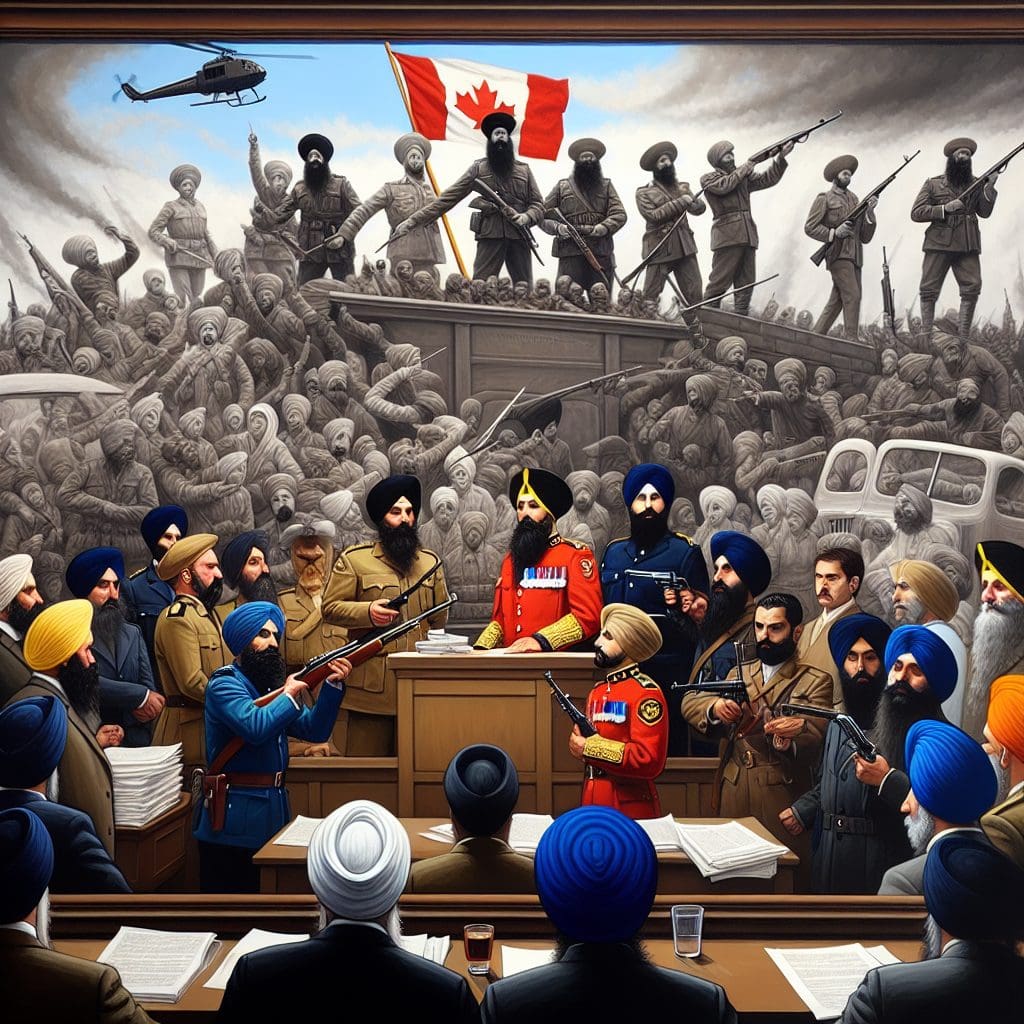

Canadian law enforcement recently dropped firearm charges against a prominent Sikh leader advocating for Khalistan, a proposed sovereign state for Sikhs in India. This development has sparked considerable attention within both Canadian and international political circles, reflecting the complex interplay of diaspora politics, national security, and cultural identity.
The individual in question, who has become a focal point for the Khalistani movement, was initially arrested on various firearm-related charges that claimed he was allegedly involved in the illegal possession and distribution of weapons. Such allegations can significantly tarnish one’s public image, especially when they intersect with sensitive political movements. However, the recent dropping of these charges suggests a lack of sufficient evidence to support the claims, raising questions about the motivations behind the original charges.
This decision occurs at a time of heightened scrutiny of Sikh activists in Canada, where the Khalistani movement has generated both support and controversy. Critics argue that proponents of Khalistan often engage in extremist rhetoric or actions, raising concerns about public safety and national unity. Conversely, supporters of the Khalistani cause view the movement as a legitimate expression of self-determination. The leader’s acquittal may thus invigorate advocates for Khalistan while simultaneously provoking backlash from opposition groups.
Additionally, this incident reflects the broader geopolitical tensions between Canada and India, particularly concerning the rights of minority communities. Many in the Sikh diaspora view the Indian government’s stance on Sikh separatism as an oppressive approach to a legitimate cultural and political aspiration. The dropping of charges could be seen as a reaffirmation of Canadian values surrounding freedom of speech and political expression, although it complicates diplomatic relations with India.
Moreover, this case exemplifies the challenges local law enforcement faces when dealing with international and political issues, particularly those tied to ethnic and cultural identity. As debates continue regarding the safety and security of communities, it is crucial for authorities to navigate these complexities carefully, balancing public concerns with respect for individual rights.
In conclusion, the decision to drop firearm charges against the Canadian Sikh Khalistani leader is a significant moment for both the Khalistani movement and the Sikh community in Canada. It underscores the ongoing discussions surrounding identity, advocacy, and the delicate balance of international relations, revealing how local judicial outcomes can resonate far beyond national borders. The outcome serves as a reminder of the intricate challenges faced within multicultural societies and the importance of dialogue in resolving contentious political narratives.
For more details and the full reference, visit the source link below: