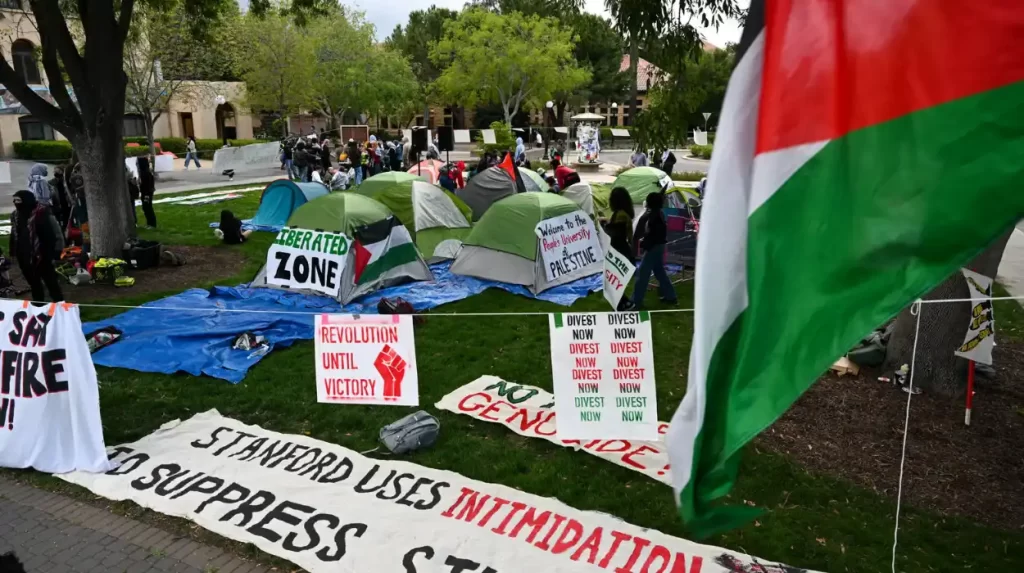

In a significant escalation of tensions surrounding the Israel-Palestine conflict, five Stanford University students are set to face felony charges in connection with a protest against the ongoing violence in Gaza. This incident not only highlights the heightened political climate in academic institutions but also raises critical questions about free speech, civil disobedience, and the boundaries of acceptable protest.
The students, all members of campus organizations advocating for Palestinian rights, participated in a demonstration aimed at raising awareness of the humanitarian crisis in Gaza. They engaged in acts of civil disobedience, which included blocking a road and staging a sit-in at a university building. While their intentions may have been rooted in a desire to draw attention to a significant global issue, their actions drew swift backlash from university administration and local authorities.
The felony charges stem from allegations of disturbing the peace, obstructing traffic, and potentially endangering public safety. Reactions to this legal action have been polarized; some view it as an essential requirement for maintaining order, while others see it as an infringement on free speech rights. Critics argue that such measures could deter students from voicing dissenting opinions on critical political issues, fostering a culture of silence rather than engagement.
The students involved have defended their actions as a necessary response to perceived inaction by the university toward humanitarian issues. They assert that the protest was aimed at sparking dialogue about the ongoing conflicts and advocating for humanitarian aid. Many supporters argue that students have a historical responsibility to engage politically, particularly in today’s complex global landscape, where issues of human rights and social justice are increasingly contentious.
The trial is poised to draw significant media attention and may further polarize campus sentiments on both sides of the debate. It underscores the challenges universities face in balancing the right to free expression with maintaining a safe and respectful campus environment. With growing movements advocating for Palestinian rights and heightened awareness of global injustices, the outcomes of the trial could set important precedents for how universities address activism.
As opinions continue to clash, the case of these five Stanford students serves as a microcosm of a much larger national and global conversation about activism, accountability, and the role of educational institutions in shaping civic engagement. Regardless of the trial’s outcome, it is clear that these issues will remain at the forefront of discourse on campuses and beyond, reflecting the urgent need for meaningful dialogue around social and political responsibilities.
For more details and the full reference, visit the source link below: