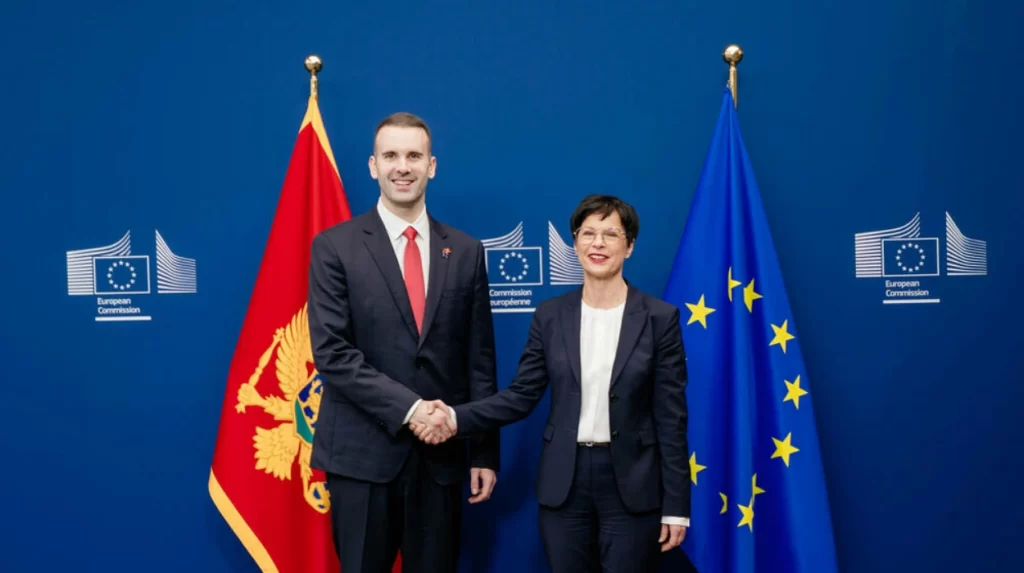

France has recently reaffirmed its support for Montenegro’s aspirations to join the European Union (EU), emphasizing the importance of reform-driven progress within the Balkan nation. The endorsement comes amid a broader EU strategy aimed at fostering stability and promoting democratic institutions in the region, which has historically faced political and economic challenges.
Montenegro, which declared independence from Serbia in 2006, has been a candidate country for EU membership since 2010. However, its journey has been fraught with challenges, including political instability and concerns over corruption, governance, and the rule of law. The French government views Montenegro’s accession to the EU not just as a political milestone but as a critical step in consolidating democratic practices and the rule of law in the Western Balkans.
France’s support is significant, particularly in the wake of a shift in regional dynamics and the EU’s recalibrated approach to enlargement. By backing Montenegro, France is strategically positioning itself as a key player in Balkan affairs, advocating for a Europe that extends its values of democracy, human rights, and economic cooperation. French officials have consistently highlighted the necessity of robust reforms in Montenegro, particularly in judicial independence, anti-corruption measures, and public administration.
In recent months, Montenegro has made strides in several reform areas. The government has committed to enhancing its judicial system and tackling corruption head-on, which has historically been a barrier to both domestic and international confidence. France’s backing serves as both encouragement and a reminder that the path to EU membership is contingent upon significant, tangible policy changes.
Furthermore, French support can facilitate wider EU engagement. As a major EU member state, France’s backing sends a positive signal to other EU leaders about the feasibility of Montenegro’s membership aspirations. This can lead to increased technical and financial assistance from the EU, helping Montenegro enhance its institutional frameworks and align them with EU standards.
The importance of French backing is particularly pronounced given the geopolitical landscape in the region, where Russia and China have attempted to expand their influence. By solidifying support for Montenegro, France aims to counter any external pressures that could destabilize the region further.
In conclusion, France’s endorsement of Montenegro’s EU push signifies a commitment to not only nurture a democratic Montenegro but also to stabilize the Western Balkans. Through a collaborative effort toward reforms, Montenegro can make considerable progress on its journey to EU integration, benefiting both itself and the wider European community.
For more details and the full reference, visit the source link below: