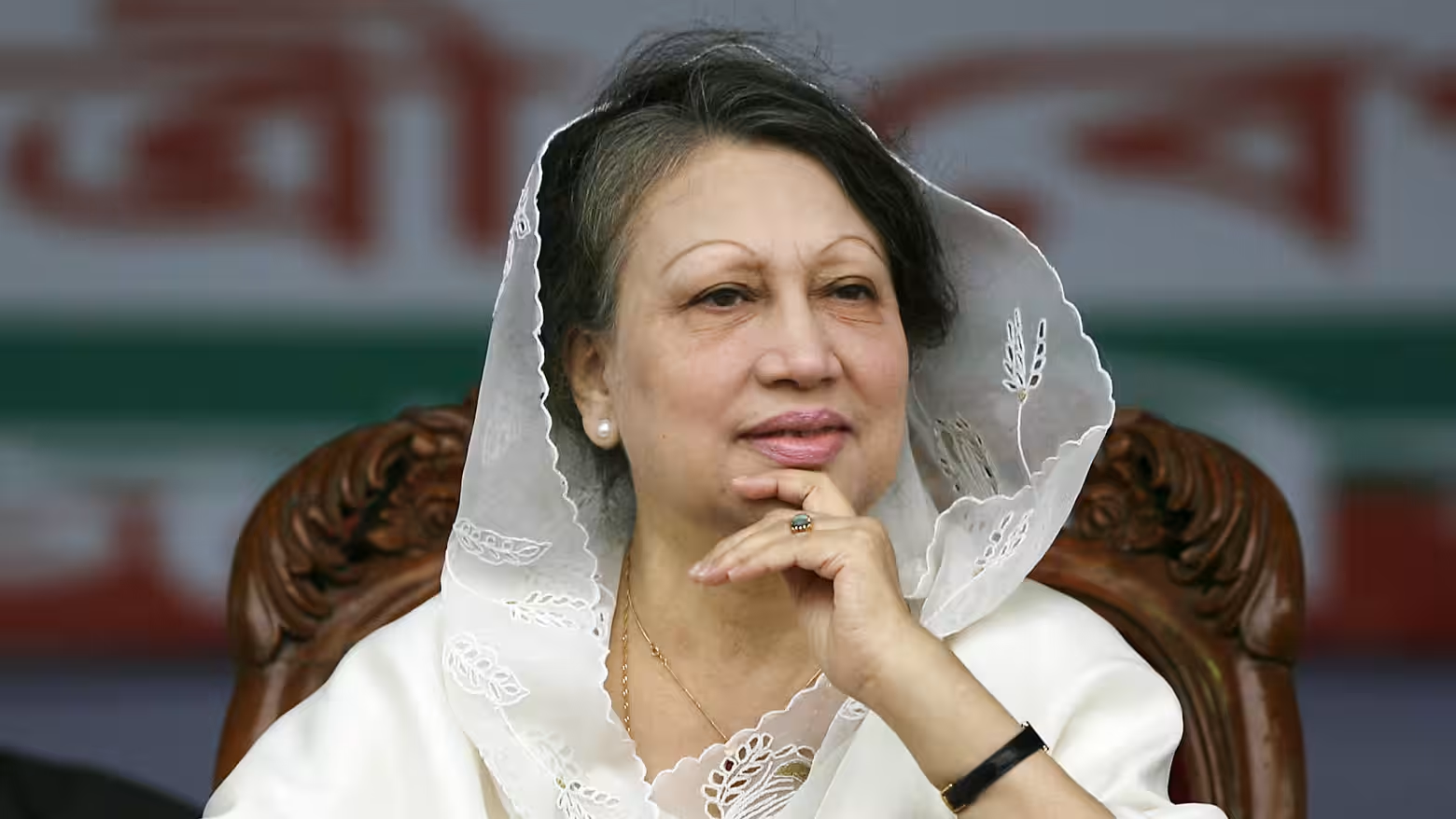

On a somber day that resonated deeply across Bangladesh, the funeral of Khaleda Zia, the former Prime Minister and prominent political figure, marked a historic moment of national mourning. As a leader who had shaped the political landscape of the nation for decades, Zia’s passing elicited an outpouring of grief from supporters and adversaries alike, reflecting the complex legacy she left behind.
Khaleda Zia rose to prominence in the late 20th century, becoming the first female Prime Minister of Bangladesh in 1991. Her tenure witnessed significant challenges and triumphs, including economic reforms and fervent political opposition. Zia’s political career was characterized by her unwavering ambition and fierce determination; she navigated treacherous waters in a male-dominated arena, often mired in controversy but also celebrated for her pioneering spirit.
The day of her funeral saw thousands gathering to pay their respects, demonstrating the profound impact she had on countless lives throughout her political journey. Flags flew at half-mast, and the nation observed a day of mourning, with public offices and educational institutions closing in tribute to her. From the streets of Dhaka to rural areas, spontaneous gatherings and memorials arose, underscoring her status as a beloved, albeit polarizing figure in the country’s history.
The funeral ceremony itself was laden with emotional tributes. Family members recounted poignant moments from her life and career, illuminating Zia’s roles as a mother, leader, and symbol of resilience. Speeches from political allies and rivals alike underscored the complexity of her legacy, acknowledging both her achievements and the controversies surrounding her time in office.
As the nation mourned, discussions erupted regarding Zia’s impact on Bangladeshi democracy. Supporters hailed her as a champion of the people who fought against autocratic rule, while critics pointed to the deepening political divides that characterized her leadership. The stark contrasts in memories and opinions spoke to the polarized nature of the nation’s politics, which Zia navigated with a keen instinct that resonated with many citizens.
In the aftermath of the funeral, questions emerged about the future of her political party, the Bangladesh Nationalist Party (BNP), and the direction of Bangladeshi politics without her formidable presence. As the nation reflects on Khaleda Zia’s legacy, it remains to be seen how her contributions will be remembered and what shape the political landscape will take in her absence.
Ultimately, Khaleda Zia’s funeral was not just a farewell to an influential leader but also a moment of introspection for a nation grappling with its historical narrative and future aspirations. The echoes of her life will undoubtedly continue to shape the discourse in Bangladesh for years to come.
For more details and the full reference, visit the source link below: