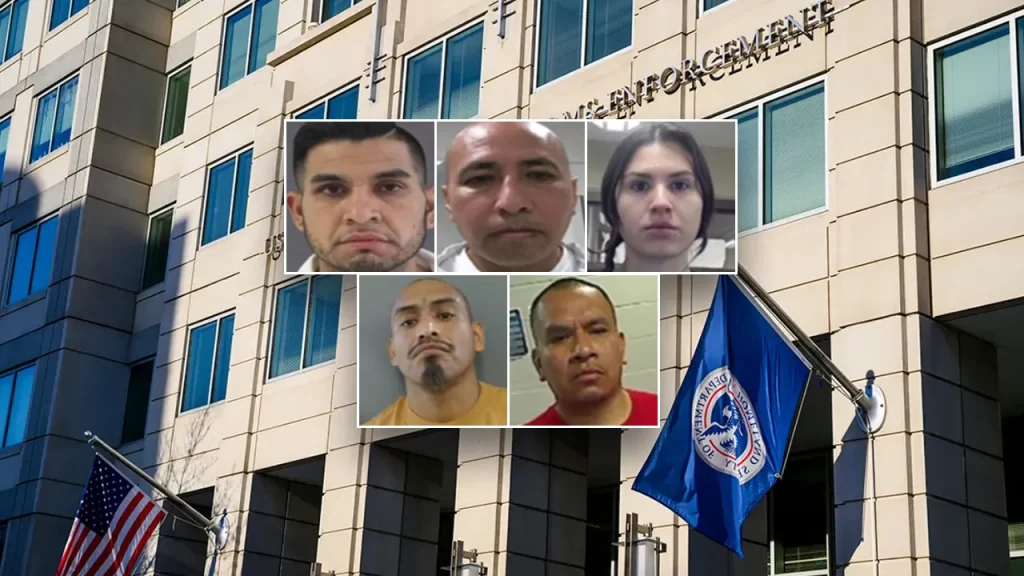

ICE Arrests Illegal Immigrants Convicted of Violent, Sexual Crimes
Introduction
In recent years, the topic of illegal immigration has become a focal point in national discussions, drawing attention from policymakers, law enforcement agencies, and the public alike. One significant aspect that has emerged in this dialogue is the role of the U.S. Immigration and Customs Enforcement (ICE) in conducting arrests of illegal immigrants with criminal backgrounds. Among these, individuals convicted of violent and sexual crimes stand out due to the potential risks they pose to communities. This article delves into the intricacies of ICE operations, the implications of these arrests, and the broader implications for public safety and law enforcement.
Understanding ICE’s Role
ICE is a federal agency under the Department of Homeland Security (DHS) responsible for enforcing immigration laws and investigating customs violations. Established in the wake of the September 11 attacks, its primary mission includes protecting national security and upholding public safety. One of the agency’s crucial roles is identifying, detaining, and deporting individuals who pose a threat to U.S. public safety—particularly those with violent or sexual criminal records.
The Legal Framework
ICE operates within a specific legal framework that allows it to carry out these arrests. Under the Immigration and Nationality Act (INA), the agency has the authority to detain and remove individuals who have violated immigration laws or committed crimes while in the U.S. This includes individuals with:
- Felony convictions: Particularly those involving violence, robbery, or sexual offenses.
- Repeat offenders: Those who have previously been deported and re-entered the country illegally.
- Gang affiliations: Members of criminal organizations that often engage in violence and drug trafficking.
Key Statistics
Understanding the scale of ICE’s efforts requires looking at statistics that highlight the correlation between illegal immigration and crime:
- In the past few years, ICE has arrested thousands of illegal immigrants with past convictions for violent crimes.
- Reports indicate that individuals with criminal records constitute a significant portion of those arrested in routine ICE operations.
- The agency often collaborates with local law enforcement agencies to identify and apprehend individuals on immigration violations.
The Impact of Arrests on Communities
Public Safety Concerns
Arrests of illegal immigrants convicted of violent and sexual crimes are often portrayed as critical for safeguarding communities. By removing individuals who have committed serious offenses, ICE aims to enhance the safety and security of neighborhoods. This effort, however, is met with a variety of perspectives:
- Supporters argue that these arrests are justified and necessary for public safety, reducing the risk posed by individuals with violent histories.
- Opponents contend that such actions can lead to racial profiling and fear within immigrant communities, discouraging individuals from reporting crimes or cooperating with law enforcement.
Case Studies
Several high-profile cases have brought attention to the issue, showcasing the complexity of the situation:
- Case 1: An illegal immigrant convicted of sexual assault was arrested after being released from prison. His deportation was lauded as a success in preventing future crimes.
- Case 2: Another incident involved a young immigrant who was wrongfully detained due to having a similar name as a different individual. This sparked debates about the effectiveness and fairness of ICE operations.
Controversies and Criticisms
Human Rights Concerns
The actions of ICE have come under scrutiny from various human rights organizations. Critics argue that the agency often prioritizes deportation over rehabilitation and fails to consider the circumstances surrounding individuals’ criminal behavior. Not everyone who commits a crime poses an ongoing threat, and many may have the potential for rehabilitation and integration.
Political Ramifications
With immigration policy often being a hotly contested issue, the actions of ICE can have far-reaching political implications. Policymakers are divided on whether to increase funding and resources for ICE or to pursue broader immigration reform that includes pathways to legal status for undocumented immigrants.
The Path Forward: Balancing Immigration Enforcement and Community Safety
Holistic Approaches
The need for a balanced approach is crucial. While public safety must be a priority, it is equally important to address the underlying issues related to illegal immigration. A holistic strategy could involve:
- Community engagement: Building trust between immigrant communities and law enforcement to encourage cooperation without fear of deportation.
- Rehabilitation programs: Focusing on rehabilitation rather than solely on punitive measures for individuals with criminal backgrounds.
- Streamlined processes: Creating pathways for undocumented immigrants who contribute positively to society to obtain legal status.
Policy Recommendations
- Comprehensive Immigration Reform: Developing a policy framework that addresses the root causes of illegal immigration while ensuring public safety.
- Preventive Measures: Investing in community programs that aim to deter crime before it happens, especially within vulnerable immigrant populations.
- Enhanced Training for Local Law Enforcement: Providing training for local police on the intricacies of immigration law and the importance of building trust in communities.
Conclusion
The issue of ICE arrests of illegal immigrants convicted of violent and sexual crimes remains one of the most contentious topics in the broader immigration debate. While the intent behind these actions is rooted in public safety, the implementation often raises questions about human rights, fairness, and the societal implications of such a strategy. As communities navigate these complex issues, the call for a balanced and comprehensive approach becomes increasingly urgent, with the hope of fostering a safer and more just society for everyone.
By understanding the nuances of ICE operations and the broader context of immigration, stakeholders can work towards solutions that respect both public safety and the dignity of individuals, regardless of their immigration status.