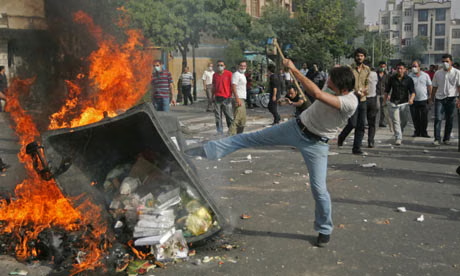

In 2026, the protests in Iran marked a critical turning point in the nation’s socio-political landscape. Beginning in 2022, the unrest was fueled by discontent over economic hardships, political repression, and a growing demand for social freedoms. The original spark was ignited by the tragic death of Mahsa Amini, a young woman who died in police custody after being arrested for allegedly violating the country’s strict dress code. This incident resonated with countless Iranians, leading to widespread demonstrations and calls for reform.
By 2026, however, the Iranian government had intensified its crackdown on dissent. Security forces employed increasingly brutal tactics to quell the protests, employing live ammunition and mass arrests. Activists noted a significant increase in the number of arbitrary detentions and cases of torture, aimed at instilling fear among the populace. The international community watched with alarm, as reports of human rights violations poured in from various human rights organizations. Despite the dangers, protesters persisted, exemplifying a resilient spirit in the face of escalating repression.
The regime’s reliance on heavy-handed tactics had profound implications. While the immediate effect was a temporary diminishment of street protests, it also catalyzed a reevaluation among Iranians about the nature of their governance. Many began to question the legitimacy of a government that resorted to violence against its own citizens. The protests became a unifying force, transcending class, ethnic, and religious divides, as people from diverse backgrounds rallied under the banner of reform and human rights.
As the military and police forces clamped down, there emerged a split within the ruling elite. Hardliners advocated for a continued show of force, while moderates recognized the need for dialogue and reform to address the legitimate grievances held by the populace. This internal conflict became more pronounced as economic conditions worsened, exacerbating public discontent.
By the end of 2026, the persistence of protests, despite brutal suppression, set the stage for a potential awakening in Iranian society. The demands for accountability, transparency, and rights became increasingly mainstream, effectively reshaping political discourse. Citizens were not merely reacting to the government’s actions; they were actively reimagining what governance could look like in Iran.
In this critical turning point, the protests not only exposed the fragility of the regime but also illuminated the tenacity of Iranians yearning for a different future. The events of this period remain etched in history, serving as a poignant reminder of the power of collective action against authoritarianism. While the path forward is fraught with uncertainty, one truth became unmistakable: the voices of the Iranian people could no longer be silenced.
For more details and the full reference, visit the source link below:
Read the complete article here: https://brusselsmorning.com/iran-protests-crackdown-2026/90212/