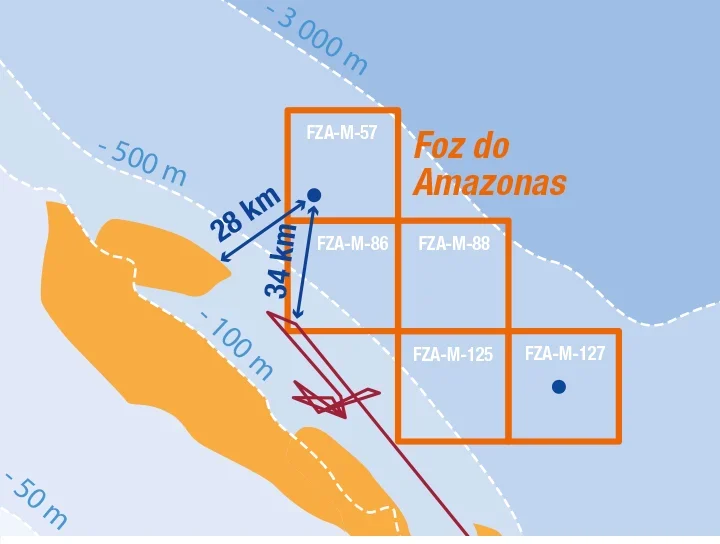

Petrobras, Brazil’s state-controlled oil company, has embarked on drilling in the Foz do Amazonas region, an area rich in untapped oil reserves. While this initiative promises economic benefits, it also presents significant environmental and operational risks. Here are five critical risks associated with Petrobras’ Foz do Amazonas drilling activities.
### 1. Environmental Impact
The Foz do Amazonas region is characterized by its rich biodiversity, comprising unique ecosystems that are home to numerous species. Drilling operations pose a direct threat to these ecosystems, potentially leading to oil spills and habitat destruction. The risk of spills, in particular, can have devastating long-term effects on marine and coastal life. The potential for contamination of water sources also raises concerns about the health of local communities that rely on these ecosystems for sustenance.
### 2. Regulatory and Compliance Risks
Navigating the complex regulatory landscape remains a significant challenge for Petrobras. Brazil’s environmental policies are stringent, particularly regarding offshore drilling. Failure to comply with regulations can result in hefty fines, delays in project timelines, or even revocation of drilling permits. Additionally, the political landscape can influence regulatory decisions, with changes in government potentially leading to increased scrutiny or opposition to drilling activities.
### 3. Operational Challenges
Drilling in deepwater zones presents numerous technical complexities. The Foz do Amazonas region features challenging geological formations and weather conditions that can complicate drilling operations. Such challenges can lead to project delays and increased costs. Moreover, the technical failures during drilling can result in blowouts, leading to catastrophic environmental consequences and severe financial repercussions for Petrobras.
### 4. Social and Community Resistance
Local communities and environmental activists have increasingly voiced their opposition to drilling in ecologically sensitive areas like the Foz do Amazonas. The risk of social unrest and community resistance can impede operations and project timelines. If Petrobras fails to engage with local stakeholders and adequately address their concerns, it may face legal actions or protests, impacting its social license to operate in the region.
### 5. Market Volatility
The global oil market is subject to fluctuations influenced by geopolitical tensions, economic downturns, and shifts toward renewable energy. The investment in Foz do Amazonas drilling may become less viable if oil prices drop significantly or if there is an accelerated transition to alternative energy sources. Such market volatility can adversely affect Petrobras’ financial stability and long-term profitability goals, making it critical for the company to assess the economic landscape continually.
In summary, while Petrobras’ exploration in the Foz do Amazonas has the potential for substantial rewards, it is imperative for the company to address these five critical risks effectively. A proactive approach to environmental stewardship, regulatory compliance, operational management, community engagement, and market strategy will be essential for its success.
For more details and the full reference, visit the source link below: