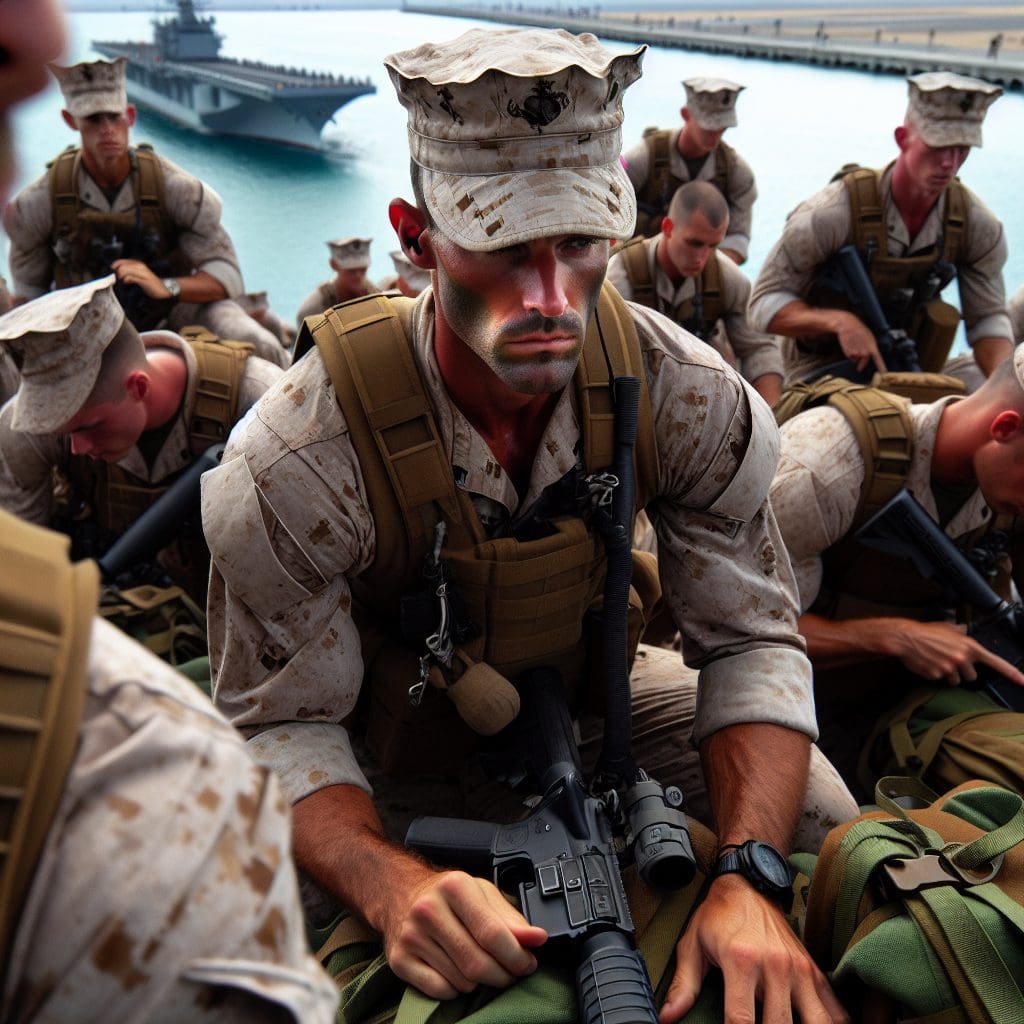

The recent deployment of 2,500 U.S. Marines to the Gulf region can be attributed to multiple strategic, geopolitical, and operational considerations. This decision underscores the United States’ ongoing commitment to maintaining stability in the region, especially in light of escalating tensions, shifting alliances, and potential threats emanating from both state and non-state actors.
One of the primary reasons for the U.S. deployment is to deter aggression from adversarial nations, particularly Iran. The Gulf has been a focal point for regional conflicts, with Iran’s activities, such as missile testing and proxy engagements in neighboring countries, raising alarms among U.S. allies. By deploying Marines, the U.S. sends a clear signal of its readiness to defend its interests and those of its partners, reinforcing deterrence and potentially averting hostile actions from adversaries.
Additionally, this deployment serves to bolster partnerships with Gulf Cooperation Council (GCC) countries, enhancing security collaborations and fostering military interoperability. Joint exercises and training initiatives can strengthen the respective capabilities of U.S. and Gulf forces, establishing a more formidable deterrent presence against common threats. Such actions demonstrate a commitment to collective security arrangements, which are essential for stability in an increasingly volatile geopolitical landscape.
Humanitarian missions are also a potential role for the deployed Marines. Given the ongoing humanitarian crises in the region, including those caused by conflicts in Syria and Yemen, U.S. forces could play a crucial part in delivering aid or providing logistical support. Marines are trained not just for combat operations but also for rapid response and disaster relief efforts, making them adaptable to various scenarios that may arise.
Moreover, the deployment enhances intelligence, surveillance, and reconnaissance (ISR) capabilities in the region. With increasing tension, the ability to gather real-time intelligence becomes vital for shaping U.S. policy and military responses. Marines can engage in forward-operating missions that improve situational awareness and facilitate quicker decision-making regarding military engagements or humanitarian responses.
Finally, the deployment serves as a tool for domestic political considerations. Showcasing military readiness can bolster public confidence in the administration’s foreign policy approach, reinforcing the perception of strength in dealing with international threats. It reflects a commitment to maintaining U.S. influence and presence in a region where power dynamics are constantly shifting.
In conclusion, the deployment of 2,500 Marines to the Gulf reflects a multifaceted approach to addressing a spectrum of challenges. From deterrence and partnership building to humanitarian support and enhanced ISR capabilities, U.S. forces are poised to play critical roles in shaping the stability of the region amidst ongoing turmoil.
For more details and the full reference, visit the source link below: