
Shooting During Car Repossession Incident in Manor, Texas: A Detailed Analysis
Introduction
The recent shooting during a car repossession incident in Manor, Texas, has captured national attention, raising significant concerns about the practices used in vehicle repossession and the escalation of violence. This incident serves as a critical case study for both law enforcement and the general public regarding the implications of aggressive repossession tactics.
The Incident: What Happened?
Background of the Case
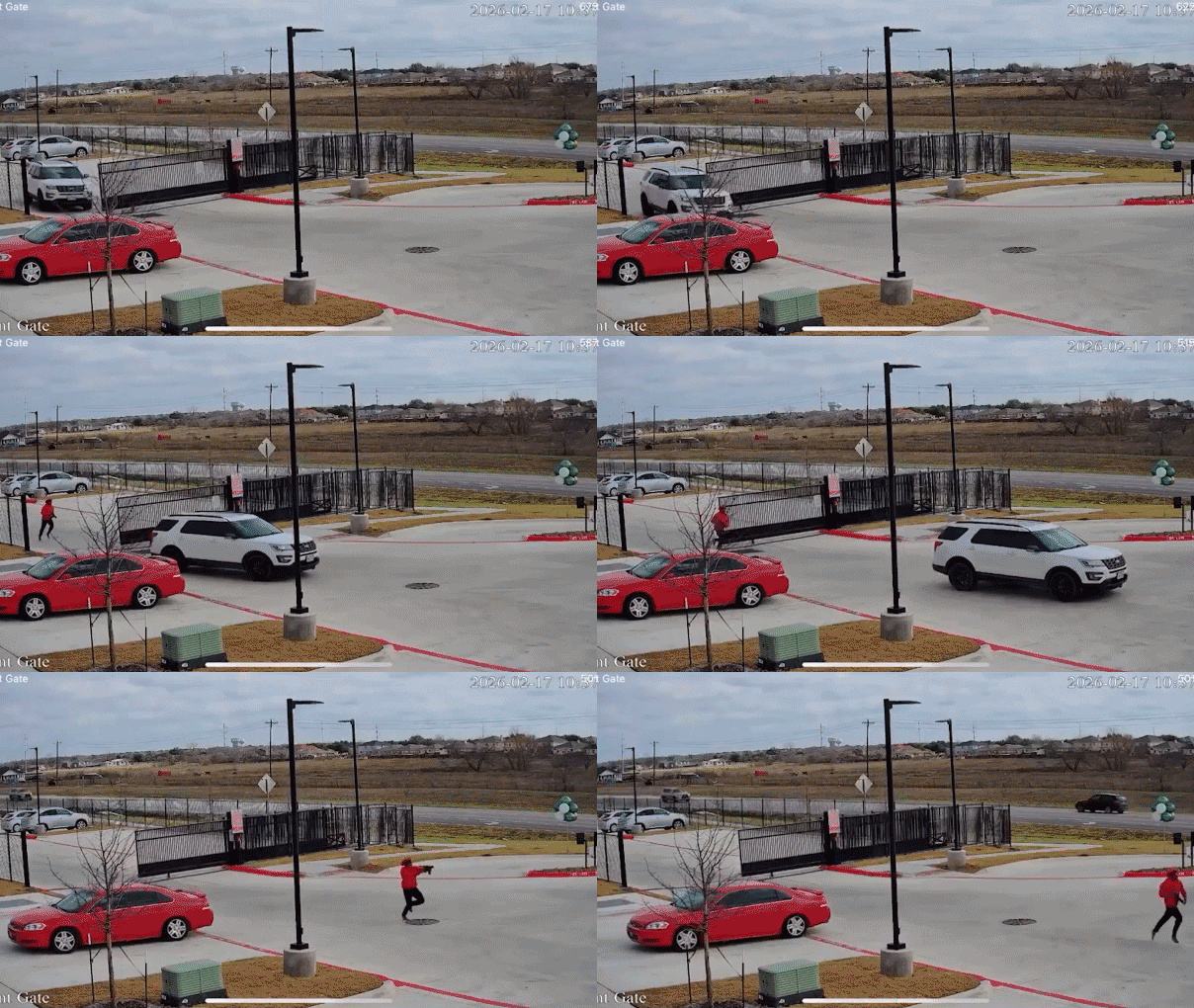
In Manor, Texas, the tranquil routine of a typical day was shattered when a car repossession turned violent. Caught on camera, this incident showcased a dangerous turn of events as a repossession agent and the car owner became embroiled in a heated confrontation.
Key Details Revealed in the Footage
The video footage reveals that the repossession agent arrived at the scene early in the morning to reclaim a vehicle due to non-payment. As the agent attempted to seize the car, the owner confronted him. Tensions escalated rapidly, culminating in a firearm being pulled. The incident is a stark reminder of how repossession can spiral out of control, leading to unnecessary violence.
The Legal Framework of Repossession in Texas
Understanding Repossession Laws
In Texas, the laws governing repossession are relatively straightforward. Lenders have the right to reclaim property when borrowers default on payments. However, they must do so without breaching the peace—a legal term indicating that no physical force or intimidation may be used.
The Role of Law Enforcement
When a repossession escalates, law enforcement’s involvement is crucial. Officers are trained to handle such situations delicately to prevent violence. The incident in Manor raises questions about policing practices and how law enforcement can intervene to ensure safety for all parties involved.
The Impact of Violent Repossession Incidents
Societal Consequences
Violent repossession incidents can have far-reaching effects on communities. Fear of violence can deter individuals from seeking help in financial crises. Moreover, such events increase polarization between law enforcement and citizens, complicating community relations.
Emotional and Psychological Implications
For those directly involved, including the repossession agent and car owner, the emotional and psychological impact can be long-lasting. Both parties may experience trauma, leading to anxiety, fear, or even post-traumatic stress disorder (PTSD).
Analysis of Video Evidence
Importance of Surveillance Footage
The video evidence from the incident plays a significant role in understanding what transpired. It provides transparency, allowing for a clearer evaluation of the actions taken by both the repossession agent and the car owner. This footage will likely become central to any future legal proceedings.
Public Perception Shaped by Visual Media
As the video circulates on social media and news outlets, it influences public perception of repossession agents. Stakeholders, including banks and finance companies, must recognize that their practices are under scrutiny.
The Role of Media Coverage
Sensationalism vs. Responsibility
Media outlets have a responsibility to report incidents like this sensitively. While sensational headlines may garner clicks, they often fail to provide the context needed for a comprehensive understanding. An analytical approach can help demystify the complexities surrounding repossession incidents.
The Call for Legislative Change
Reports following this incident have ignited discussions about the need for legislative reform regarding repossession laws. Stakeholders from various sectors are calling for more stringent regulations to ensure the safety of all parties.
Preventing Future Incidents: Best Practices
Training for Repossession Agents
To minimize the risk of violence, repossession companies should invest in comprehensive training programs for their agents. This training should emphasize de-escalation techniques and conflict resolution skills.
Community Engagement Initiatives
Building relationships with local law enforcement and community organizations can play a pivotal role in preventing violent confrontations. Collaborative initiatives can provide education for both repossession agents and car owners about their rights and responsibilities.
The Path Forward: A Call to Action
Legislative Advocacy
Advocacy for legislative changes must be prioritized. Stakeholders, including community leaders, lawmakers, and financial institutions, should convene to address the gaps in repossession laws. Reforms that prioritize safety and conflict resolution could significantly reduce violence.
Community Awareness Programs
Raising public awareness about the repossession process can foster understanding and reduce fear. Educating both lenders and borrowers on their rights can mitigate conflicts before they escalate into violence.
Conclusion
The shooting during the car repossession incident in Manor, Texas, reflects underlying tensions within financial systems and the practices that govern them. As media coverage continues to develop, it serves as a call to action for legislators, law enforcement, and community members alike. By learning from incidents like this, we can work towards creating a safer and more just environment for all involved in financial transactions.
Final Thoughts
In the wake of this harrowing incident, it is essential for stakeholders to remain vigilant and proactive in addressing the complexities of car repossession. By focusing on education, legislative reform, and community relations, we can strive to minimize violence and promote understanding in our communities.
This incident underscores the urgent need for a balanced approach, ultimately aiming for a system that protects both the rights of creditors and debtors—not just in Texas, but nationwide.