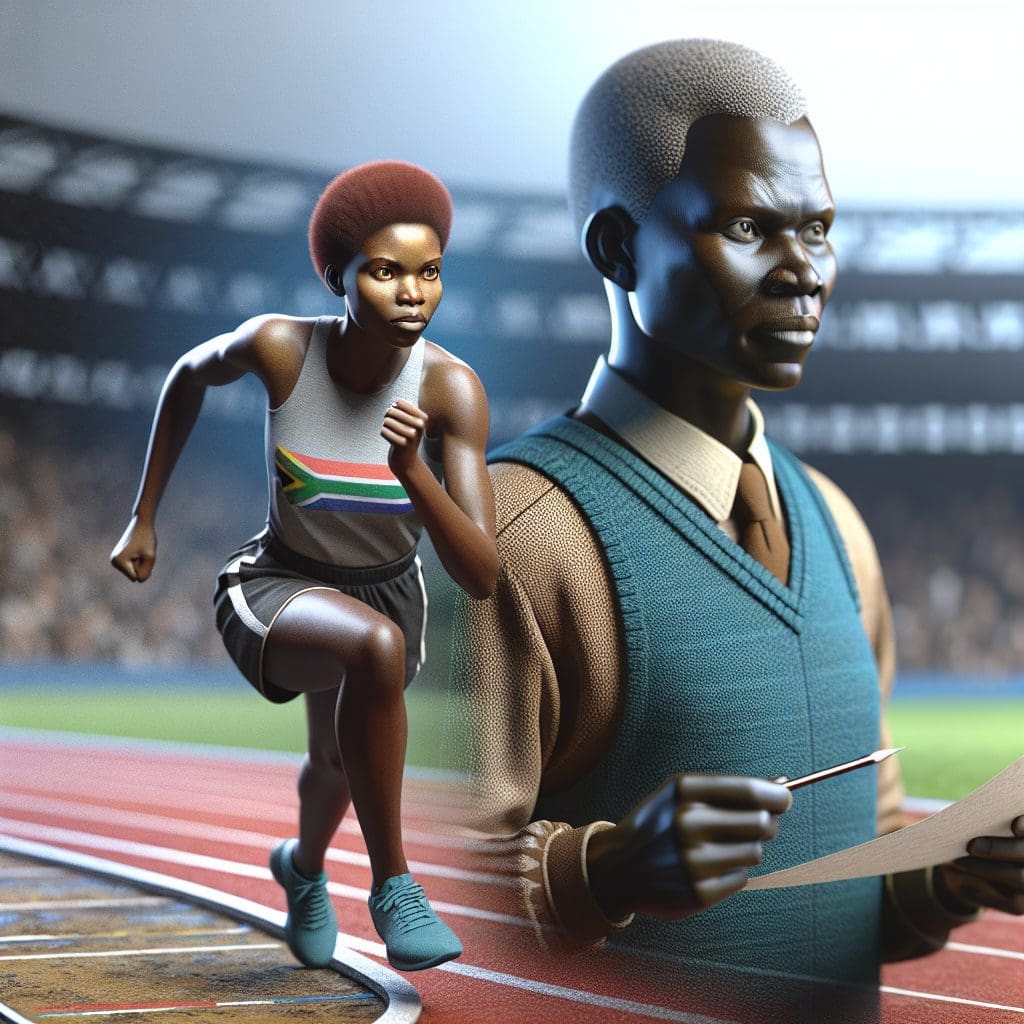

Caster Semenya, the renowned South African middle-distance runner, has once again made headlines, this time by vocally challenging Thomas Bach, the President of the International Olympic Committee (IOC). Her comments come in response to recent restrictions imposed on transgender athletes competing in women’s events, which she believes to be discriminatory and harmful.
Semenya, who has faced her own battles with athletic regulations regarding hyperandrogenism, understands all too well the complexities and nuances surrounding gender and competition. She has been embroiled in a long-standing controversy related to her natural testosterone levels, which have led to restrictive measures placed upon her by World Athletics. These rules, aimed at leveling the playing field, have sparked debates around fairness, inclusion, and the essence of what it means to be a woman in sports.
In her statement, Semenya criticized the IOC and highlighted the need for empathy and inclusivity in sports. She argued that the rules targeting transgender athletes fail to consider individual experiences and identities. Semenya emphasized that while it is crucial to ensure fair competition, these regulations can alienate and marginalize a group that is already facing social stigma and discrimination.
The IOC’s recent decision dictates that transgender women must demonstrate that their testosterone levels have been below a certain threshold for a significant period before competing in women’s events. This ruling has ignited fierce debate across the sporting world and beyond. Advocates for transgender rights argue that such policies infringe upon personal freedoms and perpetuate systemic inequality, while some athletes and stakeholders insist that gender classification needs strict guidelines to maintain a competitive balance.
By calling out the IOC president, Semenya has aligned herself with wider movements advocating for inclusivity in sports. Her unique perspective as an athlete grappling with her identity within an often rigid and unforgiving system makes her voice particularly influential. Her efforts are not just about her own experiences but also serve as a reminder that sports should be a sanctuary for all athletes—regardless of their gender identity.
The discussions surrounding Semenya’s comments and the IOC’s policies illustrate the ongoing challenges faced by sports governing bodies in balancing fairness with inclusivity. As the landscape of athletics evolves, it becomes increasingly imperative for organizations like the IOC to engage in meaningful dialogue and reconsider their policies—a task that insists on sensitivity, understanding, and respect for all athletes’ rights. Caster Semenya’s tenure in sports has symbolized resilience, and her advocacy reflects a growing call for change within the sporting community.
For more details and the full reference, visit the source link below: