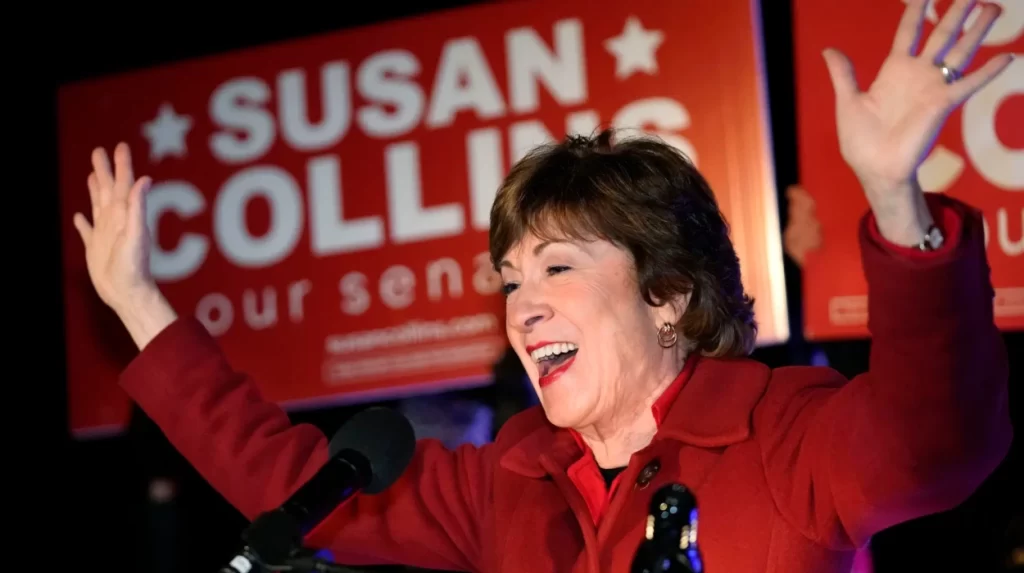

As the 2024 elections loom on the horizon, Senator Susan Collins finds herself in a precarious position amid the political machinations of the Republican Party. As a centrist figure in a predominantly blue state, Maine, Collins has cultivated a reputation for bipartisanship throughout her career. However, her stances also make her a target for more polarizing elements within the Republican Party, particularly supporters of former President Donald Trump.
Trump’s influence over the GOP remains a double-edged sword. While many Republicans rally around him, his opposition can be fierce, especially when party loyalty is questioned. Collins, who has occasionally diverged from Trump on key issues, faces significant challenges as she seeks reelection. Her moderate positions, which have won her some Democratic support, may alienate the MAGA base that occupies a substantial part of the party’s grassroots.
The stakes are high for Collins, as Maine’s demographic diversity and changing political landscape create a challenging environment for her reelection campaign. The state’s independent voters, who often play a crucial role in elections, are particularly wary of candidates perceived as too extreme. Collins has managed to align with these voters in the past through her focus on pragmatism and her willingness to work across the aisle.
However, as Trump continues to dominate the narrative within the GOP, his potential endorsement of a primary challenger could further complicate her bid. There are whispers within Republican circles of a more Trump-aligned candidate emerging, one who could capitalize on Collins’ perceived vulnerabilities. Such a primary challenge would not only threaten her nomination but could also spark division within the party, prompting debates over ideological purity versus electability.
In this hypercharged political atmosphere, Collins must tread carefully. Her challenge will be to maintain her centrist stance while simultaneously appeasing the more conservative factions that have gained traction within the party. The risk of alienating traditional Republican voters in favor of moderates could prove detrimental to her campaign, especially if turnout remains critical for the GOP.
Voter engagement will be crucial in a midterm election that could test the limits of Collins’ legacy as a unifying figure. Her ability to communicate her commitment to core Republican values while also addressing the concerns of the more progressive electorate will be a delicate balancing act.
In the face of internal party opposition and a shifting political landscape, Collins will need to harness her political acumen to navigate the complexities of the election ahead while ensuring that she remains true to her principles. The outcome of this battle could define not only her future but also the direction of the Republican Party in Maine and beyond.
For more details and the full reference, visit the source link below: