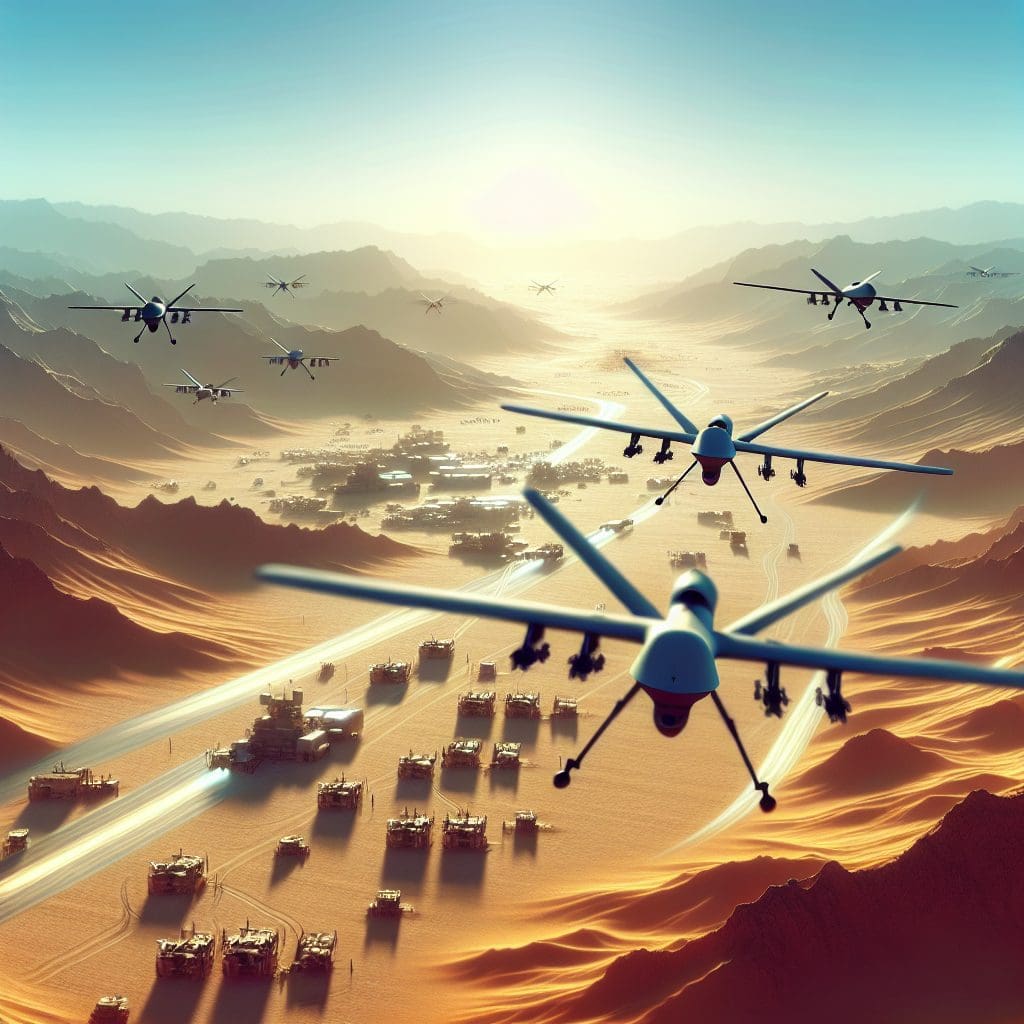

The Significance of Iranian Attack Drones in the Conflict
Iranian attack drones have emerged as a pivotal component in modern warfare, significantly impacting regional conflicts and reshaping military strategies. Their advanced capabilities and strategic deployment underscore their importance in Iran’s defense doctrine and regional power dynamics.
At the forefront, Iranian drones provide a cost-effective means of engaging in asymmetric warfare. They offer significant operational advantages over traditional manned aircraft, including lower operational costs, reduced risk to pilots, and the ability to carry out missions in contested airspace. This has allowed Iran to project power beyond its borders, effectively supporting allied groups and proxy forces in the Middle East, notably in Syria, Iraq, and Yemen. Iranian-backed militias have successfully integrated these drones into their arsenals, enabling them to conduct reconnaissance, surveillance, and precision strikes, thereby enhancing their combat efficacy against more conventional military forces.
The technological advancements in Iranian drone capabilities cannot be overlooked. Tehran has developed a variety of drones, ranging from reconnaissance UAVs to armed models capable of precision strikes against strategic targets. For instance, the Shahed series has gained notoriety for its ability to conduct long-range strikes. Their development is indicative of Iran’s broader strategy to enhance its military self-sufficiency while circumventing traditional arms embargoes. The incubation of drone technology within Iran’s defense industries underscores the nation’s commitment to modernizing its military capabilities and maintaining deterrence.
Furthermore, the proliferation of Iranian drones to proxy groups has increased the complexity of conflicts across the region. By providing these capabilities to non-state actors, Iran has effectively extended its influence while complicating the operational environment for adversaries. In conflicts where traditional military engagement might be challenging, such as in urban environments or insurgency contexts, drones provide a means for asymmetric forces to achieve tactical advantages.
Internationally, the use of Iranian drones has sparked concerns regarding regional stability and security. Their deployment has prompted responses from nations like Israel and Saudi Arabia, which view these drones as threats to their national security. This has led to heightened tensions and the potential for conflict escalation. Moreover, the evolving drone technology poses challenges for air defense systems, compelling nations to adapt rapidly to counter evolving threats.
In conclusion, Iranian attack drones are not just tools of warfare but instruments of geopolitical strategy. Their significance extends beyond immediate tactical advantages, influencing broader regional dynamics and prompting shifts in military postures among various state and non-state actors. As drone technology continues to evolve, the ramifications of their use in conflict will likely reverberate across the geopolitical landscape for years to come.
For more details and the full reference, visit the source link below: