
The geopolitical landscape of the Arctic region is undergoing significant transformation, particularly in the wake of recent actions and statements made by former President Donald Trump regarding Greenland. In 2019, Trump sparked controversy by proposing the purchase of Greenland from Denmark, a notion widely dismissed and criticized. However, that dialogue has reignited discussions around Arctic security, sovereignty, and international relations, particularly looking towards 2026.
As climate change continues to melt Arctic ice, new shipping routes and untapped natural resources become increasingly accessible. This shift is not without its challenges. The region has historically been a focal point for territorial disputes, with various nations—including the United States, Russia, Canada, and Denmark—laying claim to portions of the Arctic. Trump’s gestures toward Greenland, not merely a real estate deal but a symbol of U.S. interest in the Arctic, have highlighted the urgency for a unified strategic approach to northern security.
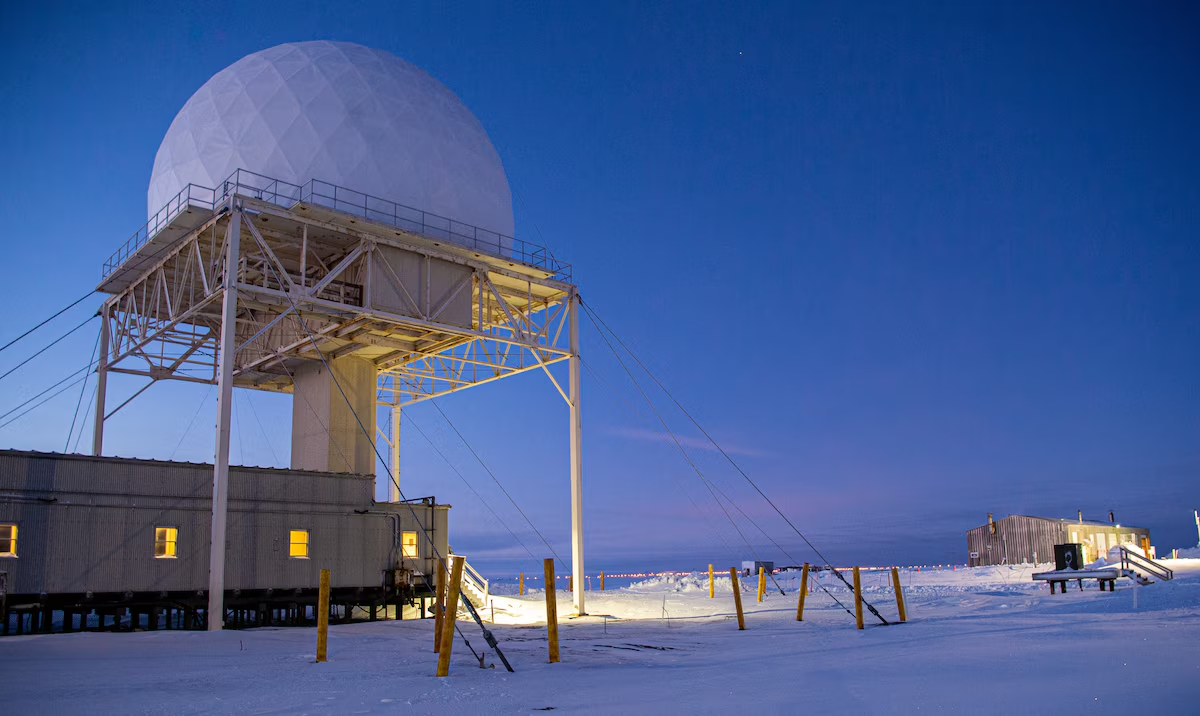
The Arctic’s rising significance is exemplified by military posturing and the establishment of bases, particularly by Russia, which has aggressively expanded its presence in the region. As nations grapple for influence over potential oil and gas reserves, Trump’s vision for Greenland raises the stakes, transforming a previously overlooked territory into a central element of U.S. foreign policy.
By 2026, the implications of Trump’s Greenland proposal could evolve into a more defined policy framework. The U.S. might seek to forge stronger alliances with Arctic nations, emphasizing cooperative approaches to address issues such as environmental protection, indigenous rights, and sustainable resource management. Nonetheless, the Arctic Council, which brings together eight Arctic nations, will face pressure to balance strategic interests with collaborative governance, particularly as countries navigate conflicting maritime claims.
Moreover, the threat of militarization looms large. Russia has resumed Cold War-era military builds across the Arctic, leading to concerns among NATO allies. Should the U.S. leverage its claim to Greenland as a means of enhancing national security, the potential for increased tensions with Russia and other nations becomes a distinct possibility. A robust U.S. presence in Greenland could provide critical tactical advantages, but it also risks provoking assertive countermeasures from rival powers.
In conclusion, Trump’s Greenland discourse is merely the tip of the iceberg in reshaping Arctic security dynamics by 2026. The interaction between national ambitions, environmental challenges, and international diplomacy will likely redefine the Arctic narrative. As stakeholders navigate these complexities, a cohesive U.S. strategy will be essential to maintain peace and stability while harnessing the region’s potential. The Arctic, once seen as distant and uninhabitable, is quickly becoming a stage for pivotal global security dialogues—one where forethought will determine the outcomes of tomorrow.
For more details and the full reference, visit the source link below:
Read the complete article here: https://brusselsmorning.com/trump-greenland-threat-2026/90353/