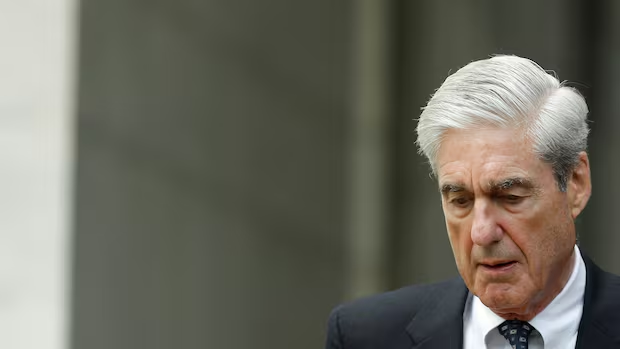

Former President Donald Trump has stirred significant controversy with remarks concerning Robert Mueller, the former Special Counsel who led the investigation into potential Russian interference in the 2016 presidential election. During a recent political rally, Trump referred to Mueller’s death as “good,” prompting widespread backlash from various political figures, media outlets, and the public. This incendiary comment has drawn attention not only for its content but also for the context in which it was made.
Mueller, who served as the director of the FBI before leading the investigation, has been a polarizing figure in American politics. His inquiry sought to determine whether the Trump campaign colluded with Russian operatives to influence the election’s outcome. The subsequent report, while inconclusive regarding direct collusion, detailed numerous instances of Russian interference and prompted calls for accountability. Trump’s remarks came at a time when the nation is still grappling with the implications of the Mueller investigation and the divisions it has created.
Critics argue that Trump’s comment reflects a deeper issue of political hostility, suggesting that his words are indicative of a broader trend of incitement against political adversaries. Many see such comments as dangerous, especially given the political climate in the United States, which has seen increased polarization and, in some cases, violence inspired by political rhetoric. Trump’s supporters, however, often interpret his blunt language as a hallmark of his “no holds barred” approach to politics, asserting that he speaks directly and authentically.
Reactions to Trump’s comments have been swift. Some lawmakers, including those from his own party, have condemned the remarks as inappropriate and harmful. Advocacy groups addressing issues of political violence and respect for public figures have voiced concern, calling for greater accountability in political discourse. They argue that comments that suggest violence or endorse harmful sentiments can lead to real-world consequences.
On social media, reactions have also flooded in, with users expressing shock and disapproval. Many have drawn parallels between Trump’s rhetoric and historical instances of political violence, emphasizing the importance of maintaining a respectful dialogue in a democratic society. As the country inches closer to another election cycle, Trump’s remarks raise questions about the tone and tenor of political discourse in the current era.
In summary, Trump’s comment regarding Robert Mueller’s death exemplifies the contentious atmosphere in contemporary American politics. As figures across the spectrum express their outrage, the implications of such rhetoric could resonate far beyond the political arena, influencing how discussions about accountability, justice, and respect are conducted in the future.
For more details and the full reference, visit the source link below: