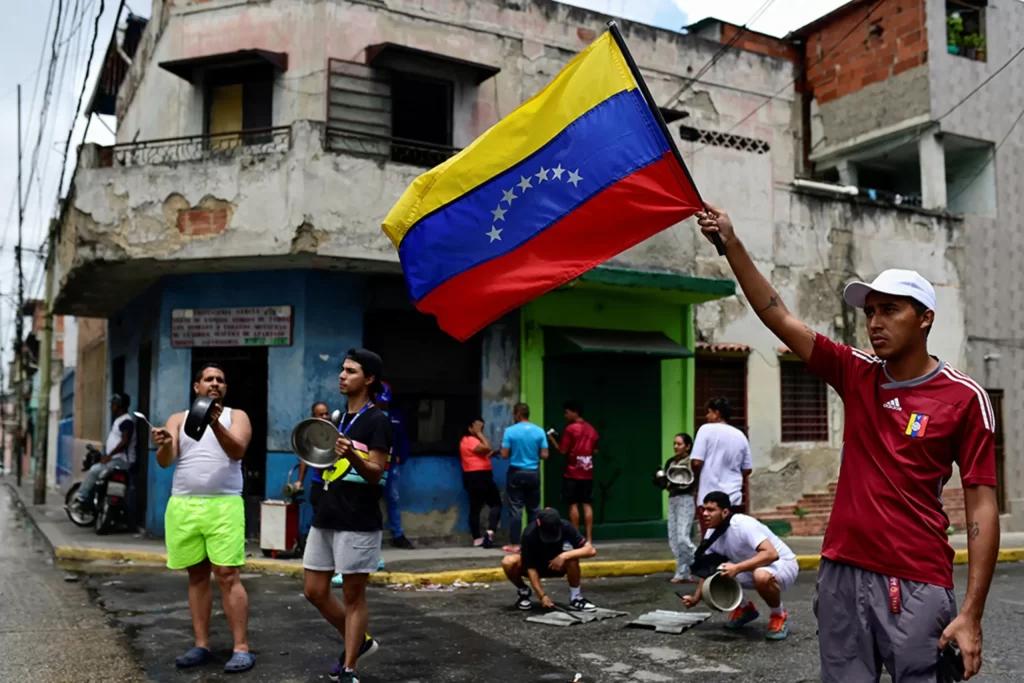

The ongoing tensions between the United States and Venezuela represent a critical turning point in the geopolitical landscape of the Americas. Historically, the relationship has been fraught with complexities rooted in political ideologies, economic sanctions, and social upheaval. The recent escalation of hostilities underscores a pivotal moment that could reshape not only bilateral relations but also the broader dynamics within the region.
Since the rise of Hugo Chávez in the late 1990s, U.S.-Venezuela relations have been strained, characterized by Chávez’s anti-American rhetoric and his efforts to build alliances with countries like Russia and Iran. His successor, Nicolás Maduro, has continued this trend, leading to a further deterioration in diplomatic relations. The U.S. has accused the Maduro regime of human rights abuses, electoral fraud, and a range of corruption charges, while Venezuela has responded with accusations of U.S. imperialism and interventionism.
Recent developments have intensified the situation. The Biden administration’s focus on addressing issues such as migration, democratic governance, and drug trafficking has led to a reevaluation of its stance towards Venezuela. Sanctions imposed during the Trump administration have straitjacketed the Venezuelan economy, leading to mass migrations and humanitarian crises. However, as geopolitical tensions rise, particularly with regard to energy security amidst the war in Ukraine, the U.S. may be forced to reconsider its approach towards Venezuelan oil.
This turning point comes at a time when Venezuela is experiencing a slow economic recovery, thanks in part to rising oil prices, which have increased the government’s revenue. Yet, this resurgence is tempered by widespread poverty and political repression. The Biden administration’s recent overtures, including talks about easing sanctions to stabilize oil markets, indicate a pragmatic shift. This reflects an understanding that engaging with Venezuela might be necessary to counterbalance the influence of adversarial nations and to alleviate the humanitarian crisis.
The stakes are high as the U.S. navigates this complex web. Any miscalculation could lead to unintended consequences not just for U.S. interests, but also for the stability of the region. Countries like Colombia and Brazil are closely monitoring these developments, given their shared borders and historical ties to Venezuela.
As tensions evolve, it’s crucial for policymakers to find a balance between supporting democratic ideals and practical geopolitical interests. A failure to adequately address the root causes of the crisis in Venezuela, including poverty and political exclusion, could undermine any progress made through diplomatic engagement. In essence, the future of U.S.-Venezuela relations hangs in a delicate balance, poised on the edge of a turning point that could define the trajectory for both nations and the region at large.
For more details and the full reference, visit the source link below: