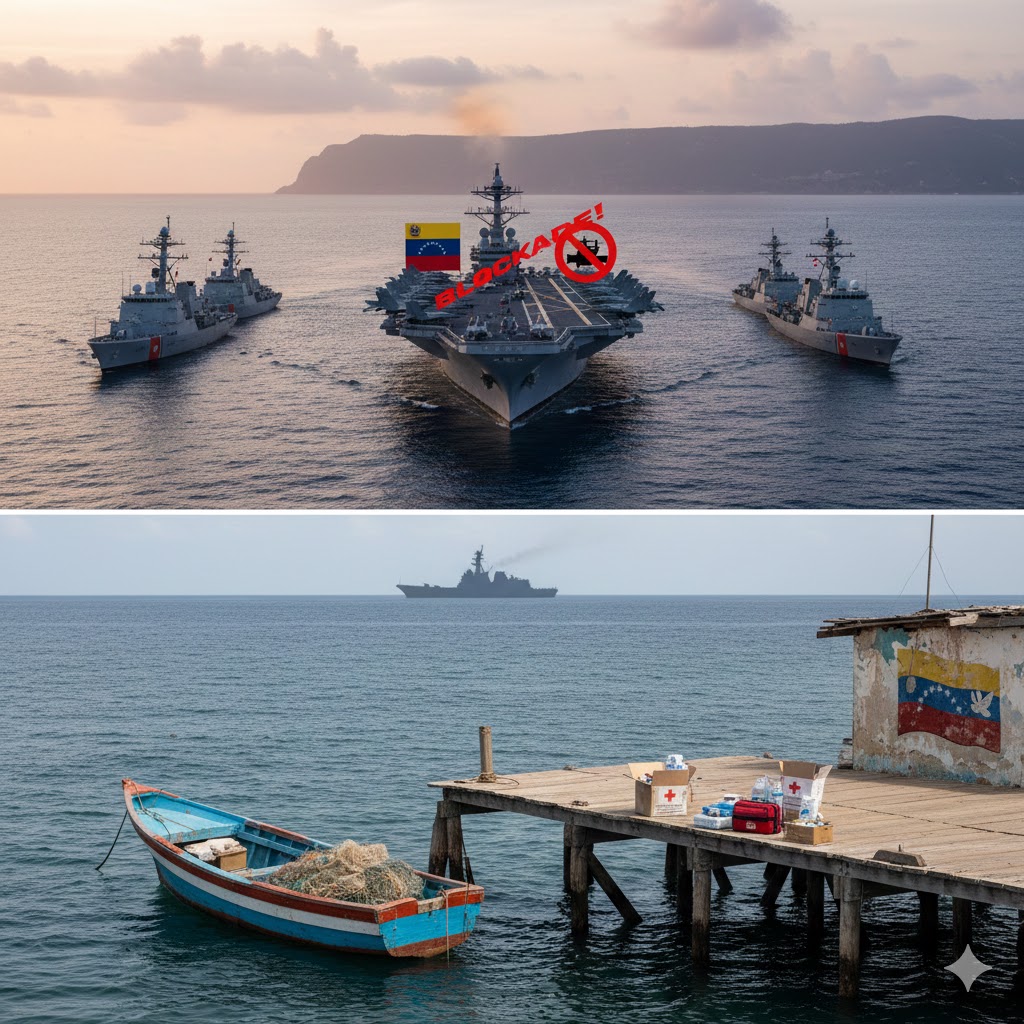

Venezuela has recently expressed strong disapproval of what it perceives as aggressive and warmongering threats from the United States, particularly under the leadership of former President Donald Trump. The Venezuelan government has labeled Trump’s maritime blockade as an act of economic warfare, aimed at destabilizing the nation and undermining its sovereignty. This blockade has been characterized by Caracas as a direct assault on the principles of international law and a violation of national rights.
The blockade, intended to impede the flow of goods, services, and oil exports from Venezuela, has been justified by the U.S. as a measure to combat alleged human rights abuses and governmental corruption within the country. However, Venezuelan officials argue that this approach serves only to exacerbate the suffering of ordinary Venezuelans, who are already grappling with severe economic hardship. The blockade has contributed to widespread shortages of essential goods, including food and medical supplies, fueling a humanitarian crisis that has led millions to flee the country.
Venezuelan President Nicolás Maduro has consistently decried the sanctions, insisting that they are a clear violation of Venezuelan sovereignty. He has called upon the international community to take a stand against what he describes as imperialist interventions that target nations striving for self-determination. Maduro’s administration frames the blockade as part of a broader pattern of aggression from the U.S., which he claims seeks to impose its will on countries that resist American dominance.
The impact of the blockade extends beyond immediate economic challenges. It has also intensified political tensions within the country, further polarizing an already divided populace. In response, Maduro has utilized nationalist rhetoric to bolster support for his government, portraying the blockade as a rallying point against external threats. This strategy aims to consolidate power and divert attention from internal issues, including political unrest and governance struggles.
Internationally, the blockade has drawn criticism from various nations and human rights organizations that view it as counterproductive. They argue that such economic measures disproportionately affect vulnerable populations, rather than the political elite the U.S. aims to target. Critics assert that a more diplomatic approach could foster dialogue and potentially lead to constructive solutions to Venezuela’s political and economic troubles.
In conclusion, Venezuela’s denouncement of Trump’s ship blockade highlights a significant aspect of contemporary geopolitical conflict. The situation encapsulates the complex interplay between foreign policy, economic sanctions, and humanitarian needs, raising important questions about the efficacy and morality of such measures in achieving political change. As both nations navigate these turbulent waters, the path forward remains fraught with challenges, requiring a careful examination of the underlying causes and consequences.
For more details and the full reference, visit the source link below: