
Waymo Self-Driving Car Blocks Ambulance During Austin Mass Shooting: An In-Depth Analysis
Introduction
In recent years, the emergence of self-driving cars has ignited a wide-ranging debate around technology, safety, and ethics. Waymo, one of the leaders in autonomous vehicle technology, became the center of controversy when one of its self-driving cars reportedly blocked an ambulance during a critical moment in the Austin mass shooting. This incident raises important questions about the capabilities of autonomous vehicles in high-pressure emergency situations and the underlying technology that governs their behavior.
Background on Waymo and Autonomous Vehicles
Waymo, a subsidiary of Alphabet Inc., has been at the forefront of developing self-driving technology since its inception in 2009. With extensive testing in various scenarios, Waymo aims to improve roads and make them safer for everyone. However, the recent incident has cast a shadow on their safety claims, prompting further scrutiny from the public and regulatory bodies alike.
What Happened: Details of the Incident
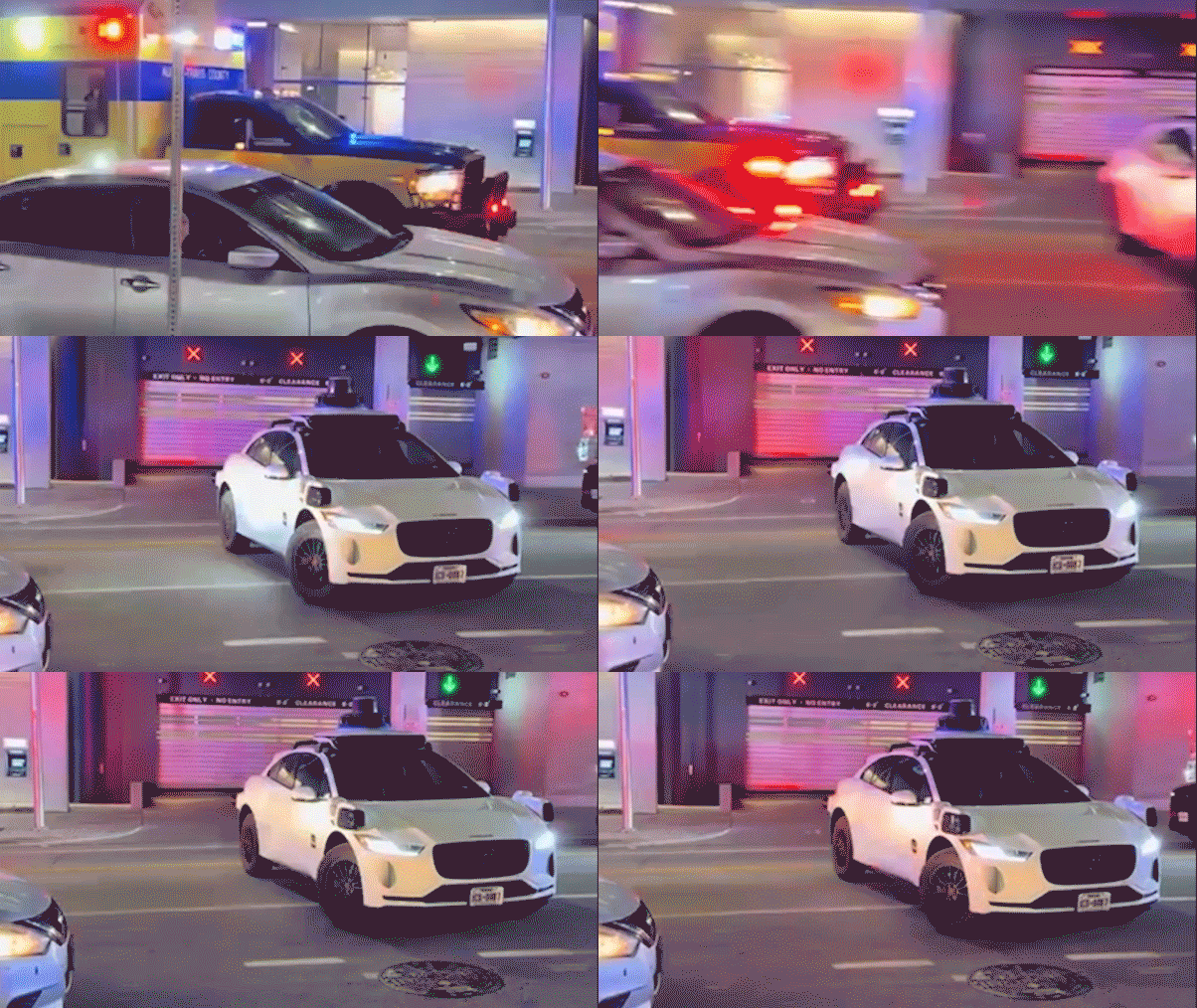
During a tragic mass shooting event in Austin, Texas, emergency responders struggled to transport victims to hospitals due to congested routes blocked by various vehicles. Unfortunately, a Waymo self-driving car was among them. Witnesses reported that the automated vehicle failed to yield, leading to delays in an already chaotic situation.
The Immediate Impact
The presence of the Waymo vehicle hindered ambulances from reaching injured individuals promptly, sparking outrage across social media and local news channels. In life-and-death situations, every second counts, and the inability of a self-driving car to navigate an emergency could have dire consequences. This incident not only highlights potential flaws in the autonomous vehicle technology but also raises concerns about how such systems are programmed to interact with emergency vehicles.
The Technology Behind Autonomous Vehicles
Autonomous vehicles rely on a combination of sensors, algorithms, and artificial intelligence to operate. However, the technology isn’t foolproof. Situational awareness is critical, and deviations from expected norms can result in malfunction or poor decision-making.
Sensor Limitations
Waymo’s vehicles use lidar, cameras, and radar systems to detect their environment. While these sensors are advanced, they sometimes have difficulty interpreting rapid changes or emergencies. In situations where human judgment calls are needed, self-driving cars may struggle. The ambiguous scenarios like the one faced in Austin highlight the limitations of these technologies.
Ethical and Moral Algorithms
Another aspect that cannot be ignored is the ethical programming of these vehicles. Autonomous cars need to be programmed to prioritize human life in emergencies, but programming such decisions into algorithms is complex. Should a vehicle prioritize moving out of the way for an ambulance, even if it means putting pedestrians at risk?
Public Response and Reactions
Following the incident, public outrage was palpable. Many social media users expressed their disbelief that a self-driving car could block an emergency vehicle at such a critical time. News outlets covered the story extensively, fueling a growing concern about the readiness of autonomous cars for real-world scenarios.
Calls for Regulation
The incident has prompted calls for stricter regulations concerning autonomous vehicles. Many argue that companies like Waymo should be required to implement fail-safes that ensure their cars give way to emergency vehicles. The necessity for greater oversight in the evolving landscape of self-driving technology has never been more urgent.
Implications for Emergency Services
The Austin mass shooting incident holds serious implications for emergency services. As cities adopt more autonomous vehicles, cooperation between these cars and emergency responders will be crucial.
Integration with Emergency Protocols
Emergency service departments may need to reevaluate their protocols for navigating urban environments filled with autonomous vehicles. The integration of technology in emergency responses could streamline the process and save lives, but only if these vehicles are programmed to cooperate effectively during emergencies.
Future of Self-Driving Cars
The future of self-driving cars is uncertain, influenced heavily by incidents like the one in Austin. As technology continues to evolve, improvements are expected, but the questions regarding ethics, safety, and infrastructure will remain.
Investing in Better Technology
Waymo and other companies in the industry must prioritize investments in better technology, focusing on improved decision-making algorithms that can handle emergencies involving human life.
Potential Solutions
Developing better communication systems between autonomous vehicles and emergency response teams could also be vital. By utilizing dedicated channels or signals, these vehicles could better understand when to yield or make way during critical incidents.
Conclusion
The Waymo self-driving car blocking an ambulance during the Austin mass shooting has unveiled significant issues that need urgent attention. The intersection of technology, ethics, and human life is complicated, and as the world leans further into automation, lessons must be learned from this incident.
Future improvements in the capabilities of self-driving cars must prioritize the welfare of humans, particularly during emergencies. Stricter regulations and additional research will be crucial in shaping a future where autonomous vehicles and human life can coexist more safely and efficiently. The path forward will require cooperation among product developers, regulators, and emergency responders to ensure that technology enhances, rather than hinders, public safety.
By addressing these significant concerns, we can look toward a future in which self-driving cars enhance the quality of life while safeguarding essential services like emergency response.