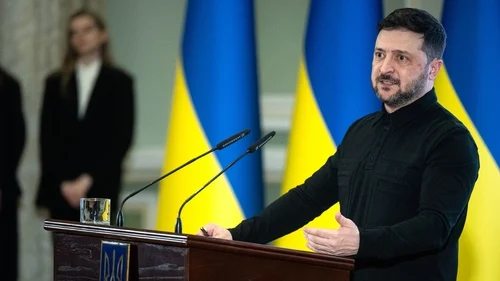

Ukrainian President Volodymyr Zelensky is actively pursuing a peace plan aimed at establishing demilitarized zones, a strategic response to the ongoing conflict with Russia. As the war enters its third year, Zelensky’s initiative marks a significant shift in the diplomatic landscape, aiming not only to halt hostilities but also to outline a framework for lasting peace.
The proposed demilitarized zones would serve as buffer areas between Ukrainian and Russian forces, intended to reduce the risk of direct confrontations and civilian casualties. The concept is rooted in previous peace agreements that have sought to stabilize conflict zones around the world, offering a potential pathway for de-escalation. Zelensky’s approach underscores a commitment to safeguarding Ukrainian sovereignty while acknowledging the complexities of the current geopolitical climate.
Key to the success of this initiative is international cooperation. Zelensky has been vocal in seeking support from Western allies, including the United States and European nations. By garnering their backing, he aims to ensure that any agreement is robust and enforceable. The integration of global powers could also facilitate more comprehensive discussions about security guarantees for Ukraine, addressing fears about long-term territorial integrity.
The demilitarized zones would ideally allow for humanitarian aid to flow more freely into affected regions, where millions of Ukrainians continue to grapple with the ramifications of war, including displacement and food insecurity. Creating safe corridors for aid will not only alleviate immediate humanitarian crises but also pave the way for rebuilding efforts and a return to normalcy.
However, the peace plan does face significant hurdles. Russia’s willingness to engage in meaningful dialogue remains uncertain, especially given its historical stance on territorial claims in Ukraine. Additionally, the inherent risks of demilitarized zones—such as the possibility of violations or misunderstandings—require careful planning and oversight. The implementation of such a plan would necessitate precise coordination between all parties involved, as well as a strong commitment to uphold agreements.
Zelensky’s proposed peace strategy signifies a pivotal moment for Ukraine, as it balances the dual imperatives of seeking peace and maintaining national security. In a conflict marked by significant loss and devastation, the establishment of demilitarized zones could represent a crucial step toward restoring stability in the region. While challenges abound, Zelensky’s determination to explore diplomatic avenues showcases a resilient hope for peace, providing a framework for dialogue that could ultimately reshape the future of Ukraine and its relationship with its neighbors.
For more details and the full reference, visit the source link below: