
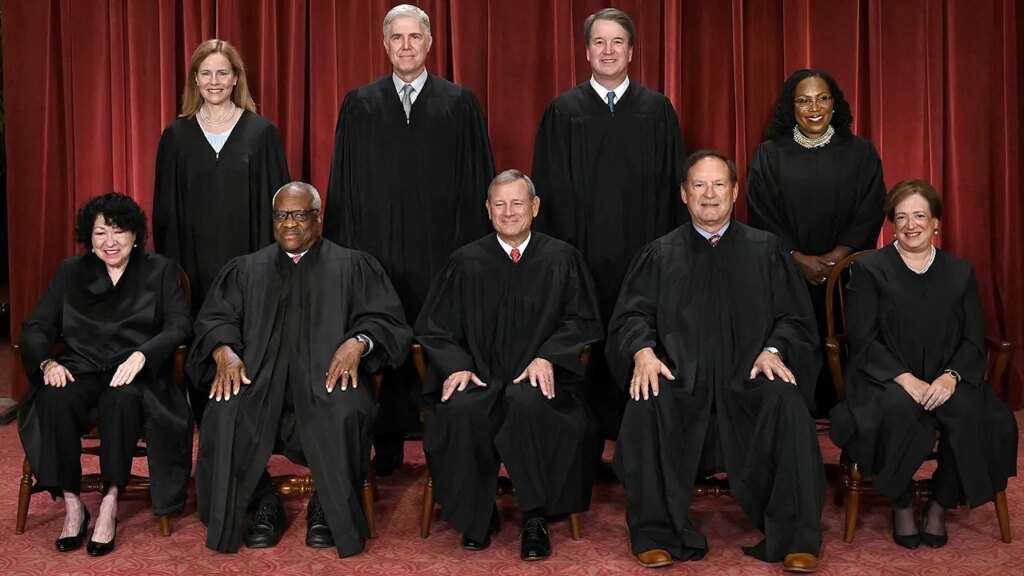

Supreme Court Set to Close Term with Landmark Birthright Citizenship Ruling
The Supreme Court of the United States is poised to conclude its current term with a significant and potentially transformative ruling on birthright citizenship. This decision could redefine what it means to be a citizen in the eyes of the law and has the potential to affect millions of families across the nation. In a time where immigration policies are central to political debates, this ruling stands to make waves throughout society, law, and political agendas.
Understanding Birthright Citizenship
Birthright citizenship is defined by the principle that anyone born on U.S. soil automatically obtains citizenship, regardless of their parents’ immigration status. The foundation of this principle arises from the 14th Amendment to the Constitution, ratified in 1868, which states that all persons born or naturalized in the United States are citizens.
This clause has been a fundamental aspect of American immigration and citizenship law for over a century. However, it has faced scrutiny and challenge in recent years, particularly as political discourse increasingly centers around topics of immigration and national identity.
The Implications of the Ruling
The upcoming Supreme Court ruling could either uphold the long-standing interpretation of the 14th Amendment or introduce significant changes that may limit the scope of birthright citizenship. The ruling holds tremendous weight, as it will not only reflect the Court’s stance on immigration but also resonate across various societal layers, including legal, educational, and social sectors.
Impact on Families
For many families, particularly those with mixed immigration status, the outcome of this ruling is deeply personal. Should the Court decide to curtail birthright citizenship, millions of children born to undocumented parents could face legal uncertainties surrounding their citizenship status. Fears over deportation and lack of access to essential services could drive families into isolation, threatening the fabric of communities across the nation.
Political Ramifications
Politically, this ruling could ignite further polarization in an already divided landscape. Advocates for immigrant rights fear that limiting birthright citizenship would embolden anti-immigrant sentiments and potentially open the floodgates for a series of legislations aimed at dismantling the protections afforded to immigrants. On the other side of the aisle, those in favor of stricter immigration laws argue that birthright citizenship is a magnet for illegal immigration and a drain on public resources. This ruling could serve as a rallying point for both sides, heightening tensions as midterm elections approach.
Other Top Headlines Leading to the Supreme Court Ruling
1. Recent Decisions on Immigration Policy
As the Supreme Court prepares for this landmark ruling, several recent decisions on immigration policy have highlighted ongoing challenges. Notably, lower courts have grappled with issues surrounding Deferred Action for Childhood Arrivals (DACA), family separation policies, and public charge rules, creating a complicated judicial landscape that the Supreme Court must navigate.
2. Public Sentiment on Immigration
Public sentiment towards immigration has shifted in recent years. Polls indicate a growing empathy towards immigrant communities, particularly those who have been additives to society, contributing to the economy, and enriching the cultural mosaic of the nation. The Supreme Court’s decision could reflect or diverge from these sentiments, impacting general public trust in the judicial system.
3. Legal Precedents at Play
The current deliberations take place against a backdrop of landmark legal precedents. Previous rulings on immigration and citizenship rights are being re-examined in this context. Legal analysts and experts are closely watching these developments as they could inform the Court’s decision, especially in how they interpret the 14th Amendment.
SEO Optimization Strategies
To ensure wide visibility for this topic, which has vital implications for both public and legal spheres, several SEO strategies can be deployed. Here are some recommendations:
Keyword Optimization
Incorporate relevant keywords such as “birthright citizenship,” “Supreme Court ruling,” “14th Amendment,” and “immigration policy.”
Long-Tail Keywords
Using long-tail keywords like “impact of Supreme Court on birthright citizenship” and “birthright citizenship ruling implications” can target specific queries and effectively raise the content’s search ranking.
Quality Backlinks
Linking to reputable sources such as governmental websites, legal journals, and prominent news organizations can bolster the content’s credibility, enhancing its chances for higher visibility on search engines.
Engaging Titles and Headers
Using engaging subheadings and meta descriptions will improve click-through rates. Example titles could include “Birthright Citizenship: A Turning Point for U.S. Immigration” or “The Supreme Court’s Defining Ruling on Citizenship Rights.”
Conclusion
As the Supreme Court nears a decision on birthright citizenship, the outcome will undoubtedly reverberate through the lives of millions. The implications touch various aspects of individual lives, raise pressing questions about national identity, and present complex legal challenges.
In a rapidly changing social and political climate, the Court’s ruling will not just mark an endpoint to the current term but could also signify a new chapter in the ongoing discussion regarding citizenship in the United States. As we await the verdict, one thing is clear — the final decision will shape immigration policy and citizenship rights for generations to come.


