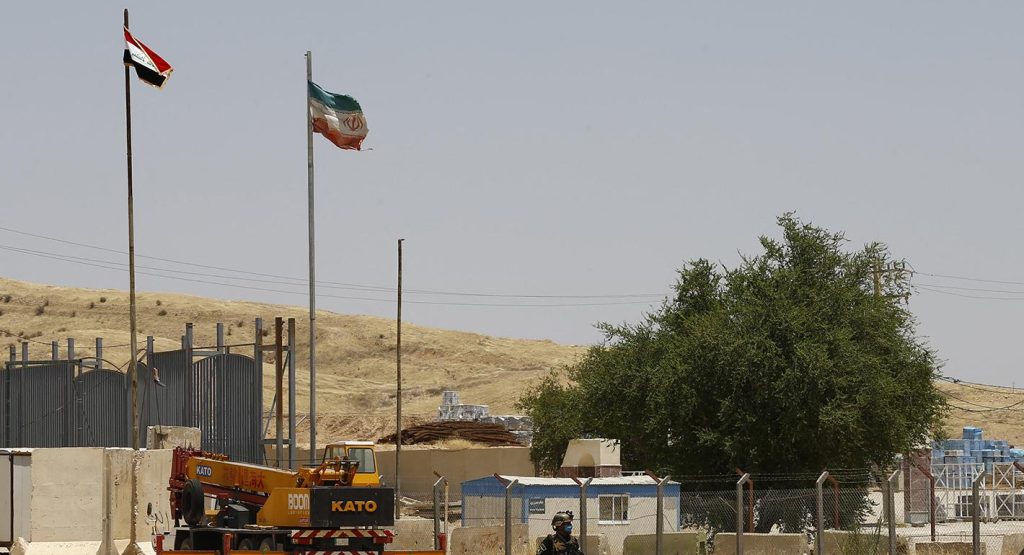

Armed Kurdish Groups Face Critical Border Shift 2026
In 2026, the geopolitical landscape in the Middle East underwent a significant transformation, marked by critical shifts in borders that directly impacted various armed Kurdish groups. These groups, historically marginalized and engaged in long-standing struggles for autonomy, found themselves navigating an increasingly complex scenario in the wake of changing alliances and regional power dynamics.
As tensions escalated between regional players and international actors, the traditional strongholds of Kurdish groups in Iraq, Syria, Turkey, and Iran came under intense scrutiny. The borders that once delineated these territories became contentious points of negotiation as new geopolitical realities emerged. The rise of new state actors and the reconfiguration of old alliances prompted Kurdish factions to reevaluate their strategies and objectives.
The dynamics became more intricate as external powers, including the United States, Russia, and Iran, recalibrated their positions concerning Kurdish aspirations. The U.S., which had previously supported certain Kurdish factions in the fight against ISIS, appeared to shift its focus towards stabilizing relations with Turkey, causing unease among Kurdish leaders. The Kurdish groups, particularly the People’s Protection Units (YPG) in Syria and the Kurdistan Workers’ Party (PKK) in Turkey, found themselves sandwiched between opposing geopolitical interests.
One of the most pressing challenges was the internal fragmentation among Kurdish factions. Disparate groups engaged in varying levels of autonomy and resistance to central governments often competed against each other, undermining a unified Kurdish front. This fragmentation limited their ability to effectively bargain during negotiations while regional players sought to exploit these divisions. Consequently, the 2026 border shifts did not just alter physical territories but also reshaped the very fabric of Kurdish political identity.
Moreover, humanitarian crises were exacerbated by the border shifts. Displacement of populations, a frequent consequence of such geopolitical alterations, left many Kurdish civilians vulnerable. Humanitarian organizations faced difficulties in delivering aid, often entangled in complex security situations resulting from ongoing conflicts.
Despite the adverse conditions, Kurdish groups showcased resilience and adaptability. They turned increasingly towards grassroots organizing and international diplomacy, seeking to build support networks beyond their immediate borders. Engagement with international human rights bodies and advocacy for Kurdish rights gained traction, indicating a long-term strategy that emphasizes political participation over armed conflict.
As armed Kurdish groups grappled with this critical border shift, the situation illuminated the intricate interplay between local aspirations and global power dynamics. In the face of uncertainty, the Kurdish quest for autonomy remained steadfast, echoing a resilient spirit of self-determination that had defined their struggle for decades.
For more details and the full reference, visit the source link below:
Read the complete article here: https://brusselsmorning.com/armed-kurdish-groups-2026/91019/