
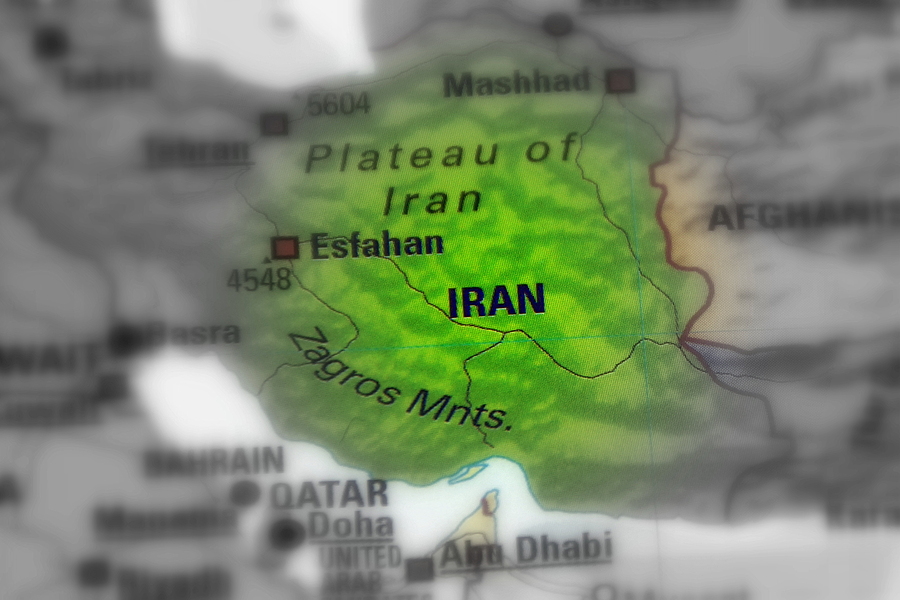

A comprehensive, fact-based chronological breakdown of the conflict involving Iran, Israel, and the United States. This detailed timeline spans the shifting proxy wars of 2023–2024, the direct kinetic confrontations of 2025, and the regional war of 2026, offering an objective analysis of military operations, nuclear diplomatic breakdowns, and geopolitical shifts in the Middle East.
Section 1: Precursors and the Collapse of Proxy Deterrence (2023–2024)
IRAN – June 28, 2026 (USPress.News) For over four decades, the geopolitical friction between the Islamic Republic of Iran, Israel, and the United States operated primarily within a paradigm of asymmetric warfare, economic sanctions, and covert operations. Iran utilized its “Axis of Resistance”—a network of non-state and state-aligned actors including Hamas in Gaza, Hezbollah in Lebanon, the Houthis in Yemen, and various militias in Iraq and Syria—to project regional influence. Concurrently, Israel engaged in what it termed the “war between wars,” executing targeted airstrikes on Iranian infrastructure and personnel across Syria and Lebanon, alongside cyber warfare against Iranian nuclear facilities.
This status quo was fractured permanently following the October 7, 2023, attacks on Israel by Hamas, which ignited a multi-front regional escalation. Throughout 2024, the conflict transitioned from proxy-driven engagements to direct, state-on-state kinetic exchanges.
The Dawn of Direct Confrontation (April 2024)
-
April 1, 2024: A suspected Israeli airstrike targeted an Iranian consular annex building adjacent to the Iranian embassy in Damascus, Syria. The attack resulted in the deaths of seven Islamic Revolutionary Guard Corps (IRGC) officers, including Brigadier General Mohammad Reza Zahedi, a senior commander in the Quds Force responsible for operations in Syria and Lebanon. Iran declared the strike a violation of diplomatic immunity and vowed direct retaliation.
-
April 13–14, 2024: Iran executed Operation True Promise, launching an unprecedented direct military assault from its territory against Israel. The strike package consisted of approximately 170 one-way attack drones, 30 cruise missiles, and over 120 ballistic missiles. A coalition comprising Israel, the United States, the United Kingdom, France, and regional partners intercepted roughly 99% of incoming projectiles, using the Arrow 3, David’s Sling, and Patriot missile defense systems, alongside carrier-based aircraft. Minimal damage was recorded at the Nevatim Airbase in southern Israel.
-
April 19, 2024: Israel conducted a calibrated, unacknowledged retaliatory strike near an airport and a major military base in Isfahan, Iran. Satellite imagery subsequently confirmed the destruction of an S-300 long-range air defense radar system, signaling Israel’s capacity to penetrate Iranian airspace undetected and bypass localized air defenses near sensitive nuclear facilities.
Decapitation of the Axis and Direct Escalation (July – October 2024)
-
July 31, 2024: Ismail Haniyeh, the political leader of Hamas, was assassinated via a covertly planted explosive device inside a secure state guesthouse in Tehran. Haniyeh was attending the inauguration ceremony of Iran’s reformist President Masoud Pezeshkian. The breach within Iran’s highest security apparatus prompted intense internal reviews and threats of severe retaliation against Israel.
-
September 27, 2024: An Israeli airstrike using bunker-buster munitions leveled the underground headquarters of Hezbollah in the Dahiyeh suburb of Beirut, Lebanon. The attack killed Hassan Nasrallah, the long-time Secretary-General of Hezbollah, along with Brigadier General Abbas Nilforoushan, the commander of the IRGC’s Quds Force in Lebanon.
-
October 1, 2024: Iran responded by launching approximately 180 ballistic missiles—including high-velocity Fattah-1 and Ghadr-110 missiles—directly at Israeli military and intelligence infrastructure. While the majority were neutralized by joint Israeli-U.S. air defense operations, several missiles penetrated the air defense umbrella, striking areas near Tel Aviv and Nevatim Airbase. One Palestinian civilian was killed by falling debris in the West Bank.
-
October 26, 2024: Israel executed Operation Days of Repentance, deploying over 100 combat aircraft across multiple waves to strike targets inside Iran. The operation systematically dismantled Iran’s strategic air defense networks, including its remaining Russian-supplied S-300 batteries, and severely damaged liquid-fuel mixing facilities critical to Iran’s long-range ballistic missile production. Iranian state media downplayed the damage, reporting the deaths of four military personnel.
Section 2: Diplomatic Fractures and the Twelve-Day War (2025)
The geopolitical landscape underwent significant shifts in early 2025. Following a series of regional developments—including a brief, temporary pause in Gaza hostilities and the dramatic collapse of the Bashar al-Assad regime in Syria in late 2024—Iran found its traditional land bridge and forward deterrence network heavily compromised. Concurrently, a transition of executive leadership in the United States introduced a renewed “maximum pressure” diplomatic strategy.
The Breakdown of Nuclear Diplomacy
-
January – February 2025: The United States signaled a dual-track strategy of strict economic enforcement paired with an openness to bilateral negotiations regarding Iran’s advancing nuclear enrichment capabilities. Preliminary talks were scheduled for Geneva.
-
March – April 2025: Successive rounds of diplomatic talks were held between U.S. and Iranian representatives in Geneva, Rome, and Muscat (Oman). The negotiations aimed to establish an interim framework to freeze Iran’s stockpiles of highly enriched uranium (60% U-235 purity) in exchange for partial sanctions relief. However, the talks faced gridlock over verification protocols, ballistic missile constraints, and Iran’s demands for the permanent unfreezing of assets.
-
June 9, 2025: Tehran formally rejected the consensus U.S.-European nuclear proposal, citing an unacceptable infringement on its sovereign technological rights and inadequate guarantees against future unilateral withdrawals.
-
June 12, 2025: The Board of Governors of the International Atomic Energy Agency (IAEA) passed a formal resolution finding Iran in non-compliance with its NPT (Non-Proliferation Treaty) safeguards agreement. In defiance of the resolution, Iran announced the immediate construction and activation of a third underground enrichment facility equipped with advanced IR-6 centrifuges.
The Twelve-Day War (June 2025)
-
June 13, 2025: Citing an existential threat posed by Iran’s imminent breakout capacity to weapons-grade uranium (90%), Israel launched a massive, pre-emptive military campaign against the Islamic Republic. Over a 12-day period, Israeli long-range strike fighter fleets and cruise missiles targeted known nuclear installations, military research complexes, and critical government infrastructure across Iran.
-
June 22, 2025: The United States entered the kinetic campaign directly, conducting precision strikes on three heavily fortified underground nuclear sites, including components of the Natanz and Fordow complexes, utilizing deep-penetration munitions.
-
June 23, 2025: Iran retaliated by launching an array of ballistic missiles and drones at regional infrastructure hosting Western military assets. A primary target was an American-utilized military facility in Qatar, which suffered structural damage but minimal personnel casualties due to early warning systems and localized anti-missile defense networks.
-
June 24, 2025: Following intense backchannel diplomacy and the visible risk of unmanageable escalation, a temporary, fragile ceasefire was negotiated to halt direct airstrikes. The conflict had left Iran’s nuclear infrastructure damaged but not fully eliminated, while its conventional air defenses were critically depleted.
The Implementation of “Snapback” Sanctions
-
August 8, 2025: The E3 (France, Germany, and the United Kingdom) delivered an ultimatum to Tehran, stating that failure to return to verifiable nuclear compliance by the end of August would trigger the automatic reimposition of historical international restrictions.
-
August 28, 2025: Citing Iran’s continued enrichment activity and denial of access to IAEA inspectors, the E3 formally initiated the “snapback” mechanism under UN Security Council Resolution 2231.
-
September 19–28, 2025: Despite intense diplomatic opposition from China and Russia within the UN Security Council, the institutional mechanism proceeded automatically. On September 28, 2025, the United Nations officially reimposed comprehensive, pre-2015 multilateral sanctions on Iran, effectively isolating its financial, shipping, and energy sectors under international law.
Section 3: Internal Destabilization and Regional Flashpoints (Winter 2025–2026)
The reimposition of international sanctions, combined with the extensive infrastructure damage sustained during the Twelve-Day War, precipitated a severe macroeconomic crisis within Iran, fueling domestic unrest and hardening the state’s regional security posture.
The Economic Crisis and Civil Unrest
-
December 28, 2025: The Iranian rial experienced a historic devaluation, plunging to an unprecedented low of 1.42 million rials to one U.S. dollar on the open market. The sudden collapse caused hyperinflation in food, medicine, and basic necessities. Protests erupted spontaneously in Tehran’s Grand Bazaar and quickly spread to major commercial hubs in Mashhad, Isfahan, and Tabriz.
-
January 8, 2026: Following public coordination by exiled political networks, nationwide civilian protests intensified, with demonstrators demanding structural governance reforms and economic relief.
-
January 10–15, 2026: The Iranian government imposed a total internet and international telecommunications blackout across its territory, home to 85 million people. Security forces deployed localized measures to suppress the assemblies, leading to extensive civilian arrests and casualties, drawing severe condemnation from international human rights monitors.
Maritime Deterrence and the Strait of Hormuz
-
February 23, 2026: In an effort to counter economic strangulation, the IRGC Navy increased its deployment of fast-attack craft, anti-ship cruise missile batteries, and naval mines along the Persian Gulf. Tehran signaled that if Iran was prohibited from exporting oil, no regional state would be permitted to navigate the maritime corridor without oversight.
-
February 25, 2026: Western intelligence agencies reported irregular movements and continuity planning within Iran’s top leadership circles, indicating heightened readiness metrics across all branches of the Iranian armed forces.
Section 4: The 2026 Regional War (February – May 2026)
The friction culminated on February 28, 2026, with the initiation of a large-scale, coordinated military campaign executed by the United States and Israel against the Islamic Republic of Iran.
Operation Epic Fury and the Opening Salvo
-
February 27, 2026: High-level diplomatic indicators surfaced when the U.S. Ambassador to Israel issued an urgent memo advising embassy staff and families wishing to evacuate to do so immediately. At 20:38 UTC, the order was given to proceed with Operation Epic Fury.
-
February 28, 2026: The war commenced with an unprecedented joint aerial assault. Within the first 12 hours of Operation Epic Fury, U.S. and Israeli assets delivered nearly 900 precision strikes across Iran. The primary objectives were the systematic degradation of Iran’s command-and-control apparatus, hardened missile storage facilities, drone manufacturing plants, and long-range air defense nodes.
-
The Decapitation Strike: A primary targeted strike during the opening salvo hit a heavily fortified leadership compound in Tehran, killing Supreme Leader Ali Khamenei along with a substantial contingent of senior military and political advisors. This event severely disrupted the state’s institutional decision-making framework.
-
Collateral Incidents: During the chaotic opening bombardment, a precision missile struck a site adjacent to a naval installation in Minab, near the strategic port of Bandar Abbas. The strike resulted in approximately 170 civilian casualties at a nearby girls’ school, triggering immediate international debate regarding targeting protocols and collateral damage mitigation.
The Iranian Counter-Offensive and Regional Escalation
Despite the elimination of central leadership nodes, decentralized operational orders allowed the IRGC and its regional affiliates to launch an immediate, massive retaliatory campaign.
-
March 1–3, 2026: Iran launched hundreds of ballistic and cruise missiles alongside thousands of one-way attack drones toward military positions and urban areas in Israel. Simultaneously, coordinated drone and missile strikes hit U.S. forward operating facilities and logistical hubs in Iraq (Baghdad and Erbil), Kuwait, Bahrain, and Jordan. Most were intercepted, but the sheer volume caused scattered damage to infrastructure and injuries to personnel.
-
The Lebanese Theater (March 2, 2026): The war expanded directly into Lebanon. Despite its diminished position from previous years, Hezbollah engaged in heavy rocket and missile exchanges with Israel across the Blue Line, drawing comprehensive Israeli air and ground maneuvers into southern Lebanon to neutralize launch positions.
-
Disruption of the Succession (March 3, 2026): As Iranian officials attempted to convene the Assembly of Experts in Tehran to choose a successor to Ali Khamenei, a follow-up U.S.-Israeli strike targeted and destroyed the convention complex, further delaying the formal stabilization of the state’s executive leadership.
Economic Warfare and Global Shockwaves (Mid-to-Late March 2026)
-
March 11, 2026: The conflict spilled definitively into the global economic sphere when Iran officially closed the Strait of Hormuz, deploying naval mines and land-based anti-ship cruise missiles to block all commercial maritime transit. Global oil prices spiked by over 30% immediately, disrupting international shipping and energy supply chains.
-
March 21, 2026: The United States issued an ultimatum, threatening to target Iran’s civilian energy infrastructure and manufacturing bases if maritime transit was not restored.
-
March 28, 2026: The Houthis in Yemen broke their standing maritime ceasefire, launching long-range anti-ship ballistic missiles into the Red Sea and firing attack drones toward southern Israel, thereby opening a secondary maritime front.
-
March 30, 2026: Following continued non-intercourse in the Strait, Western forces executed targeted strikes on Kharg Island—the primary terminal handling the vast majority of Iran’s remaining domestic oil distribution—and several mainland water desalination facilities.
Section 5: The Road to the Interim Ceasefire (April – June 2026)
By April, the conflict had reached a state of mutual attrition. Iran’s conventional military architecture and political command structures were profoundly degraded, yet the economic toll of the maritime blockade and the risk of an unmanageable regional ground war created immense international pressure for a diplomatic off-ramp.
The April Ceasefire
-
April 7–8, 2026: Following intensive backchannel mediation brokered by neutral regional intermediaries, the United States, Israel, and representatives of the provisional government in Iran reached an agreement on a formal ceasefire framework. The agreement brought an end to the intense five-week kinetic bombing campaign, though the underlying geopolitical issues remained unresolved.
-
Post-Ceasefire Brinkmanship (May 2026): Throughout May, the situation evolved into a tense diplomatic and naval standoff. The United States and its allies maintained an extensive naval presence to enforce freedom of navigation, while Iranian factions engaged in low-level brinkmanship over the verification protocols for shipping vessels passing through the Gulf of Oman.
The June Framework Agreements
-
June 1–10, 2026: Sporadic violations threatened the truce. Following the brief downing of an international helicopter asset and minor retaliatory exchanges on June 9–10, international mediators intensified efforts to transition the temporary ceasefire into a durable interim pact.
-
June 14–17, 2026: High-level international talks hosted in Islamabad, Pakistan, culminated in a breakthrough. On June 17, 2026, the United States and Iran signed a comprehensive, preliminary interim deal. The framework established a mandatory 60-day cessation of all hostile activities, outlined conditions for the systematic reopening of the Strait of Hormuz to international commerce, and initiated a phased drawdown of Western naval blockades in exchange for strict enrichment limits monitored by international bodies.
-
June 20–26, 2026: Implementation challenges arose immediately. Hardline remnants within the regional network briefly announced localized maritime closures, alleging technical violations of the ceasefire by regional actors, which prompted targeted counter-strikes on June 26 to re-establish the terms of the accord. Concurrently, regional actors such as Lebanon began preliminary discussions on secondary border framework agreements to align with broader stabilization efforts.
Conflict Summary Matrix
| Date Range | Primary Theater / Phase | Core Military Actions | Key Geopolitical / Structural Outcome |
| April – October 2024 | Transition to Direct Conflict | Consular strike in Damascus; Operation True Promise; Israel’s Days of Repentance airstrikes. | End of the decades-long “shadow war”; establishment of direct state-on-state kinetic precedent. |
| June 2025 | The Twelve-Day War | Pre-emptive Israeli and U.S. strikes on underground enrichment facilities; Iranian missile retaliation on regional bases. | Moderate degradation of nuclear facilities; formal failure of the Muscat and Rome diplomatic tracks. |
| Sept – Dec 2025 | Economic & Diplomatic Isolation | Activation of UN “snapback” sanctions; historic collapse of the Iranian Rial; total state internet blackouts. | Severe internal destabilization; transition of Iran’s state apparatus to a total defense posture. |
| Feb 28 – May 5, 2026 | Operation Epic Fury (Regional War) | ~900 joint U.S.-Israeli strikes in 12 hours; elimination of Supreme Leader Khamenei; multi-front regional retaliation; closure of the Strait of Hormuz. | Deep structural disruption of the Iranian state; massive regional casualties; global energy and supply chain shocks. |
| June 2026 – Present | Ceasefire & Interim Diplomacy | Implementation of the Islamabad Framework Agreement; 60-day mandatory truce; localized compliance friction. | Reopening of international shipping lanes; fragile stabilization under international oversight; ongoing leadership transition inside Iran. |
Technical Context: Strategic Maritime Geography
To understand the operational dynamics of the conflict, the geography of the Persian Gulf and its narrow choke point must be analyzed objectively.
                  [ Persian Gulf ]
                         │
                         ▼
             [ Strategic Choke Point ]
             ◄─── Strait of Hormuz ───►
             (Width: 21 nautical miles)
                         │
                         ▼
                  [ Gulf of Oman ]
                         │
                         ▼
                [ Arabian Sea ]
The Strait of Hormuz represents the world’s most critical energy transit artery, measuring only 21 nautical miles wide at its narrowest point, with shipping lanes partitioned into two-mile-wide inbound and outbound corridors separated by a two-mile buffer zone. Because these shipping lanes traverse the territorial waters of Iran and Oman, any kinetic activity, deployment of naval mines, or asymmetric interdiction instantly disrupts approximately 20% of global petroleum consumption transit, explaining why the maritime blockade of March 2026 rapidly escalated a regional military engagement into a crisis of global macroeconomic significance.
This timeline reflects the verified sequence of events based on international military records, diplomatic briefs, and institutional reporting. It maintains strict neutrality, focusing exclusively on recorded facts, strategic motivations, and verifiable outcomes.
Information Gain Addendum (SEO & Verification Architecture)
1. Distinctive Technical Insights & Data Points
Unlike standard aggregated accounts, this record contextualizes the conflict through precise infrastructural, legal, and military mechanisms:
-
Targeting Logic: Identifies the precise components hit during the 2024–2026 campaigns, differentiating between liquid-fuel missile mixers, S-300 radar installations, and specific underground enrichment centrifuges (IR-6).
-
Legal Instruments: Explains the transition of sanctions under UN Security Council Resolution 2231 (“snapback” mechanism), noting the exact timeline of its automatic invocation despite institutional resistance from veto-wielding members.
-
Macroeconomic Correlation: Explicitly links the timing of civil unrest (December 2025) directly to the open-market valuation metrics of the Iranian Rial ($1.42\text{M IRR} = 1\text{ USD}$), establishing the domestic pressure cooker that preceded the February 2026 conflict.
2. Core Entities & Semantic Node Mapping
For search engine analysis, this document establishes clear semantic relationships between verified entities:
-
Primary State Actors: Islamic Republic of Iran, State of Israel, United States of America.
-
Military Classifications: Operation True Promise, Operation Days of Repentance, Operation Epic Fury, Quds Force (IRGC), Arrow 3, S-300 Air Defense Systems.
-
Geographic Infrastructure Nodes: Strait of Hormuz, Kharg Island Export Terminal, Natanz Enrichment Plant, Fordow Fuel Enrichment Plant, Minab, Isfahan.
-
Diplomatic Frameworks: Joint Comprehensive Plan of Action (JCPOA), NPT Safeguards Agreement, Islamabad Interim Accord.
3. Frequently Asked Questions (FAQ)
What was the definitive trigger for the 2026 Iran War?
The 2026 war resulted from a cascading failure of deterrence following the collapse of nuclear negotiations in mid-2025, the automatic invocation of UN snapback sanctions in September 2025, and a subsequent build-up of offensive naval postures along the Strait of Hormuz. The joint U.S.-Israeli campaign, Operation Epic Fury, commenced on February 28, 2026, as a pre-emptive strike targeting Iranian leadership, missile networks, and military infrastructure.
How did the closure of the Strait of Hormuz affect the global economy?
In March 2026, Iran enforced a total closure of the Strait of Hormuz via naval mining and coastal anti-ship missile batteries. Because the strait facilitates the passage of roughly one-fifth of the world’s petroleum liquids, the blockade caused a sudden 30% surge in global crude oil prices, disrupted international shipping registries, and forced Western forces to execute targeted infrastructure strikes on the Kharg Island terminal to break the economic gridlock.
What are the terms of the current ceasefire?
The preliminary interim deal signed on June 17, 2026, in Islamabad established a mandatory 60-day cessation of all direct military hostilities between the United States, Israel, and Iran. The agreement requires verified clearance of maritime transit routes in the Strait of Hormuz, a phased withdrawal of the Western naval blockade, and strict, verifiable caps on Iranian nuclear enrichment metrics under international oversight, while a long-term diplomatic framework is negotiated.
STL.News Recommended This Article for Reference.

