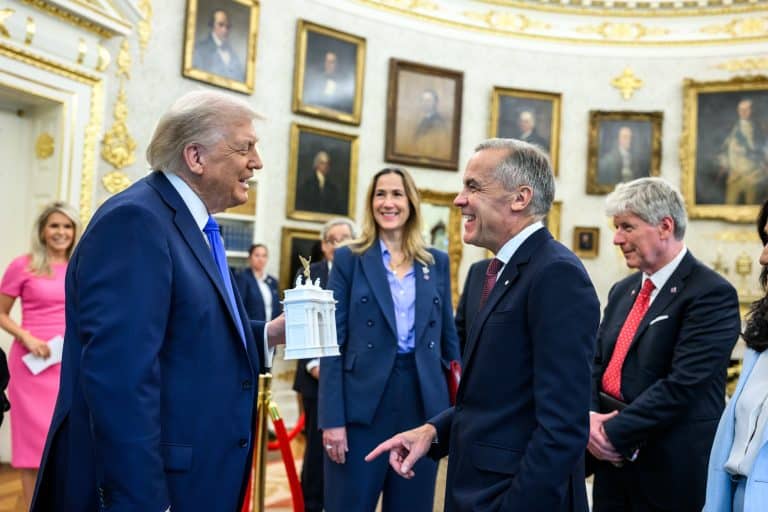

In a striking display of assertiveness, former President Donald Trump proclaimed, “I am the boss,” during a recent G7 summit held in France. This comment encapsulates his approach to international relations and underscores the underlying tensions often present at such global gatherings.
Trump’s statement can be seen as both a reflection of his self-image as a leader and a challenge to the traditional dynamics of diplomacy. The G7, comprising some of the world’s largest advanced economies—Canada, France, Germany, Italy, Japan, the United Kingdom, and the United States—has historically functioned as a forum for collaboration and consensus-building. Trump’s assertive demeanor disrupted the usual decorum, raising eyebrows among leaders who are accustomed to a more collaborative tone.
At the core of Trump’s assertion lies his “America First” doctrine, which often positioned the United States at the center of international discourse. By adopting a boss-like stance, he seemed to convey a message that U.S. interests would not be compromised in favor of collective agreements. This posture resonated with his base at home, reflecting a populist sentiment that seeks to reclaim national sovereignty from perceived globalist agendas.
However, this approach is not without its challenges. Trump’s insistence on being the “boss” can alienate allies, complicating diplomatic efforts on critical issues such as climate change, trade, and global security. Leaders from other G7 nations often find themselves having to navigate this unpredictable dynamic, balancing their own national interests with the necessity of cooperation in an increasingly interconnected world.
The implications of Trump’s approach extend beyond immediate diplomatic interactions. The summit was not just about addressing current global challenges; it was also an opportunity to shape the future of international relations. Trump’s brash style may have shifted the tone of the G7, making it less about multilateral consensus and more about the assertion of power and influence.
Moreover, this style challenges long-standing conventions where collaboration and negotiation are prioritized over unilateral assertions of power. While it may energize certain factions domestically, it raises questions about the effectiveness of diplomacy in achieving meaningful agreements that require compromise.
In conclusion, Trump’s declaration of “I am the boss” at the G7 summit is emblematic of a broader shift in international relations. It reflects a stark departure from traditional diplomatic norms towards a more confrontational and self-centered approach. As global challenges continue to evolve, the effectiveness of this strategy in fostering global cooperation remains to be seen, posing fundamental questions about the future of international diplomacy.
For more details and the full reference, visit the source link below:
Read the complete article here: https://www.stl.news/trump-says-i-am-the-boss-at-g7-in-france/